
Here are some numbers to crunch.
Let’s start small: 25 percent. That’s the portion of fresh garlic sold in the U.S. that is imported from China. Ramping it up just a notch, 30 percent is the estimate of profits that will be lost by independent restaurant owners if Donald Trump goes through with his tariff plans.
There are bigger numbers, of course. Of all the vegetables imported by the U.S., 63 percent come from Mexico. And a 2019 study published in the Journal of Economic Perspectives found that the initial round of tariffs in the first Trump administration cost Americans $1.4 billion in lost income each month – not to mention an additional tax burden of $3.2 billion a month.
Numbers such as this, as well as Trump’s habit of changing announced deadlines, have made many in the food service industry restless.
“I don’t know what to think,” says Chad Silacci of Rustique winery on River Road. “It keeps changing. Do we make less wine?”
Combine tariffs, the near certainty of counter-tariffs and an inflationary tempest that has seen restaurant prices jump 4 percent since 2024, according to the Bureau of Labor Statistics, and the result is a nagging uncertainty in the food service industry.
David Rodas, owner of Mission 19 Taqueria in Monterey, observes that the cost of products from Mexico tripled, even as the 25-percent tariff was going into place.
“Speculation moves the needle more than anything – like the stock market,” he says. “It’s just sad.”
Intent on creating authentic flavors, Rodas imports chiles, seasonings and, of course, avocados. Almost one-third of the ingredients used by the Mission 19 kitchen come from Mexico.
“Some of our grain is from Canada, but I think most of it is in the U.S. already,” says J.C. Hill, brewmaster and owner of Alvarado Street Brewery, with locations in Monterey, Salinas and Carmel. “We have a little bit of time.”
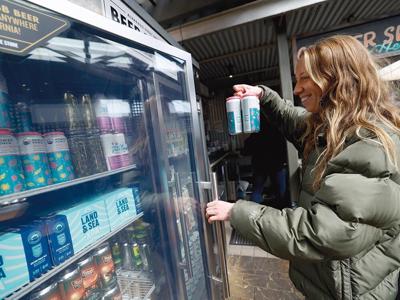
Of greater concern to Hill and the other Monterey County breweries is the tax on imported aluminum. Evan Loewy of Other Brother Beer Co. in Seaside completed a large purchase of cans ahead of the storm – “but not four years’ worth,” he says, adding that he is worried that if the price of aluminum spikes, he may have to pass the cost on to customers.
When Trump imposed a similar tariff during his previous term, Hill was forced to raise prices. This time around, he’s determined to hold fast.
“We will swallow most of the cost. That’s the new reality.”
“People are already feeling it with inflation,” he says. “We’re going to eat the cost. There are other ways to find savings.”
A tariff is essentially a tax paid by the company importing a product. That company – a produce distributor, for example – in turn passes the cost to the grocer or restaurant. Tariffs were an industrial age tool to protect manufacturers, but in an economy driven by consumption, consumers pay the ultimate price.
A poll by Numerator found that 80 percent of Americans believe tariffs will put a dent in their finances. Indeed, a study by the Budget Lab at Yale University estimates that American households will take a hit of around $1,200 a year. With inflation already raging, restaurant traffic tumbled into the red in 2024.
“That’s the main issue,” Rodas says. As a result, dining establishments are slashing profit margins. “We will swallow most of the cost,” he adds. “That’s the new reality.”
The service industry has been dealing with a lot of reality in recent years. In addition to all of the above, winemakers have seen sales stumble for three consecutive years.
“The wine industry in general is very unpredictable,” Silacci says with a shrug. “You just keep trying to farm and make wine the best you can.”
As the supply chain unraveled in 2021 in the wake of tariffs and the global pandemic, glass bottles became scarce. According to accounts at the time, orders from winemakers backed up for 12 months.
Last year was a good one for Rustique. The 2024 vintage across Monterey County is rated as one of the most promising in recent times. And yields were strong, too. Silacci produced 2,400 cases, requiring 28,800 bottles – a figure which, under the circumstances, makes him cautious.
“We’re all in for a ride,” he says.
(0) comments
Welcome to the discussion.
Log In
Keep it Clean. Please avoid obscene, vulgar, lewd, racist or sexually-oriented language.
PLEASE TURN OFF YOUR CAPS LOCK.
Don't Threaten. Threats of harming another person will not be tolerated.
Be Truthful. Don't knowingly lie about anyone or anything.
Be Nice. No racism, sexism or any sort of -ism that is degrading to another person.
Be Proactive. Use the 'Report' link on each comment to let us know of abusive posts.
Share with Us. We'd love to hear eyewitness accounts, the history behind an article.