
Douglas Cruickshank says he doesn’t remember why, at age 56, four decades into a prosperous career as a writer, photographer and editor, including for Salon and The Fessenden Review, he joined the Peace Corps to live in Africa. He figures it had to do with “giving back.” But he didn’t know how much he would gain.
“I say it was the best experience of my life,” he says from home in San Francisco.
He was sent to Uganda: “People know three things about [it]. Gorillas. Idi Amin. And Ebola. That’s about what I knew.”
What he came to learn, living there August 2009 to April 2012, filled his heart, rejuvenated his waning urge to write, and poured out into a large photography and essay book titled Somehow: Living on Uganda Time. He comes to Henry Miller Memorial Library on Sunday to talk about the the experience, maybe starting with realigning what people think they know.
“I think misconceptions are largely fueled by the media’s preoccupation with tragedy. I call it tragedy porn,” he says. “Violence, rape, starvation. In Africa what’s happening most of the time is what’s happening here and in most places in the world: People are sending their kids to school, fixing their motorcycles, working in gardens, opening their shops.”
He lived in the village of Kyarumba, in the second highest mountain range in Africa after Kilimanjaro. His assignment was to help develop business for the 10-year-old coffee co-op of 3,800 farms, 85 percent of them woman-owned.
“Ugandans are industrious, organized and entrepreneurial,” he says. “They’re very smiley people, but they stop smiling when you take a picture.”
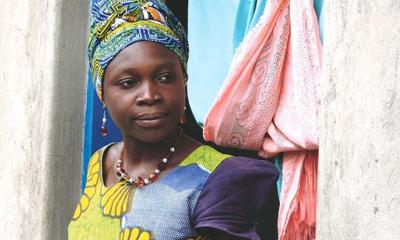
The book is filled with portraits of Ugandans, the countryside, dirt roads, green foliage, ramshackle shops, traffic, cities, accompanied by guileless essays.
“They seem happier there,” he says. “I refer to the U.S. as the land of endless wanting. Happiness, for people in Africa, is not based on getting what they want, but what they already have – a rich fabric of personal relationships. I think that serves them very well. It helps people deal with all the other difficulties of life.”
That’s best illustrated by the book’s title, Somehow. It’s a malleable and popular word in Uganda. When asked how one is doing, it’s a response that speaks of acceptance, of endurance. Somehow.
DOUGLAS CRUICKSHANK reads and speaks 3pm Sunday at Henry Miller Memorial Library, 48603 Highway 1, Big Sur. Free to attend; half the purchase price ($60) of the book will go to aid agencies in Kyarumba. 667-2574, DouglasCruickshank.com
(0) comments
Welcome to the discussion.
Log In
Keep it Clean. Please avoid obscene, vulgar, lewd, racist or sexually-oriented language.
PLEASE TURN OFF YOUR CAPS LOCK.
Don't Threaten. Threats of harming another person will not be tolerated.
Be Truthful. Don't knowingly lie about anyone or anything.
Be Nice. No racism, sexism or any sort of -ism that is degrading to another person.
Be Proactive. Use the 'Report' link on each comment to let us know of abusive posts.
Share with Us. We'd love to hear eyewitness accounts, the history behind an article.