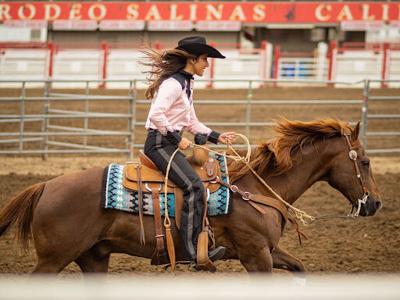

Dave Faries here, noting that 11 years ago this week I was in Rock Springs, Wyoming to see a few seconds of the National High School Rodeo Finals.
The young saddle bronc rider I had come to write about was thrown from his mount before the eight-second mark. As he gathered himself from the arena dirt—and before dusting himself off—he turned to the horse and tipped his hat in a show of respect.
I am not someone who follows rodeo closely, preferring more urban pursuits. But I’ve hovered around a few with notebook and camera in hand. There are many who view the sport—and other events using animals, such as horse racing, dog racing and the circus—as a form of cruelty. Critics have a point. On the other hand, the sport evolved from daily chores performed by cowboys from the Old West to today.
Well, apart from bull riding, which I’m guessing had its origins in a bottle of frontier whiskey. Otherwise, it’s a normal human impulse to gather and put one’s skills to the test against others. The rodeo cowboys and cowgirls I’ve spoken with over the years are respectful of the animals. And they conduct themselves with respect to others, at least while in and around the arena.
At a rodeo, it’s common for a response to a question to begin with “yes, sir.” And this atmosphere extends beyond the area, to the people involved in rodeo as a show.
This week’s cover stories feature some of those people. As David Schmalz learned while following the competition for the Miss California Rodeo Salinas crown, the women seeking to represent the event are skilled and confident. Meanwhile Celia Jiménez learned that rodeo stock—the animals used in events—are a select and well-traveled lot.
Pam Marino highlights the star-studded life of Pat DuVal. Once Monterey County’s “Singing Sheriff,” DuVal sets the tone for the rodeo each day with a rendition of “I Love You, California” and this week was inducted into the California Rodeo Salinas Hall of Fame. Meanwhile Jeff Mendelsohn took on the enviable task of sampling the rodeo’s food stand options.
Yes, we also examine the ethics of rodeo. Sara Rubin’s story looks at the realities of the event and the steps taken by supporters, opponents and neutral parties with the safety of animals in mind.
What goes on around California Rodeo Salinas is rather fascinating. We hope the range of stories we were able to present give a glimpse into the people who make it happen.
A tip of the hat to them.

(5) comments
From Dr. Peggy Larson, DVM -
Animals should not be injured or killed for entertainment and that is what rodeo is. It bears no resemblance to ranching. I grew up on a cattle ranch in North Dakota and spent 8 years as a ranch veterinarian there. My ranch clients did not ride bulls, speed rope calves or make their expensive horses buck. Rodeo is not American "tradition".
As a former bareback bronc rider, pathologist and large animal veterinarian, I have both the experience and autopsy proof that rodeo injures and kills animals. Dr. Robert Bay from Colorado autopsied roping calves and found hemorrhages, torn muscles, torn ligaments, damage to the trachea, damage to the throat and damage to the thyroid. These calves never get a chance to heal before they are used again. Meat inspectors including Drs. Haber and Fetzner who processed rodeo animals found broken bones, ruptured internal organs, massive amounts of blood in the abdomen from ruptured blood vessels and damage to the ligamentum nuchae that holds the neck to the rest of the spinal column.
Dr. C. G. Haber, a veterinarian with thirty years of experience as a USDA meat inspector, stated "The rodeo folks send their animals to the packing houses where I have seen cattle so extensively bruised that the only areas in which the skin was attached was the head, neck, legs, and belly. I have seen animals with six to eight ribs broken from the spine and at times puncturing the lungs. I have seen as much as two and three gallons of free blood accumulated under the detached skin."
Animals and humans share the same pain and fear centers in the brain. The fear center is the amygdala. The pain centers are the pre-frontal cortex and the hypothalamus. Animals feel pain and fear the same as humans!
As a former state criminal lawyer, we prosecutors have all had cases where criminals have abused and tortured animals before abusing or killing humans. What are we teaching our children when we cheer when a calf roper knocks down and drags by the neck a bawling calf? Kids cry at rodeos. Time to end animal abuse at rodeos.
“If ever there were a completely gratuitous abuse of animals, and often
baby animals at that, all done for the sheer thrill and bravado of it,
it is rodeo.” (--Matthew Scully, in his 2002 book DOMINION. Scully
is a former speech writer for former Pres. George W. Bush.)
"Do I think it hurts the calf? Sure I do. I'm not stupid." (--Keith
Martin, chair of the board, PRCA. In the 2/6/2000 San Antonio Express
News, "Choosing Champions," by reporter Elizabeth Allen)
"Yeah, I accidentally killed and injured lots of calves when I was
learning. I mean, I plain roped their heads off." (--a PRCA calf
roper, "The mud, the blood & the poop," by PRCA reporter Gavin Ehringer,
Colorado Springs Independent, August 19, 2004)
“The single worst thing you can do to an animal emotionally is to make
it feel afraid. Fear is so bad for animals I think it’s worse than
pain.” (--Dr. Temple Grandin, world-renowned animal behaviorist)
The MC WEEKLY owes its readers (and these exploited and abused animals) a follow-up rodeo story from the ANIMALS' point-of view. I was present at the 1995 California Rodeo when FIVE animals suffered and died for our "entertainment." Only in the aftermath of the mayhem did the PRCA begin requiring on-site veterinary care. The great majority of the 5,000-10,000 U.S. rodeos don't provide even this basic care, to their ever-lasting shame.
The United Kingdom (England, Scotland, Wales) outlawed rodeos back in 1934, followed by Germany and the Netherlands. Can the U.S. be far behind?
Nearly EVERY animal welfare organization on Planet Earth condemns rodeo for its inherent cruelties. LEGISLATION IS IN ORDER EVERYWHERE.
See prize-winning rodeo documentary, "BUCKING TRADITION" - www.buckingtradition.com (also available on YouTube).
Welcome to the discussion.
Log In
Keep it Clean. Please avoid obscene, vulgar, lewd, racist or sexually-oriented language.
PLEASE TURN OFF YOUR CAPS LOCK.
Don't Threaten. Threats of harming another person will not be tolerated.
Be Truthful. Don't knowingly lie about anyone or anything.
Be Nice. No racism, sexism or any sort of -ism that is degrading to another person.
Be Proactive. Use the 'Report' link on each comment to let us know of abusive posts.
Share with Us. We'd love to hear eyewitness accounts, the history behind an article.