
Celia Jiménez here, thinking about the 15th annual Asian Cultural Fair in Salinas that will happen tomorrow, Saturday, April 27 in Chinatown.
One of the questions I wondered the first time I went to Soledad Street in Salinas, in a majority-Latino city, was: Why is this area called Chinatown?
Thanks to the work of the nonprofit Asian Cultural Experience of Salinas and dedicated community members, I learned it was a lively place where predominantly Chinese, Japanese and Filipino communities had lived. Documenting, celebrating and sharing this history is part of the nonprofit’s mission.
This year, the fair will be a little different. On an administrative level, ACE changed its name to ACES to make the organization and the work it does more easy to find online.
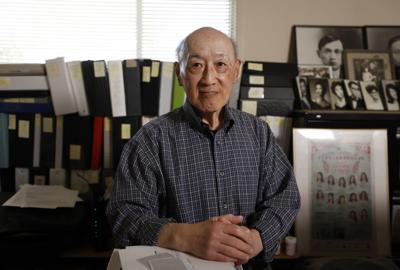
This celebration will be dedicated to one of its founders, Wellington Lee, a champion in preserving and spreading Chinatown’s history, who died in February at 79.
“He's a historian who really grasped this unique collaboration of the Japanese, Chinese and Filipinos, and preserved that history of Chinatown,” ACES member Larry Hirahara says.
I met Lee a couple of years ago, when I was learning about the agricultural history in Monterey County as part of the AgKnowledge class, led by the Grower-Shipper Association Foundation. He enthusiastically shared stories about growing up in Chinatown.
Lee described Chinatown as full of life with homes, restaurants, gambling, nightlife and diverse people walking the streets. “It was an international kind of place,” Lee said. Lee’s grandfather Yin “Shorty” Lee (who earned his nickname because he was 4-foot-11) was Chinatown’s honorary mayor.
But history like that is so easily forgotten. Lee shared he was the only one in his family who was interested in Salinas Chinatown’s history. At his small home in Salinas, he kept dozens of photographs, newspaper folders and oral stories about the people that lived there. He was working on a book.
“I don't want it to be forgotten, and I don't want people to exaggerate,” he said. “What motivates me is that I just want the history to be correct and to make sure that they have the facts right.”
Lee’s book hasn’t been published. “One of the things we want to do is get a grant and finish that book,” Hirahara says.
For years, ACES has worked to bring and share their history and contributions to the Salinas Valley and Monterey County. One of the organization's goals is turning the old Republic Café into a museum (a project that is slowly progressing).
The fair this weekend includes cultural demonstrations such as bonsai art and Kendo martial arts, photographs, a car show and craft vendors and a walking tour that will take people back in time when Chinatown was booming. The fair will be at different locations, including the Buddhist Temple and the Filipino Community Center.
One of my highlights during AgKnowledge was stopping at Confucius Church and listening to Lee’s anecdotes.
Lee will be missed, yet his legacy will continue.
The event begins at 11am tomorrow, April 27. Dances are my favorite part of the fair. What is yours?

(0) comments
Welcome to the discussion.
Log In
Keep it Clean. Please avoid obscene, vulgar, lewd, racist or sexually-oriented language.
PLEASE TURN OFF YOUR CAPS LOCK.
Don't Threaten. Threats of harming another person will not be tolerated.
Be Truthful. Don't knowingly lie about anyone or anything.
Be Nice. No racism, sexism or any sort of -ism that is degrading to another person.
Be Proactive. Use the 'Report' link on each comment to let us know of abusive posts.
Share with Us. We'd love to hear eyewitness accounts, the history behind an article.