
It’s a pleasant 67 degrees in Seaside as I write this, slightly warmer than the usual high of 65. Such moderate temperatures are so normal for Seaside that it’s easy, for those who haven’t traveled further inland this summer, to forget that historic heat waves have gripped much of the country in recent weeks, and that we are heading (again) for the hottest year on record for the planet.
David Schmalz here, wishing I had good news to report in that respect, but I don’t. However I can report that the contours of oil and gas regulation in California have become more clearly defined.
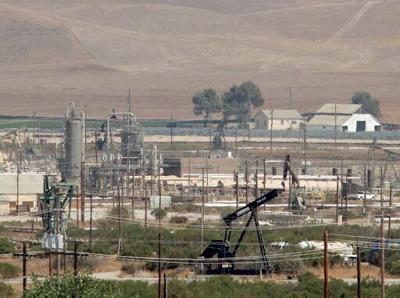
In 2016, Monterey County residents passed Measure Z—a ballot measure that, if implemented, would ban fracking as well as new oil and gas development in the county—by a 56-44 margin. Even at the time it was passed there remained an open question: To what extent do local jurisdictions in the state have the right to regulate oil and gas development?
That question has been litigated since December 2016, and attorneys representing oil and gas interests—mainly Chevron and Aera Energy—have prevailed at every turn, first in a March 2018 ruling by Monterey County Superior Court Judge Thomas Wills, which stated local jurisdictions don’t have the authority to regulate the industry. The decision was appealed by Protect Monterey County, the activist group that brought the measure. The state’s Sixth District Court of Appeal heard the arguments for the case in September 2021, and in October issued a ruling that upheld Wills’ decision.
Attorneys for the nonprofit Center for Biological Diversity, representing Protect Monterey County, petitioned the state Supreme Court to weigh in on the issue. The state Supreme Court agreed, which in and of itself is notable—just a tiny fraction of the cases that petitioners seek to put in front of that court are heard, perhaps less than 5 percent.
Today, the state Supreme Court released its decision on the case, which also upholds the original ruling. In addition it is a published opinion, meaning that it can be cited by attorneys in other matters as case law. In other words, it represents a more clearly defined law of the land than was previously on the books.
The decision plainly states that Measure Z contradicts section 3106 of state law. Per that code section:“The [state oil and gas] supervisor shall so supervise the drilling, operation, maintenance, and abandonment of wells and the operation, maintenance, and removal or abandonment of tanks and facilities attendant to oil and gas production…”
So that’s that.
It’s a gut punch to supporters of the measure and to the idea of local self-determination—we remain subject to the whims of state and federal lawmakers, and their counterparts worldwide, to regulate oil and gas development. So far, that paradigm has not gone great. It is also a blow to those looking to mitigate climate change, a catastrophic, ongoing crisis created by fossil fuel emissions that has been scientifically understood since at least the 1970s.
There are some very smart people who hold out faith that there will be technological breakthroughs (carbon capture, for example) that will stave off the worst of climate change. But everything I’ve read makes me feel the opposite. For example, there were about 43 billion tons of carbon emissions put into the atmosphere in 2019, while the planet’s nature only had the capacity to absorb about 2 billion tons of carbon. I just don’t think carbon capture is scalable, though I desperately hope I’m wrong.
So what to do? Aside from limiting our personal carbon footprints, the only solution is at the ballot box: Vote for state and federal politicians who not only believe in climate change, but also are committed to doing something about it.
(2) comments
That's a huge mix of topics derived from that decision. First, Fluorinated Hydrocarbons and Methane are more likely the culprits for global warming. Second, the state Supreme Court merely confirmed that the State Legislature usurped jurisdiction over oil drill, so persons concerned about such for water pollution etc. should address their state representatives for appropriate legislation, rather than attempting piece-meal county by county legislations.
Interesting that the only named individual in this article is local judge, who upon being named, is nearly subjected to hostility. I feel as if this could lead to targeted harassment.
Welcome to the discussion.
Log In
Keep it Clean. Please avoid obscene, vulgar, lewd, racist or sexually-oriented language.
PLEASE TURN OFF YOUR CAPS LOCK.
Don't Threaten. Threats of harming another person will not be tolerated.
Be Truthful. Don't knowingly lie about anyone or anything.
Be Nice. No racism, sexism or any sort of -ism that is degrading to another person.
Be Proactive. Use the 'Report' link on each comment to let us know of abusive posts.
Share with Us. We'd love to hear eyewitness accounts, the history behind an article.