
Pam Marino here, still wearing a mask when I go grocery shopping because the Covid-19 pandemic is not over (it’s also still cold and flu season). There were a fair number of fellow shoppers who were also masked. With new local Covid cases still popping up week after week, the pandemic is still a thing in the eyes of the World Health Organization, even if many of us have moved on.
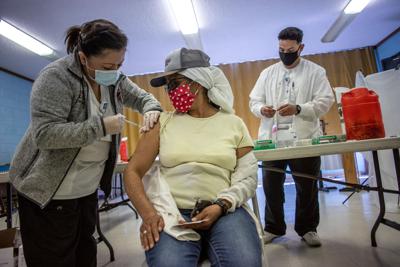
Part of why we can move on is thanks to the original Covid-19 vaccines and the bivalent booster that became available last fall, plus wearing masks, social distancing, shutdowns and other actions taken to protect each other back when death from Covid was more of a possibility for all ages, rather than today when those most at risk are people over the age of 65.
Moving on includes saying goodbye today, Feb. 28, to California’s Covid-19 State of Emergency, enacted three years ago by Gov. Gavin Newsom on March 4, 2020. Two days later Monterey County announced its own state of emergency, followed by cities each declaring their own emergencies.
“State of Emergency” sounds dramatic—and it certainly felt dramatic at the dawn of the pandemic, when we still didn’t quite know what to expect—but such government declarations are legal constructs designed to give leaders expanded powers to take quick action to protect the public.
Now three years later, today’s end of California’s state of emergency feels far less dramatic, almost more like a shrug. It’s more bureaucratic and ceremonial. As I report in this Thursday’s edition of the Weekly, you will see little immediate difference—more changes will become apparent starting this spring, when the U.S. emergency comes to an end on May 11.
Eventually all the “free” things made available to fight Covid—namely testing, vaccines and treatment—will go away. Covid vaccines will remain free as long as the stockpile of vaccines ordered by the Biden Administration lasts. (One report states that officials ordered 171 million vaccines last year but only 51 million have been utilized.) Paxlovid treatments are likely to remain free through the fall.
Free tests will be harder to come by. The state-supported Covid testing sites closed last week, although the VIDA project and some nonprofit organizations continue to offer tests that come from the California Department of Public Health. Kim Stemler, who orders tests for the Covid-19 Collaborative, a project of the Community Foundation for Monterey County, says she hopes to get enough tests from the state to keep them going until May.
Once all the free tests and vaccines and treatments go away, those with insurance will be able to access them at a lower cost, but that will lead to questions of equity and access for those without insurance.
Covid is likely always going to be with us, much like the flu, but the hope is that it will not pack the same wallop when it comes to deaths and long term conditions. As of now, WHO still considers Covid-19 a global health emergency, but the good news is that Director-General Tedros Adhanom Ghebreyesus said on Jan. 30 that it’s possible the pandemic will end later this year.
(0) comments
Welcome to the discussion.
Log In
Keep it Clean. Please avoid obscene, vulgar, lewd, racist or sexually-oriented language.
PLEASE TURN OFF YOUR CAPS LOCK.
Don't Threaten. Threats of harming another person will not be tolerated.
Be Truthful. Don't knowingly lie about anyone or anything.
Be Nice. No racism, sexism or any sort of -ism that is degrading to another person.
Be Proactive. Use the 'Report' link on each comment to let us know of abusive posts.
Share with Us. We'd love to hear eyewitness accounts, the history behind an article.