
Kyarra Harris here, thinking about the history of Seaside.
Each year during Black History Month, it’s important for me to learn about a historical figure I’ve never heard about before. Lucky for me, this year I have been engulfed in the rich history of Monterey County.
To kick off my month of historical learning, I attended the Black Leaders and Allies Collaborative’s new movie night series in Pacific Grove, featuring a screening of the 1990 documentary The FBI's War on Black America. The film highlights the FBI’s counterintelligence program, better known as COINTELPRO, in which it illegally spied on civil rights activists in the 1960s and made attempts to discredit them in the public eye.
Though many of the historic names and faces are familiar, it’s worth noting there is not a lot of conversation about how many obstacles civil rights activists faced during that time. People were threatened, their activities were sabotaged, and many lost their lives in the process. The aftermath of the COINTELPRO program also changed the way the Black community would practice activism for decades to come
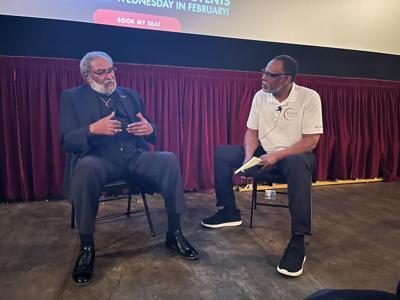
After the film, BLAAC founder Dirrick Williams interviewed Mel Mason, a former Black Panther and longtime community activist in Seaside. Mason was personal friends with some of the leaders mentioned in the film. Even today, he said those stories trigger him.
The ’60s were littered with pain—including the assassinations of Malcom X, Martin Luther King Jr. and Bobby Kennedy, among others. It created a chilling effect on the Black community. Most activists were too afraid to try again with the same zeal.
“After the Black Panthers disbanded, people were discouraged. When we tried to form another party, people backed away from it,” Mason said.
Though no movement has eclipsed the momentum of that era, the Black Lives Matter movement garnered traction many had not seen in decades. Both Williams and Mason shared their appreciation for younger generations stepping up to continue the work, but felt pieces were missing.
“BLM had so much momentum [in 2020], then it died down. It’s necessary to sustain what you’ve done and continue to work,” Mason said. “Freedom is not free, and it takes a long time to become free. Freedom is an ongoing process.”
(0) comments
Welcome to the discussion.
Log In
Keep it Clean. Please avoid obscene, vulgar, lewd, racist or sexually-oriented language.
PLEASE TURN OFF YOUR CAPS LOCK.
Don't Threaten. Threats of harming another person will not be tolerated.
Be Truthful. Don't knowingly lie about anyone or anything.
Be Nice. No racism, sexism or any sort of -ism that is degrading to another person.
Be Proactive. Use the 'Report' link on each comment to let us know of abusive posts.
Share with Us. We'd love to hear eyewitness accounts, the history behind an article.