
The word skepticism comes from the Greek skeptikos, meaning “an inquirer,” somebody asking questions and searching for truth. Sara Rubin here, and I relate very much to this idea—inquiry is the basis of journalism.
But then I quickly think of how often skepticism is weaponized against the truth. There are vaccine skeptics who doubt the life-saving powers of vaccines in global public health; climate skeptics who don’t believe that anthropogenic climate change is happening; Covid skeptics who think the virus was and is a hoax; election deniers who believe election officials are not to be trusted. What’s the line between questioning and trust that lands us somewhere in the realm of healthy skepticism?
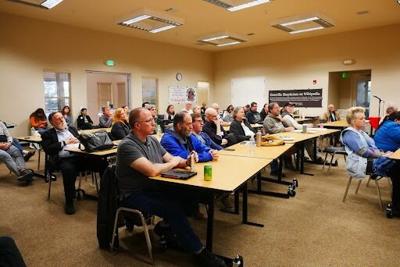
Susan Gerbic, a skeptic who lives in Salinas, is deeply devoted to dwelling in that space. She manages a nonprofit called the About Time Project, which coordinates teams of volunteer editors working in many languages to fact-check Wikipedia articles. She leads sting operations proving some self-proclaimed psychics are liars. And she organizes the annual SkeptiCamp program in Monterey County, a weekend of social events and learning (for free) to bring skeptically minded people together. This year’s event promises to be “full of science and critical thinking…and magic and fun!”
Sessions include “the true story of Sallie Winchester,” the woman behind the Winchester Mystery House; a presentation by Gerbic on Wikipedia; a talk about romance scams from someone who was herself scammed; a discussion of artificial intelligence; and more.
There is an underlying emphasis on science and ascertaining reality. And it’s not for the sake of puncturing your dreams about a crystal ball—it’s for society’s sake. “Lots of people want to believe magical things, and want to believe they’re real, but that’s not how a society is going to run and be healthy,” Gerbic says. For example, she points to people who refused to wear masks or get vaccinated for Covid and have infected others. And that gets at the core of her guiding principle as a skeptic—she thinks of herself first and foremost as a consumer advocate.
“We don’t like scams, and people being taken advantage of,” she says. “We look at this as a way of giving back to the community.”
Being empowered to ask questions—not to be cynical, but to be curious and, well, skeptical—is the skill that SkeptiCamp aims to impart.
They kick it off at London Bridge Pub in Monterey from 5-10pm on Friday, Jan. 5, then the main program runs at the Seaside Community Center from 9am-5pm on Saturday. Tours of the Winchester Mystery House in San Jose (you must buy a ticket) follow on Sunday. All are welcome to drop in for the full weekend or parts of it. Just be prepared for respectful, curious conversation.
(0) comments
Welcome to the discussion.
Log In
Keep it Clean. Please avoid obscene, vulgar, lewd, racist or sexually-oriented language.
PLEASE TURN OFF YOUR CAPS LOCK.
Don't Threaten. Threats of harming another person will not be tolerated.
Be Truthful. Don't knowingly lie about anyone or anything.
Be Nice. No racism, sexism or any sort of -ism that is degrading to another person.
Be Proactive. Use the 'Report' link on each comment to let us know of abusive posts.
Share with Us. We'd love to hear eyewitness accounts, the history behind an article.