
Pam Marino here, hoping that no matter what you are celebrating this morning—Easter, Passover, Ramadan or simply Spring itself—you are enjoying the day. I’m celebrating Easter with my family and enjoying a break from covering news stories.
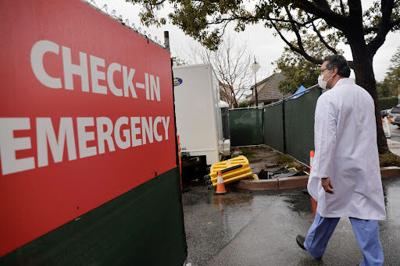
One of my latest stories is about a very real challenge facing hospital emergency rooms everywhere, including Monterey County. The cover story in this week’s print edition of the Weekly, titled “State of Emergency,” details how a lack of psychiatric treatment beds in California means patients suffering a mental health crisis must wait for transfer inside an emergency room, sometimes for up to three days.
I had been hearing about this problem for some time from local doctors and medical professionals, who would tell me how it puts an enormous strain not only on the patients, but on emergency room staff. It also means sometimes people who come to the emergency room for other reasons must wait to be seen, because a bed that could be used for them is taken by someone waiting for a transfer to a psychiatric facility.
One study puts the number of psychiatric beds needed in California at 4,700. Gov. Gavin Newsom recently put the number at 6,000, during his announcement of a bond measure for the 2024 ballot that would raise $3 billion for the construction of mental health facilities.
The result is that a patient in Monterey or Salinas could wait a few hours or even a few days in an emergency room bed, which every medical professional I spoke to agrees is not the best place for someone in a mental health emergency. I also spoke to a former patient, who shared with me how anxious and fearful she felt for the day and a half she was in an emergency room waiting for a bed.
The story outlines how we got into this situation and what the possible solutions are for the future. In the meantime, hospitals here in Monterey County have had to figure out how to help patients cope during their wait and how to free up beds so that all patients may be served.
Salinas Valley Health took one approach—using psychiatrists via telehealth—which has been very helpful to patients, according to Dr. Rakesh Singh, an emergency physician and vice head of staff at the hospital in Salinas. On March 20, Community Hospital of the Monterey Peninsula opened a Crisis Stabilization Unit across the hall from its emergency department, giving another alternative for helping stabilize patients who do not need acute care in a facility.
The situation is perhaps more dire for children and teens, and that’s covered in a sidebar to the story. Lori Butterworth of AIM Youth Mental Health tells me that families sometimes have to wait up to 50 days to be seen by an outpatient professional due to a severe shortage of mental health professionals for youth.
If you or a loved one have faced this situation, I’d be interested in hearing what you think about the story. And I hope you are safe and well and enjoying this spring holiday.

(1) comment
There should be no new money for people who have mental problems until they learn how to use nutrition to reverse learning problems, ADHD, depression. These techniques provide a permanent solution. Along with this mentally disturbed people need to learn basic life skills.
Welcome to the discussion.
Log In
Keep it Clean. Please avoid obscene, vulgar, lewd, racist or sexually-oriented language.
PLEASE TURN OFF YOUR CAPS LOCK.
Don't Threaten. Threats of harming another person will not be tolerated.
Be Truthful. Don't knowingly lie about anyone or anything.
Be Nice. No racism, sexism or any sort of -ism that is degrading to another person.
Be Proactive. Use the 'Report' link on each comment to let us know of abusive posts.
Share with Us. We'd love to hear eyewitness accounts, the history behind an article.