
Celia Jiménez here, thinking about how the visibility of Indigenous residents has grown in Monterey County. Anecdotally, I’ve seen increased participation at meetings of the Salinas City Council, Monterey County Board of Supervisors and at various school districts.
On June 27, I attended a cultural event Centro Binacional para el Desarrollo Indígena Oaxaqueño organized to bring two Oaxacan Indigenous communities together: the Chatino and Mixteco.
The event was held at Teamsters Local 856 in Salinas. About 100 people from both communities of all ages showed up. Some were wearing their traditional clothing with embroidered blouses and flower-patterned skirts or dresses below the knee adorned with white lace.
The event was presented in Mixteco, Chatino and Spanish. They talked about tequio, which can roughly translate to unpaid or volunteer community participation to improve their town or community.
“What we want is to build trust between both communities,” says Araceli Merino, a Chatino woman and Centro Binacional worker. “United we are more.”
CDBIO offers leadership workshops for Indigenous people to talk about the challenges they face everyday, and encourages them to get involved in their community and participate in city council and school district board meetings.
The meeting started about 20 minutes late; many attendees were showing up as soon as they could after a long day working in the fields. The event started with a presentation that discussed common objectives. In general, the plan is to bring Indigenous people together and find solutions to common challenges they are facing, such as having programs for Indigenous students and their parents at schools (Santa Rita Union School District began a program in Mixteco in January and people are advocating to bring one to Greenfield Unified School District), having translation and interpretation services at hospitals, rent stabilization and more.
Maricela Ramirez Rivera, a Mixteco woman and a worker for Centro Binacional, says they are treated differently for being Indigenous and speaking Indigenous languages. She notes they have the same rights as everyone else in this country. “We are not that different,” she says in Spanish.
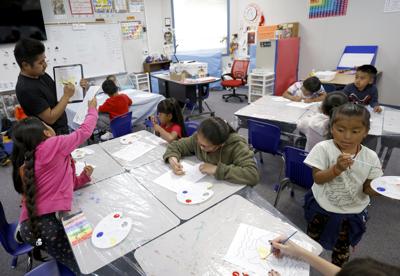
Aurelia Espinoza, a Mixteco woman, says she likes to attend CDBIO’s events because they, the community, have created change, referring to the after-school Mixteco program at SUSD.
“We did it,” she says in Spanish, adding that all of her kids have already graduated from elementary school but it’s a step forward.
“I don’t know a lot of Mixteco,” Espinoza notes. She left Oaxaca when she was 5 and her parents only spoke Spanish with her. She’s now learning and practicing Mixteco with relatives who don’t speak Spanish, Espinoza says.
At the event, we also listened to Mixteco music, saw different artesanias or handmade crafts including crocheted bags, hats made out of palms and embroidered napkins.
Sitting down and talking with others while enjoying food was one of my favorite parts of the event. I even asked which tortilla maker they used for the thinnest corn handmade tortillas I’ve seen. There were different dishes, some a tad familiar, some I never tried before, including soup of quelite de alache, fried eggs in red chile that reminded me of mom’s shrimp gorditas, tetelas (a triangular-shaped corn masa filled with beans and cheese), beans with dried meat or jerky, handmade corn and flour tortillas, and the thickest atole I’ve ever tried with pieces of hominy.
I’ve seen how confidence has grown among the Indigenous community in the region. It's exciting to see more of them coming forward to participate in their communities.

(0) comments
Welcome to the discussion.
Log In
Keep it Clean. Please avoid obscene, vulgar, lewd, racist or sexually-oriented language.
PLEASE TURN OFF YOUR CAPS LOCK.
Don't Threaten. Threats of harming another person will not be tolerated.
Be Truthful. Don't knowingly lie about anyone or anything.
Be Nice. No racism, sexism or any sort of -ism that is degrading to another person.
Be Proactive. Use the 'Report' link on each comment to let us know of abusive posts.
Share with Us. We'd love to hear eyewitness accounts, the history behind an article.