
Remember the story of Rip Van Winkle? Pam Marino here, reminded of the legend of the farmer who, in pre-Revolutionary War times, ambles into the mountains and encounters a group of dwarfs who offer him a drink that sends him into a 20-year slumber. When he wakes up he has a long white beard, his town has grown bigger and he discovers he’s no longer in an English colony but a new nation.
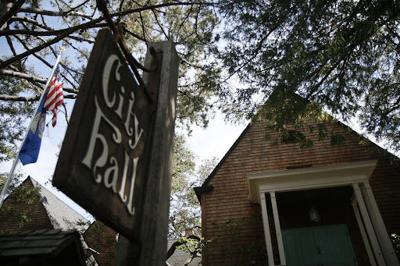
The story came to mind as I was reading up on the Carmel City Council agenda for tomorrow night, Tuesday, Nov. 7. The village by the sea where houses are given names, not numbered, is contemplating the idea of adopting street addresses after more than 100 years without them.
I’m not suggesting Carmelites have been sleeping for the past 20 years, but some do seem unwilling to wake up to the fact that while they have fought to protect their vaunted “village character,” the world around them has dramatically changed.
The opposition by Carmelites to numbered addresses runs deep: When the Carmel postmaster asked for numbered addresses in 1925, residents formed a resolution against it. The city’s leaders adopted a house numbering ordinance in 1926, but it was repealed in 1940. Carmelites even threatened to secede from the State of California in 1953 when the state considered making house numbers mandatory everywhere.
All that took place decades before the information revolution that began approximately in the mid-1980s, when computers rose to greater importance and the Internet was on the cusp of exploding into widespread use. The new world is now crashing into Carmel’s stubborn hold on the old.
With the rise of online services, some residents have found they cannot get packages delivered or use apps for ride services. People attempting to apply for a California REAL ID ran into roadblocks. Changes in how the federal government collects information made getting passports a chore. Other residents have reported having difficulty securing loans. Some say they worry their home will not be “findable” in an emergency, according to a city white paper on street addresses.
The white paper also reports that “residents provide new neighbors with workarounds and look out for each others’ packages when a new UPS or FedEx driver accidentally delivers a package to the wrong house.” Those workarounds are now “exhausted,” for those who are frustrated with the constant roadblocks that a lack of street addresses creates.
The leaders of the Carmel Residents Association remain staunchly against addresses. The CRA website dedicates an entire page to the address debate and history, taken from a CRA newsletter article published last fall. It includes details of the many of the workarounds addressed by the white paper. With perhaps an air of arrogance the title of the CRA article is: “You’ve got mail...Someplace.”
It was also with arrogance that “Mr. Recent Arrival” was slammed in an essay published in the May 2022 CRA newsletter, for daring to ask about incorporating street addresses, among other quirky aspects of the village.
Yet not all CRA members agree. In a survey taken over the summer, just over 38 percent said they’d like an address to clear up the confusion that having no house numbers creates, but they would still want to pick up their mail at the Carmel Post Office. It’s a tradition many cherish, a place where neighbors gather and chat and make connections.
Tomorrow’s meeting should reveal which direction the council is leaning on whether to pursue addresses or not. But even if councilmembers say they’re interested in addresses, it will be a long process of working with federal officials to institute them. And that will lead to more debates: Should the city allow address number displays, or only use them for GPS purposes? If they are displayed, what are the design standards for displaying them?
If you’re interested in the debate, you can access the full city staff report and white paper here. The meeting will be held at 4:30pm and I would give you a number address if I could, but a description will have to do—the council chambers are located on the east side of Monte Verde Street between Ocean and Seventh Avenues. You can also participate virtually. The instructions are found on the agenda located here.
Rip Van Winkle, the story by Washington Irving goes, spent his remaining years telling any villager who would listen about times gone by. The town—and the country—had moved on, never to return to the old days. Maybe it’s finally time for Carmelites to move on too.
(1) comment
Seems like you are upset that Carmel wants to retain tradition, and this seems to go along with the recent position that many in Carmel do not want new housing. Something that you ardently support. Sorry Ol' Pam, Carmel will always win :D
Welcome to the discussion.
Log In
Keep it Clean. Please avoid obscene, vulgar, lewd, racist or sexually-oriented language.
PLEASE TURN OFF YOUR CAPS LOCK.
Don't Threaten. Threats of harming another person will not be tolerated.
Be Truthful. Don't knowingly lie about anyone or anything.
Be Nice. No racism, sexism or any sort of -ism that is degrading to another person.
Be Proactive. Use the 'Report' link on each comment to let us know of abusive posts.
Share with Us. We'd love to hear eyewitness accounts, the history behind an article.