
Sara Rubin here, writing as Older Americans Month is set to begin tomorrow, May 1. The idea is to honor and celebrate our elders. But my mind is somewhere else—instead, I find myself thinking about how we let our elders down.
More specifically, I am still thinking about a powerful visit I had with a group of residents in Pacific Grove Senior Living, the kind of place many people in their age group (80s and 90s) would aspire to live out their final years in. Bob and Sharon Sadler’s fourth-story window offers sweeping views of Monterey Bay. Their apartment is lovingly decorated, and the walls painted a calming, pale yellow.
They sold a nearby house to come and live in this unit, with the idea that they’d spend the rest of their lives here.
But they have already had to make major adaptations to make the place work for them. They are in a two-bedroom apartment with a hotel-style kitchenette, because they expected to eat mostly at the onsite cafeteria. But they found the food to be indelibly bad, so they converted the second bedroom into a makeshift kitchen. They installed a fridge, microwave and induction cooktop, plus shelving for dry goods.
“We made it work,” Sharon says. “But for the long term, this doesn’t solve our problem.”
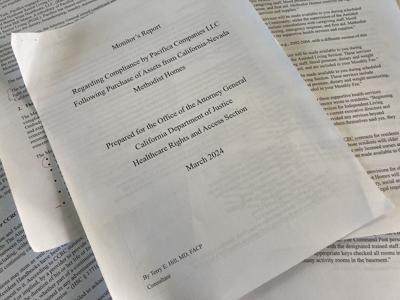
It certainly doesn’t, and the problem is much bigger. As I covered in the news section of the April 25 issue of the Weekly, still on newsstands through today, P.G. Senior Living is the subject of a scathing report by a third-party monitor, who inspected the community on behalf of the California Attorney General. The AG gets involved when a for-profit company—in this case, Pacifica Senior Living—acquires a nonprofit health organization. The monitor is responsible for checking on whether Pacifica is fulfilling a series of conditions laid out when the acquisition was approved.
I encourage you to read the story and the report in its entirety for more detail about a variety of noncompliance issues. But there is something else in the report that caught my eye: the importance of sharing meals.
The report acknowledges how much it matters for overall health and wellness. Two issues converge to make the cafeteria uninviting: diminished food quality according to residents, and a transition from carpet to tile floors. The latter means sound reverberates more readily, resulting in a “diminished capacity for conversation in the lobbies and dining rooms.”
Especially for an aging crowd that may be hard of hearing, the monitor notes this is a big problem. “Compared with the life safety issues discussed above, the capacity for conversation at meals may seem like a nice-to-have rather than an essential,” the monitor reports. “There is abundant evidence to the contrary. The lack of shared meals and the reductions in shared activities contribute to social isolation, which is a known health risk.”
Of course, there are many places in Monterey County and beyond that create inviting, welcoming environments for people of all ages to gather. But the context given for this detail—how important the opportunity to eat together is for our health—is a reminder that loneliness is a real risk factor, at any age, and one we should work as a community to counteract. I plan to share a meal with a senior during this Older Americans Month, and hope you will as well.
(0) comments
Welcome to the discussion.
Log In
Keep it Clean. Please avoid obscene, vulgar, lewd, racist or sexually-oriented language.
PLEASE TURN OFF YOUR CAPS LOCK.
Don't Threaten. Threats of harming another person will not be tolerated.
Be Truthful. Don't knowingly lie about anyone or anything.
Be Nice. No racism, sexism or any sort of -ism that is degrading to another person.
Be Proactive. Use the 'Report' link on each comment to let us know of abusive posts.
Share with Us. We'd love to hear eyewitness accounts, the history behind an article.