
David Schmalz here, hoping that wherever you’re reading this, you’re finding a way to beat the heat. To that end, I imagine Monterey County’s beaches and coastline will be notably more crowded than usual today.
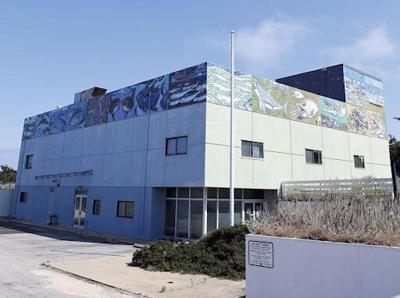
One of my favorite coastlines locally is in Pacific Grove, stretching from Point Pinos to Asilomar State Beach. Which is in part why I found a story in this week’s issue by my colleague Pam Marino so engaging: It’s about the city’s state-mandated housing element, which includes a proposal to rezone some of that area to make home for 84 residential units—28 for very low-income, 28 for low-income, 28 for moderate-income—on four acres of what is now dune habitat and an old NOAA building (which is adorned with a beautiful, beloved mural of marine life) that is no longer in use. Complicating matters even more, Indigenous peoples claim the site as sacred land.
Marino’s story is one that raises confounding questions.
If it were up to me, I would love to see the housing crisis addressed by building vertically in downtowns or downtown-adjacent sites as opposed to expanding outwards onto undeveloped land. That said, what I think often gets lost in the housing element debates is they aren’t concrete plans for a development of any kind. Instead, they are in effect a zoning document, a city promising the state to update its zoning in places to accommodate as many units as the state demands. A developer, ultimately, would have to build the project, and jump through all the regulatory hurdles to do so.
Marino’s story mentions Pacific Grove’s Local Coastal Plan, which is a California Coastal Commission-approved document that allows P.G. to issue coastal development permits without the applicant coming before the commission itself.
But in this case, I’m not so sure the Coastal Commission would be the buzzsaw some might think it is: I’ve been following the politics of the commission from afar since 2015, and one way I’ve seen it evolve is its increasing emphasis on facilitating more coastal access for lower-income demographics. And this particular slice of open space is surrounded by development: to the north—P.G.’s municipal golf course—and to the south, multimillion dollar homes tucked away amid trees and dunes.
I can imagine the Coastal Commission looking at that image and saying, “Hey, if rich people can have houses here, and the city can have a golf course here, why shouldn’t lower income folks get a slice of paradise too?” With environmental mitigations, of course.
I can also see the agency taking very seriously the contention that the land is sacred, which raises a sticky ethical question—desperately needed housing for lower-income residents, or respecting the wishes of Indigenous people? (After Marino’s story was published, the Pacific Grove Planning Commission voted 7-0 to recommend to the P.G. City Council that the NOAA property be removed from the city’s housing element.)
There are a lot of ins and outs of a decision about how and where to build needed housing, and there are plenty of ins and outs in Marino’s piece. If you haven’t already, I hope you’ll read it and think on it too.

(0) comments
Welcome to the discussion.
Log In
Keep it Clean. Please avoid obscene, vulgar, lewd, racist or sexually-oriented language.
PLEASE TURN OFF YOUR CAPS LOCK.
Don't Threaten. Threats of harming another person will not be tolerated.
Be Truthful. Don't knowingly lie about anyone or anything.
Be Nice. No racism, sexism or any sort of -ism that is degrading to another person.
Be Proactive. Use the 'Report' link on each comment to let us know of abusive posts.
Share with Us. We'd love to hear eyewitness accounts, the history behind an article.