
David Schmalz here. At the Seaside City Council meeting May 2, Stanford historian Carol McKibben, who wrote a history of Seaside that published in 2011—Racial Beachhead: Diversity and Democracy in a Military Town—made an ask during public agency announcements: She had written a paper for the state, which she hasn’t yet submitted, about the connection between African Americans in Seaside and Fort Ord, and she wanted feedback.
She wanted, in essence, a peer review: “It’s really important for me not to be the spokesperson for the city.” (To be clear, a review from her peers in the community—not just academics—as anyone is welcome to chime in.)
McKibben gave the draft copy of the paper to the city months ago hoping it would be broadcast to the community, but that hadn’t yet happened, and she’s on a tentative deadline to submit it to the state in early June. (The city posted it on its website May 6.)
I was completely unaware of what she was talking about, so I requested the paper from the city and followed up with McKibben, and we were finally able to connect yesterday. She apprised me of the broad strokes—it was all part of an effort by the state, she said, to rectify that, up until now, there’s virtually no recognition in historical exhibits in State Parks for the contributions of Black communities throughout the state.
“I applaud what they’re doing. A lot of people visit these parks, that’s how they learn their history—they don’t do it by reading my book,” she says, adding, with respect to her paper, “I don’t believe it’s right to do it without the input of the community.”
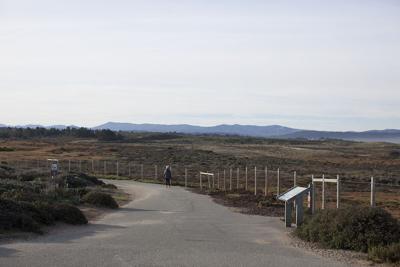
McKibben’s project is part of a statewide initiative—the African American History & Engagement Project—that the state legislature funded in 2022 for the next five years. A partnership between California State Parks and the California African American Museum, the project will aim to add more historical context and narrative regarding African Americans in approximately 24 state parks, and Fort Ord Dunes State Park made the first cut.
But rather than belabor you with more details, I’ll instead share with you McKibben’s paper—aside from the bibliography, it’s 27 pages, double-spaced, and a quick and edifying read.
I hope, and she does too, that you give it a look and share any feedback you may have via email at mckibben@stanford.edu.

(0) comments
Welcome to the discussion.
Log In
Keep it Clean. Please avoid obscene, vulgar, lewd, racist or sexually-oriented language.
PLEASE TURN OFF YOUR CAPS LOCK.
Don't Threaten. Threats of harming another person will not be tolerated.
Be Truthful. Don't knowingly lie about anyone or anything.
Be Nice. No racism, sexism or any sort of -ism that is degrading to another person.
Be Proactive. Use the 'Report' link on each comment to let us know of abusive posts.
Share with Us. We'd love to hear eyewitness accounts, the history behind an article.