The 1965 Voting Rights Act is the most important piece of legislation in U.S. history. It is the law that freed this country from apartheid. Before the Voting Rights Act, the white majority could systematically disenfranchise Black citizens, as well as other minority groups. White folks could prevent non-white people from voting. And they could do this by means of violence, poll taxes, gerrymandering and any other mechanism white people could dream up.
The Voting Rights Act was the first piece of legislation that seriously tried to change this. It did this by enforcing the 15th and 19th Amendments and their prohibitions on denying the vote on account of race or gender.
The Voting Rights Act did not remove white supremacy from politics; it opened a door, and Black political power flooded into the white-only space of the U.S. government. In 1964, there were only four Black people in Congress, and zero in the Senate. By 1968, that number had more than doubled to nine. Today, there are 67 Black people and 56 Latinos in Congress, the highest number for both groups in this country’s history.
The Voting Rights Act changed the face and the structure of American government.
Some people have never gotten over it, and six of those people sit on the Supreme Court.
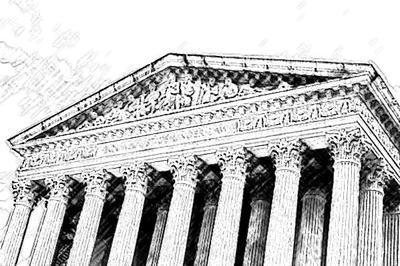
On April 29, the Supreme Court ruled 6-3 in Louisiana v. Callais that the Voting Rights Act cannot be used to protect minority political power from being diluted through gerrymandering. This effectively ends the Voting Rights Act, and with it the all-too-brief era of multiracial democracy in America.
“It was born of the literal blood of Union soldiers.”
The nuts and bolts of the decision are fairly straightforward. Louisiana has six congressional districts, and about a third of its population is Black. Mathematically, that means Louisiana should have two majority-minority congressional districts, but its 2020 redistricting allowed for only one. The state was sued under the Voting Rights Act and forced to draw a map with two Black districts. It did. Then white people sued, arguing that they were constitutionally entitled to congressional overrepresentation. The court agreed.
In a dissent, Justice Elena Kagan wrote of the law, “It was born of the literal blood of Union soldiers and civil rights marchers. It ushered in awe-inspiring change, bringing this nation closer to fulfilling the ideals of democracy and racial equality.”
The real bite will come in 2030, when there’s a new Census and a new round of redistricting. That’s when we’ll see red state after red state dismantle Black and Latino voting power. Louisiana had one majority-minority district. It should have two. By 2030, it will have zero.
There’s only one way out of this, and it involves people using what voting power they have to send people to Congress committed to multiracial democracy. Congress can overrule the Supreme Court on this. It can pass a new law.
For now, the Voting Rights Act is dead. We need a new one, or the racists win.
(0) comments
Welcome to the discussion.
Log In
Keep it Clean. Please avoid obscene, vulgar, lewd, racist or sexually-oriented language.
PLEASE TURN OFF YOUR CAPS LOCK.
Don't Threaten. Threats of harming another person will not be tolerated.
Be Truthful. Don't knowingly lie about anyone or anything.
Be Nice. No racism, sexism or any sort of -ism that is degrading to another person.
Be Proactive. Use the 'Report' link on each comment to let us know of abusive posts.
Share with Us. We'd love to hear eyewitness accounts, the history behind an article.