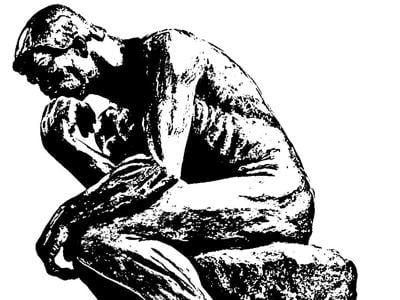
I was once asked, “What is the opposite of art?” I answered that it is ignorance. The ancient Greek word for art is techne, meaning skill. Art has evolved into many forms and styles, sometimes revealing of aspects of our humanity, but “skill” implies knowledge and it is to knowledge-based art that we have to return.
There are many valid ways to make art, from the joyous pleasure of shapes and colors to expressions of angst and injury, but looking over history, it’s possible to see that art can be more than that, and have a positive social effect. Aside from its pleasurable aesthetic aspects, art can introduce challenging ideas into the world. For example, the artists and writers who called themselves Dadaists just over 100 years ago were protesting the carnage of World War I by making works that were absurdist and nihilistic. Those ideas have played out throughout the past century and into this one to the extent that they have become commonplace and have even influenced our politics. Trumpism is absurdism writ dangerously large.
So, what can artists do today to counteract the effects of our politics? One inclination is to make even more absurdist works, intended as critiques. While this is an understandable approach, I don’t think it’s helpful. One of the roots of our current dilemma is the cultivation of ignorance through various media, including the internet. (We have seen how the Russians have exploited these susceptibilities.) What is needed now is a new art movement with a clear mission to inspire a renewed passion for knowledge.
From the earliest cave paintings it is clear that one of the most important elements of art is the development and use of hand/eye skills, techne. Many, if not most, schools have abandoned the teaching of careful direct drawing that teaches students how to look carefully, analyze and then depict what they see. I call this practice perceptual analysis. We see what we know.
In addition, art can convey meaningful content. Much of the art of the past 60 years has been about personal expression. What is needed now is content that explores deeper meaning. There are myths and philosophies from nearly all cultures that offer foundational truths about our human nature. Knowledge of myths and of their historical context gives us a view of our common humanity across time. We live in or near a landscape of great beauty on its face, but it has been given a greater depth of meaning by poet Robinson Jeffers, novelist John Steinbeck and others.
Going against the current pop culture is not easy – all aspects of it can be wonderfully entertaining and even addictive – but we are, as a culture, in need of a deeper desire for knowledge rather than superficial entertainment. A new rationality needs to emerge in our art to take us beyond personal expression, Dadaist absurdisms and other contemporary art conventions to help guide us to a more skillful, thoughtful and rational future.
DAVID LIGARE is an artist who lives and works in Carmel Valley. He has had more than 45 solo exhibitions in locations including New York, London and Rome.
(0) comments
Welcome to the discussion.
Log In
Keep it Clean. Please avoid obscene, vulgar, lewd, racist or sexually-oriented language.
PLEASE TURN OFF YOUR CAPS LOCK.
Don't Threaten. Threats of harming another person will not be tolerated.
Be Truthful. Don't knowingly lie about anyone or anything.
Be Nice. No racism, sexism or any sort of -ism that is degrading to another person.
Be Proactive. Use the 'Report' link on each comment to let us know of abusive posts.
Share with Us. We'd love to hear eyewitness accounts, the history behind an article.