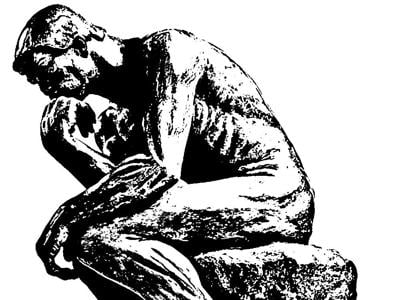
Perhaps there is no such thing as a bad question, but some questions are better than others. The best questions challenge people in gentle ways and enable them to open up. Sometimes, the answers can be quite revealing.
If you ask people, “What did you learn from the Covid pandemic?” you will get wildly different answers. The answers will tell you surprising things about people.
The beauty is in the simplicity. Everyone qualifies as an expert. We all lived it.
For instance, in 2020, just a few months after the initial outbreak, one person answered, “It’s amazing how quickly we recovered.” A few months later, another person answered, “It will take at least a generation to recover.”
The first person was a trader on Wall Street. The stock market went down, then back up. The second person was a leader of the United Way in a county in western Alabama. They added, “Up to third grade, kids learn to read. After third grade, kids read to learn. A kid who isn’t good at reading isn’t good at learning on Zoom.” Those third-graders are now approaching high school.
I have asked many people what they learned, and here are some of the responses:
What happens far away affects us locally.
Ignore science at our peril.
The truth is easily distorted.
People listen best to what they want to hear, and can be manipulated by it.
Everything is better if we view this as we are all in it together.
Masks are a form of caring for others. Same with hand washing.
The economy can bounce back quicker than the disenfranchised.
Any form of bigotry hurts us all.
We are able, in an emergency, to care for our most vulnerable first.
Isolation and fear are bigger threats than viruses.
Divisiveness undermines the best parts of who we are as a people.
Freedom is fragile.
We rely on first responders more than we realized.
On a scale of 1 to 10, the best any Zoom lesson can be is an 8.
Hugs are more valuable than we thought.
Once we have a change of lifestyle for a full year, some parts are likely to stick.
Slowing down has some advantages.
Quarantining is a luxury not all can afford.
A little bit of competence can go a long way.
The government can be a vehicle for salvation.
When doors are closed, mold grows. [Mold used here as a metaphor: domestic abuse, addiction, ignorance, poor health and nutrition, etc.]
When crises arise and people in other nations run for toilet paper, Americans run for guns.
Kids, even though they don’t often admit it, really like going to school.
The best question we can ask today – half a decade after the pandemic outbreak, and as the virus continues to affect us – is: “Will we remember what we learned?”
(0) comments
Welcome to the discussion.
Log In
Keep it Clean. Please avoid obscene, vulgar, lewd, racist or sexually-oriented language.
PLEASE TURN OFF YOUR CAPS LOCK.
Don't Threaten. Threats of harming another person will not be tolerated.
Be Truthful. Don't knowingly lie about anyone or anything.
Be Nice. No racism, sexism or any sort of -ism that is degrading to another person.
Be Proactive. Use the 'Report' link on each comment to let us know of abusive posts.
Share with Us. We'd love to hear eyewitness accounts, the history behind an article.