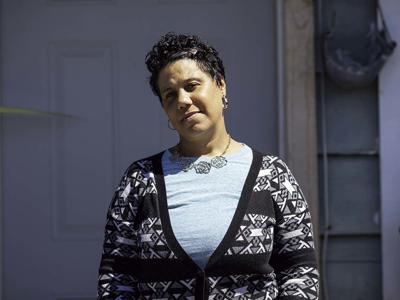

Julie Brooks and her co-workers at the Hyatt Regency Monterey Hotel and Spa were preparing for a large banquet happening the night of March 12, when they were called together for an announcement. Gov. Gavin Newsom had issued an order banning gatherings of 250 or more. The banquet was off and all large functions were cancelled into at least April.
Brooks calls the week that followed a “whirlwind,” as the pandemic upended life more each day. On March 18, Monterey County’s shelter-in-place order went into effect and she stayed home, not knowing the status of her job at the Hyatt. A week later: Hyatt management laid off most of its staff, and Brooks’ 22-and-a-half years of employment there came to an end. She estimates 95 percent of Hyatt workers there at the time were laid off due to Covid-19.
(The hotel had already laid off some workers for a remodel that was underway. Hotel management did not respond to a request for comment.)
“No one realized that the last shift they worked is the last shift they worked. That’s what’s so jarring,” Brooks says. “It hit us out of nowhere.”
“Their main question is, ‘When are we going to go back to work?’”
She is one of an estimated 12,000 to 14,000 Monterey Peninsula hospitality workers who’ve been laid off since early March – almost half of the estimated 25,000 workers under normal circumstances working at hotels, restaurants and other services – according to Jeroen Gerrese, chair of the Monterey County Hospitality Association. More than 40 hotels and inns have shut down, representing about 2,500 rooms, he says. Some remain open, which is allowed under the order if they are accommodating those providing essential services.
Union officer Hector Azpilcueta of Unite Here Local 483 estimates that 98 percent of the full-service hotel employees are gone. His union represents about 1,400 of those employees, including Brooks, who also serves on the union’s board and was a shop steward at the Hyatt.
Since most employees were left with no health insurance, the union secured three months of coverage through its international union, Azpilcueta says. That carries members through the end of June. (The region is estimated to be hardest hit by the pandemic in late April and early May.) The local branch is also raising funds for members in need and has been sharing information about how to file for unemployment and where to get food and other necessities.
Brooks says she and other members are reaching out to each other through texts, phone calls and social media to keep spirits lifted. “We’re doing our best to maintain a sense of community,” she says.
In the dozens of phone calls and messages the union receives from members, the number-one concern isn’t how to get help in the short-term, Azpilcueta says. “Their main question is, ‘When are we going to go back to work?’” He doesn’t have an answer for them, the virus is too unpredictable at this point to say anything definitive. Looking ahead, the answer remains uncertain and he expects it won’t be easy.
“This is going to take awhile. I don’t see how we go back to business as normal after this pandemic,” he says. “I don’t even dare to predict how much business will be there when it reopens. I don’t think (even) the employers can tell that.”


(0) comments
Welcome to the discussion.
Log In
Keep it Clean. Please avoid obscene, vulgar, lewd, racist or sexually-oriented language.
PLEASE TURN OFF YOUR CAPS LOCK.
Don't Threaten. Threats of harming another person will not be tolerated.
Be Truthful. Don't knowingly lie about anyone or anything.
Be Nice. No racism, sexism or any sort of -ism that is degrading to another person.
Be Proactive. Use the 'Report' link on each comment to let us know of abusive posts.
Share with Us. We'd love to hear eyewitness accounts, the history behind an article.