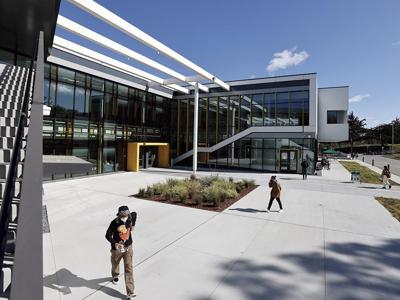

Alarm bells started ringing throughout the California State University system after Interim Chancellor Jolene Koester announced in November that enrollment is projected to decline by 25,000 students this academic year, or 7 percent. At a CSU Board of Trustees meeting on Jan. 24 in Long Beach, Koester described the projection as “unprecedented and deeply concerning,” and called for action to reverse the trend.
“Should this enrollment decline become sustained, it will present a fundamental and significant threat to our mission to the fundamental viability of our universities and the future of the communities we serve,” Koester said, adding that “difficult choices must be made.” CSU officials followed Koester’s remarks with a plan in which seven campuses that have seen at least a 10-percent decline since the pandemic could face budget cuts in 2024-25 if they do not attract more students.
CSU Monterey Bay has seen a 5-percent decline since fall 2020, from 6,749 full-time equivalent students to just 6,373 enrolled in fall 2022.
Prior to the pandemic, the CSU system was on an upward enrollment trajectory while universities across the country saw a downward trend. The CSU welcomed its largest class ever in the fall of 2020. Transfer students made up about a third of the decrease since that semester, which corresponds with falling enrollments at California community colleges that provide transfers. The biggest decrease was in continuing students who did not re-enroll.
The remedies for increasing enrollment included a strategy already employed by CSUMB – forming partnerships with K-12 school districts and community colleges to create pathways for students to smoothly transition into the university. Other strategies mentioned at the Long Beach meeting included increasing opportunities to earn credits during the summer months, re-engaging with students who left during the pandemic and marketing to attract new students.
In a written response from CSUMB’s Academic Affairs Department, officials there say they are looking at ways to help students complete degrees in a timely manner, as well as using recent campus funding to provide scholarships. They also point to adding curriculum that meets the need of the local workforce, like the new agribusiness supply chain management undergraduate program, and the forthcoming mechatronics engineering program that will address robotics in agriculture.
“We have a perfect product that is for the last century – it hasn’t changed,” CSUMB President Vanya Quiñones says, adding that the university system needs to transform to survive. “You can be Blockbuster or you can be Netflix.”
The curriculum will have to adjust to meet the changing needs of students, she says. In addition to adding new programs, Quiñones is creating new traditions to campus life, including “The Plunge,” where she and others jump into Monterey Bay in the fall, and Otter Thursday, which kicked off Feb. 2 with a noon rally to show off school spirit.


(0) comments
Welcome to the discussion.
Log In
Keep it Clean. Please avoid obscene, vulgar, lewd, racist or sexually-oriented language.
PLEASE TURN OFF YOUR CAPS LOCK.
Don't Threaten. Threats of harming another person will not be tolerated.
Be Truthful. Don't knowingly lie about anyone or anything.
Be Nice. No racism, sexism or any sort of -ism that is degrading to another person.
Be Proactive. Use the 'Report' link on each comment to let us know of abusive posts.
Share with Us. We'd love to hear eyewitness accounts, the history behind an article.