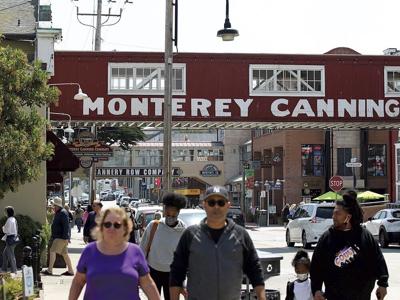

Rob O’Keefe, president and CEO of the Monterey County Convention and Visitors Bureau, had his shining moment on stage at the bureau’s annual meeting in September. After setting a vision for increasing the average hotel stay from 2.6 nights to 3.6 over the next 10 years – an increase that would mean an estimated $900 million in economic benefit to the county – he walked off the stage to the song “One More Night” by Phil Collins.
The goal to increase the length of hotel stays is one part of a 10-year strategic plan shaped by what O’Keefe calls an “unprecedented” outreach to the community using a consultant, the Coraggio Group. In the last year they employed surveys, one-on-one interviews, geographically based town halls and focus groups to learn what community members wanted to see for the future of the county’s number two industry behind agriculture.
As a result, the bureau revamped its vision and mission statements that focus on economic growth for the community’s benefit. “We used to be more ‘heads in beds’” focused, says Janine Chicourrat, who served on the Strategic Task Force. The change is more “community centric,” she says. O’Keefe adds, “Our mission is to use tourism in a responsible way to drive community prosperity.”
The plan also includes increasing tourism improvement district fees attached to hotel bills, recently approved by the Monterey County TID Oversight Committee. The fees on per-night hotel stays are some of the lowest in the state, if not the country, O’Keefe says. That money is used to compete with other markets like Napa and Santa Barbara for travelers. “We’ve always had a second-class budget for a world-class destination,” he says.
Currently the TID fees are $1 a night for limited-service hotels and $2 a night for full-service. The new fees are $1.50 and $4.50, with a new category of luxury hotels, like Post Ranch Inn and Pebble Beach, paying $7 per night.
In addition, O’Keefe says South County mayors from cities like King City and Soledad are interested in joining the district next year, which will mean more revenue for the bureau.
The focus for future marketing spending will be on travelers who come from further away, like the East Coast and international destinations, people who stay longer and spend more. They’re also reaching out for more group travel, people who come for meetings and conferences in the off season between October and May and typically spend 158-percent more than leisure visitors. “If we can increase off-season occupancy by 1 percentage point, that’s about $34 million a year in visitor spending,” O’Keefe says.
One of the lessons learned from the community outreach was that people don’t understand what a convention and visitors bureau is, O’Keefe says. They’re planning to change the bureau’s name and do a “mini rebrand” in the coming year. “It’s clear to me we need to be more out there in the community,” he says. “We’ve got to find more and better ways of doing that. And we will.”




(0) comments
Welcome to the discussion.
Log In
Keep it Clean. Please avoid obscene, vulgar, lewd, racist or sexually-oriented language.
PLEASE TURN OFF YOUR CAPS LOCK.
Don't Threaten. Threats of harming another person will not be tolerated.
Be Truthful. Don't knowingly lie about anyone or anything.
Be Nice. No racism, sexism or any sort of -ism that is degrading to another person.
Be Proactive. Use the 'Report' link on each comment to let us know of abusive posts.
Share with Us. We'd love to hear eyewitness accounts, the history behind an article.