
When people think of leaders of the environmental movement, both past and present, they may think of Native American activist Winona LaDuke, Black agricultural researcher George Washington Carver, or even “the Squad,” the moniker given to four U.S. representatives Alexandria Ocasio-Cortez, Ilhan Omar, Ayanna Pressley and Rashida Tlaib, who’ve become the faces of the Green New Deal. Diversity does exist in the movement.
But overwhelmingly, the green movement – from CEOs to influencers to canonized historical figures – are white. Forbes’ 2020 list of “100 UK Leading Environmentalists (Who Happen To Be Women)” also happen to be mostly white. Meanwhile, those who gained titles like father of the national park system (John Muir), mother of the modern environmental movement (Rachel Carson) and face of youth climate activism (Greta Thunberg) are all white.
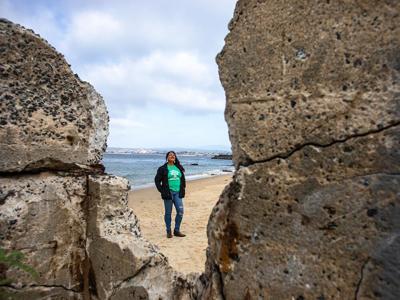
That’s a problem, according to Mariana Del Valle Prieto Cervantes, a Monterey resident and the water, equity and ocean program manager at Green Latinos, a nonprofit that helps address national, regional and local climate issues that affect the Latino communities “It’s not that [Black, Indigenous, people of color] are not part of the conversation. It’s just that we’re not in the mainstream.” Where this poses a problem is when decision-makers and companies overlook who their policies and products affect.
“[BIPOC] are the hardest hit by climate change. We like to think that California is leading the way in sustainability, but there are still two incinerators [in the state] and they’re in Latino communities,” she says. “They’re the communities breathing the toxic air from those facilities.” They’re also more likely to live in communities with poor access to clean water, inadequate infrastructure, and within the vicinity of high-pollution industries like agriculture or waste management.
But being in close proximity to environmental destruction also means communities of color are more likely to contribute to environmentalism. “[BIPOC] contribute more to environmentalism than most people realize,” Del Valle Prieto Cervantes says. “We don’t drive EVs, but we’re more likely to ride public transportation, walk or bike. We may not be buying the new zero-waste product, but we’re forced to reuse everything anyway. We’re the hardest hit and we’re more likely to believe in climate change compared to white communities.” (Various studies by Princeton, Pew Research Center, Yale and others back up that claim.)
How to shift the power dynamics and perception of environmentalism? Get loud. “I’m a busy person, but it only takes a few minutes of time to call a company or write an email to my representatives,” Del Valle Prieto Cervantes says. “There are so many opportunities to be part of the decision-making process.”



(1) comment
This is so true. Latinx voters carried Measure Z (the Monterey County Fracking ban in 2016) by a larger margin than any other group. Sadly they know first hand what can happen to water supplies!
Welcome to the discussion.
Log In
Keep it Clean. Please avoid obscene, vulgar, lewd, racist or sexually-oriented language.
PLEASE TURN OFF YOUR CAPS LOCK.
Don't Threaten. Threats of harming another person will not be tolerated.
Be Truthful. Don't knowingly lie about anyone or anything.
Be Nice. No racism, sexism or any sort of -ism that is degrading to another person.
Be Proactive. Use the 'Report' link on each comment to let us know of abusive posts.
Share with Us. We'd love to hear eyewitness accounts, the history behind an article.