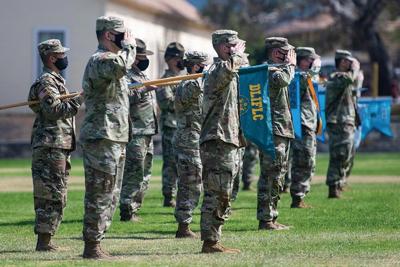

In September, six months into shelter-in-place, there was a noticeable shift among the students representing all military branches participating in rigorous language training at the Defense Language Institute at the Presidio of Monterey. Commanders referred to it as “the restlessness,” DLI Commandant Col. Gary Hausman says. That restlessness included an increase in suicide attempts. Hausman ordered a safety stand down to take place Oct. 26-27, with half-day classes, a motivational speaker and small group discussions. “We are getting ahead of the issue,” Hausman says.
“Every life is important and you are not alone,” Hausman wrote in an email obtained by the Weekly and sent a week prior to thousands of DLI students, faculty and staff announcing the stand down. He noted an “eight-fold increase” in attempted suicides among Army students since July. (Hausman declined to provide exact numbers.)
In an interview on base the first day of the stand down, Hausman says, “There have been no casualties as a result of the restlessness.” He praises medical personnel, counselors and chaplains trained in counseling working to support students.
The problem isn’t just inside the ranks of DLI. Suicide rates were “higher than expected” in Monterey County during September, says Dana Edgull, a manager with Monterey County Behavioral Health, although exact numbers aren’t yet available. Over the past decade there’s been an 18-percent increase in suicide deaths in the county but only a 6-percent increase in population. “That’s concerning to us,” Edgull says. Suicidal behavior, including thoughts and attempts, have also increased.
Calls to the region’s 24-hour multilingual suicide crisis line were up 30 percent between March and July, says Carly Memoli, program director of the Family Service Agency’s Suicide Prevention Service, which runs the hotline in Monterey, Santa Cruz and San Benito counties. The agency has also seen an increased interest in volunteers. They currently have 65 active volunteers but could use 100; 21 people are being trained.
In August, Behavioral Health and FSA invited other community stakeholders to a meeting to generate support for a new initiative called Monterey County HOPES, an acronym for Helping One Another Prevent and Eliminate Suicides. Memoli says the goal is to educate the public about what resources to help are available now to reduce suicides and suicidal behavior and uncover what resources need to be added. They want to create a “suicide safer community,” she says, one where there isn’t just a hotline but an entire community of people trained in helping those in trouble.
In a cruel ironic twist, September was National Suicide Prevention Month. Edgull doubts that had anything to do with more people thinking about or actually dying by suicide. “Research tells us talking about suicide does not increase suicide,” she says. Memoli says the important thing is to talk about it so that people know it’s natural to occasionally think about suicide and it’s OK to reach out for help. “It’s a tough time right now but we can get through it together,” she says.


(0) comments
Welcome to the discussion.
Log In
Keep it Clean. Please avoid obscene, vulgar, lewd, racist or sexually-oriented language.
PLEASE TURN OFF YOUR CAPS LOCK.
Don't Threaten. Threats of harming another person will not be tolerated.
Be Truthful. Don't knowingly lie about anyone or anything.
Be Nice. No racism, sexism or any sort of -ism that is degrading to another person.
Be Proactive. Use the 'Report' link on each comment to let us know of abusive posts.
Share with Us. We'd love to hear eyewitness accounts, the history behind an article.