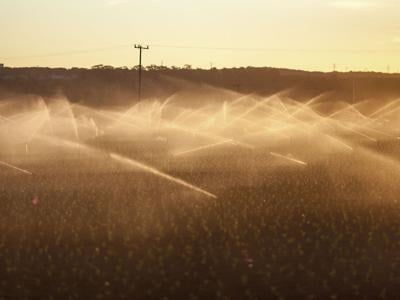

In the midst of a widespread drought, Lakes San Antonio and Nacimiento, critically important reservoirs for Monterey County, are at their lowest capacity levels since 2017. When the lakes get low, the ability to get enough water to some agricultural growers gets complicated. Add politics and Covid to the mix and you get the scramble underway between the region’s sewage agency, the city of Salinas and the Monterey County Water Resources Agency to deliver water to thousands of acres of crops and protect a fragile underground water supply.
Take a trip down to South County and the situation looks dire. Lakes San Antonio and Nacimiento are at 7-percent and 13-percent capacity, respectively. The lakes feed the Salinas River, whose surface water in part feeds 12,000 acres of crops, which then feed us. On Aug. 1, with about three months left in the growing season, the lakes stopped feeding the Salinas River with enough water, leaving some growers to choose between finding more water or risk losing their crops.
Since Aug. 1, these growers have turned to their last resort: drawing water from their increasingly fragile groundwater wells.
Over the last two decades, 16 of 25 groundwater wells near Castroville have been overpumped to the point of seawater intrusion. The risk of losing wells to seawater intrusion is what led to the Castroville Seawater Intrusion Project, or CSIP, system, that treats wastewater and delivers it to irrigate crops. Brent Buche, general manager of the Monterey County Water Resources Agency, estimates that through CSIP, those 12,000 acres of crops get about half of their water from recycled wastewater treated by Monterey One Water – the region’s sewage agency – and the other half from Salinas River water.
Without enough river water to draw from now, M1W spokesperson Mike McCullough says growers in the area increased their groundwater use from near-zero to 25 to 45 percent of their irrigation.
For about a year, M1W, the city of Salinas and the Water Resources Agency have been negotiating a long-term deal for access to a supplemental source of water owned by Salinas: a pond of agricultural wash water that currently sits unused, evaporating into the air or percolating into the ground. M1W built a pump station on the bank of the pond in 2020; however, it has remained unused because the sides have been unable to reach an agreement on the water’s use.
In July, facing drought and with the prospects for a long-term deal still uncertain, Salinas, M1W and the water agency pressed to put a short-term deal in place that would supply enough treated pond water through the rest of the season for growers to stay off their groundwater wells.
Salinas City Council was meant to approve the agreement on Aug. 24, M1W’s board would vote on Aug. 30 and growers would have water by Aug. 31. However, Salinas City Manager Steve Carrigan tested positive for Covid, forcing the vote and the agreement to be postponed to Sept. 14.


(0) comments
Welcome to the discussion.
Log In
Keep it Clean. Please avoid obscene, vulgar, lewd, racist or sexually-oriented language.
PLEASE TURN OFF YOUR CAPS LOCK.
Don't Threaten. Threats of harming another person will not be tolerated.
Be Truthful. Don't knowingly lie about anyone or anything.
Be Nice. No racism, sexism or any sort of -ism that is degrading to another person.
Be Proactive. Use the 'Report' link on each comment to let us know of abusive posts.
Share with Us. We'd love to hear eyewitness accounts, the history behind an article.