
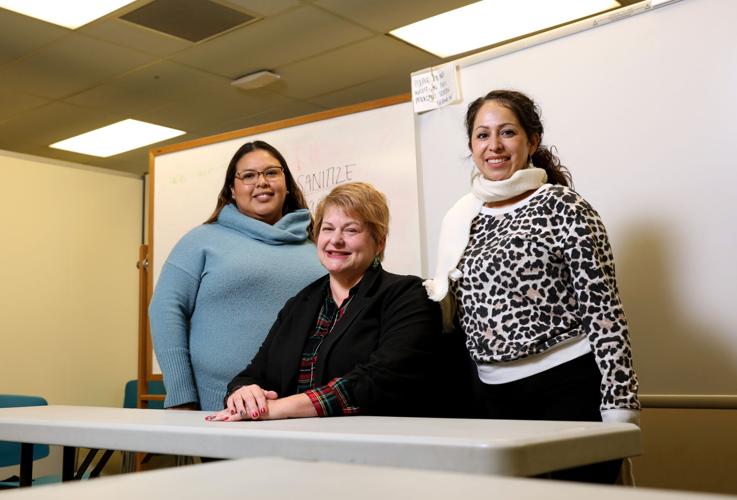

On the surface, Partners for Peace is a nonprofit that provides family education classes. For some participants, it goes deeper. “It can save families,’’ says Margarita Cervantez, a single mother of four and a Parents for Peace facilitator.
Cervantez started as a student of P4P and later on became a facilitator. She took Loving Solutions, a 10-week class, and she says it helped her to modify the ways she communicates with her kids, eventually developing a more harmonious relationship with them. “It made me rethink my expectations for the children and how I was parenting them,” she says.
Partners for Peace started about 25 years ago by providing outreach for farmworkers with things like literacy programs and family education classes. In 2009, they narrowed down their scope to focus on family education. Today, the organization offers four different classes in both English and Spanish: The Strengthening Families program, for children and parents/caregivers, is designed to improve family relationships; the Parent Project, in which parents learn how to identify and tackle negative behaviors; Loving Solutions, a prevention program; and Step Up Mentoring, for kids to set goals and develop life skills. All programs are free.
Many of the parents who attend Cervantez’s Parent Project class are there because of a court order and feel they are being punished. But the classwork aims to help participants not just comply, but to learn “how to be better parents and produce better citizens,” Cervantez says. The hope is that new skills enable parents to break the cycle of parenting based on practices that have been passed down to them—avoiding yelling or spanking, and instead communicating productively. “We have parents that couldn’t tell their children that they love them or hug them, because they weren’t used to it,” Cervantez says.
With some coaching, parents start saying words of affirmation—as simple as saying “I love you” to their children—and when they get a similar response back from their kids, it encourages them to continue.
“The only way a child knows you love them is if you say I love you either written physically or verbally,” adds Vicki Law, P4P’s executive director.



(0) comments
Welcome to the discussion.
Log In
Keep it Clean. Please avoid obscene, vulgar, lewd, racist or sexually-oriented language.
PLEASE TURN OFF YOUR CAPS LOCK.
Don't Threaten. Threats of harming another person will not be tolerated.
Be Truthful. Don't knowingly lie about anyone or anything.
Be Nice. No racism, sexism or any sort of -ism that is degrading to another person.
Be Proactive. Use the 'Report' link on each comment to let us know of abusive posts.
Share with Us. We'd love to hear eyewitness accounts, the history behind an article.