
On Friday, July 26, when California Coastal Commission staff released a report regarding Monterey-Salinas Transit’s proposed SURF! busway from Marina to Sand City, the surf was looking down – the report said in no uncertain terms that the project was “not approvable” under the law, in this case, the Coastal Act.
Central to the concerns were the project’s expected impacts on environmentally sensitive dune habitat, notwithstanding that habitat being located in a derelict rail corridor.
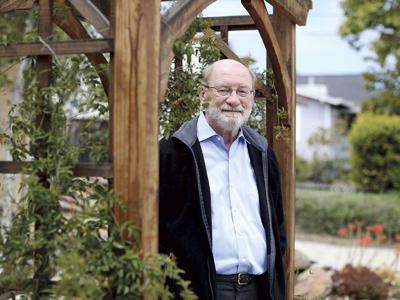
On Saturday morning, July 27, State Sen. John Laird, D-Santa Cruz, called Carl Sedoryk, MST’s general manager. It was just after 9:30am, and Sedoryk, a second-degree black belt, was teaching a class at American Karate in Pacific Grove, a volunteer gig he’s done for the better part of the last decade.
Sedoryk took the call.
Laird’s goal was to pull a victory from the jaws of bureaucratic defeat for a project he’d been involved in for years – aside from its other state funding, Laird had used his power to get an additional $2.5 million in state money appropriated to the $91.5 million SURF! project.
That culminated in a four-hour-plus meeting on Aug. 16 at Laird’s office in Santa Cruz that included Coastal Commission Executive Director Kate Huckelbridge and members of her staff; Sedoryk; Transportation Agency for Monterey County Executive Director Todd Muck; Laird’s staff; and staff of Assemblymember Dawn Addis, D-Morro Bay. “When you have a project that’s all but fully funded, it’s hard to let that go,” Addis says.
In the first hour, Laird says, things were going off the rails, so he called a recess and then brought in each of the principal parties to identify their specific concerns. Coastal Commission staff didn’t want to disturb dune habitat, TAMC didn’t want to sacrifice the viability of rail along the corridor going forward, and MST didn’t want to lose a project it considered fundamental to its goals, one that was fully funded at some $92 million and that was more than five years in the making.
Then Laird brought them all back together again and they hashed out a compromise: How about, instead of a 4.3-mile paved busway that runs parallel to the existing rail tracks, let’s put the busway on the tracks instead?
A remaining hurdle was whether the board of TAMC, which owns the rail easement, would agree to the revised plan, due to concern it would preclude future use of the corridor as a railway.
To that end, Kevin Kahn, the Coastal Commission’s Central Coast district manager, sent a letter to the TAMC board, assuring them “it will not preclude such potential future rail use, and will actually help facilitate it in the future.”
The TAMC board unanimously approved the realignment on Aug. 28.
Now, the project will finally go before the Coastal Commission for a permit on Thursday, Sept. 12.
The agency’s report to the commissioners now recommends approval, but with conditions. As of Sept. 3, Sedoryk is still working his way through those conditions to see what, if anything, MST will advocate to soften or remove.
As for the fact the project will be coming before the agency with essentially a plan without any final engineering designs – though engineers have already started working on it – Sedoryk says building SURF! over the rails will be easier, and perhaps cheaper, than the original alignment.


(3) comments
So how, exactly, does paving over the tracks "not preclude...potential future rail use, and....actually help facilitate it in the future.” Didn't the weekly think to ask that fundamental question?
Also not addressed is the problem of Prop 116 funds that TAMC used to purchase the railroad right-of-way. Those funds can only be used for rail projects. Busways are not allowed. It is my understanding that TAMC will have to pay back the Prop 116 funds if the ROW is used for anything but rail.
When TAMC bought the ROW 21 years ago we were told trains would be operating on the line in 3 years. Demonstration trains came in and were viewed by huge crowds of people who were excited! Intercity rail service would benefit the entire Peninsula, allowing locals to get to the Bay Area without driving, and bring in tourists without cars. But TAMC let the whole project fall apart pretty quickly after buying the ROW. This SURF plan has nobody excited. It only serves Marina to Monterey commuters, and less expensive and less destructive alternatives are available.
[smile]I am confident that this BRT project will establish a faithful ridership that will later leverage the still active light rail plan for this corridor. Thanks, Senator Laird and Assemblymember Addis, and TAMC and MST members!
This approval was, sadly, almost inevitable. I take the smallest consolation that the impact on Environmentally Sensitive Habitat Areas will be reduced when it could have been largely avoided.
The Coastal Commission staff did note this unfortunate dynamic in their August report when they wrote:
"... this is a classic symptom of the way transportation project funding in California often works, where funding tends to be allocated for projects well in advance of serious environmental analysis and entitlement processes, including for CDPs. And then IT IS THE FUNDING THAT DRIVES A PARTICULAR COURSE OF PRE-DETERMINED ACTION, rather than an unencumbered evaluation of potential alternatives based on a coequal analysis of project benefits and burdens."
Welcome to the discussion.
Log In
Keep it Clean. Please avoid obscene, vulgar, lewd, racist or sexually-oriented language.
PLEASE TURN OFF YOUR CAPS LOCK.
Don't Threaten. Threats of harming another person will not be tolerated.
Be Truthful. Don't knowingly lie about anyone or anything.
Be Nice. No racism, sexism or any sort of -ism that is degrading to another person.
Be Proactive. Use the 'Report' link on each comment to let us know of abusive posts.
Share with Us. We'd love to hear eyewitness accounts, the history behind an article.