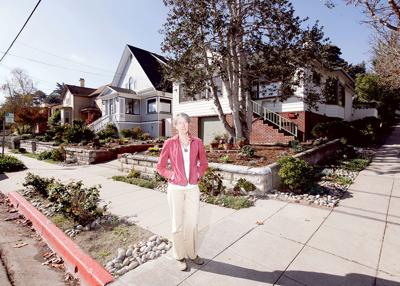

Monterey City Council revisited a half-century-old ban on building and renting out second units in 2016, and despite a well-documented housing shortage, voted to uphold that ban. But a new state law is forcing the city to change course.
On Sept. 27, Gov. Jerry Brown signed SB 1069 into law, opening single – and multi-family neighborhoods across the state to secondary units, now referred to as “accessory dwelling units,” in neighborhoods previously not zoned for them. The new law is an effort to increase the housing supply throughout California.
The Monterey Planning Commission will hold public comment on a proposed ordinance to accommodate the new state law on Nov. 22. The Council is expected to take action in December before the state law takes effect Jan. 1.
Councilmember Timothy Barrett has long wanted the council to consider overturning the prohibition to ease the city’s rental crunch. But many residents voiced opposition to easing the second-unit policy, citing concerns with parking, traffic and quality of life in their neighborhoods.
“The California Legislature helped us do something we couldn’t do for ourselves,” Barrett says. “They’ve acknowledged there’s a housing emergency. I’m hopeful it’s a win-win for everyone and that it will help some people.”
A new ordinance being considered would allow accessory dwellings in homes and existing detached structures in single-family neighborhoods to be converted to residences then rented out. A building permit and water credits would be required, but not additional parking, city planner Elizabeth Caraker says.
In areas zoned for multi-family buildings, new detached structures for rent would also be allowed.
There are currently no numbers on how the change will affect the housing stock and how many new rental units will be made available. Secondary units constructed before 1964, when the prohibition was passed, are currently grandfathered in and allowed. All newer existing units will face red tape before coming online as legal rentals.
“If they’re already built, they’d be illegal,” Caraker says. “Owners would still have to get a building permit and be inspected so everything is up to code.”
Mike Dawson, a planning commissioner and president of the Alta Mesa Neighborhood Association, spoke out against secondary units and opposed a proposal the Planning Commission passed, recommending City Council consider overturning the ban.
But he strikes a more conciliatory tone after the change in state law: “I’m trying to keep an open mind,” Dawson says.



(0) comments
Welcome to the discussion.
Log In
Keep it Clean. Please avoid obscene, vulgar, lewd, racist or sexually-oriented language.
PLEASE TURN OFF YOUR CAPS LOCK.
Don't Threaten. Threats of harming another person will not be tolerated.
Be Truthful. Don't knowingly lie about anyone or anything.
Be Nice. No racism, sexism or any sort of -ism that is degrading to another person.
Be Proactive. Use the 'Report' link on each comment to let us know of abusive posts.
Share with Us. We'd love to hear eyewitness accounts, the history behind an article.