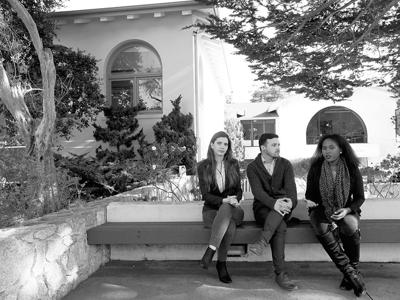

Students from the Middlebury Institute of International Studies are canvassing Monterey’s neighborhood associations, business groups and nonprofit organizations. CSU Monterey Bay students are constructing databases and documenting the physical, financial and natural capital available to the city. It’s happening for academic credit – and also to build an asset inventory, under contract with the city of Monterey.
The collaboration between the Graduate School of International Policy and Development at MIIS and the Institute for Innovation and Economic Development at CSUMB is intended to provide the city with a broad-based accounting of its assets.
“We want to identify everything we have to offer as a city and to find what we are missing,” says Elizabeth Caraker, principal planner for Monterey. “Looking at the data gaps in the inventory will expose what we need.”
The idea is to provide a comprehensive rundown of the city’s business, workforce, financial and cultural resources. The goal is to help the city leverage those assets for future growth, and in the process the two schools are bringing together their own resources.
“CSUMB and MIIS have never partnered on a study like this,” says Brad Barbeau, business professor at CSUMB and co-director of the Institute for Innovation and Economic Development. “This is a prototype for future collaboration between the schools.”
While academics will present the final report and database to City Council in March 2017, students are doing the research and collecting data.
“Having people from outside Monterey look at the city’s social assets gives an important perspective,” says Thabo Mubukwanu, a MIIS student from Zambia, who has met with representatives of Gathering for Women and other women’s organizations in the city.
The community asset inventory was first suggested by City Councilmember Timothy Barrett, with the goal of giving the city information to develop a more holistic approach to growing the local economy while creating affordable housing and good jobs. The city issued a request for proposals to conduct the project, and City Council approved a $35,000 contract with the two higher education institutions in September.
“Anything we can do to capitalize existing assets to create a more vibrant and diverse economy that returns a livable wage, the stronger our position will be in our evolving economy,” Barrett says. “The next step is the most important: We have to put this information to use.”




(0) comments
Welcome to the discussion.
Log In
Keep it Clean. Please avoid obscene, vulgar, lewd, racist or sexually-oriented language.
PLEASE TURN OFF YOUR CAPS LOCK.
Don't Threaten. Threats of harming another person will not be tolerated.
Be Truthful. Don't knowingly lie about anyone or anything.
Be Nice. No racism, sexism or any sort of -ism that is degrading to another person.
Be Proactive. Use the 'Report' link on each comment to let us know of abusive posts.
Share with Us. We'd love to hear eyewitness accounts, the history behind an article.