By Mark C. Anderson
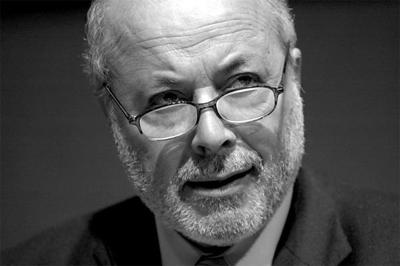
Judge Juan Guzmán Tapia’s life changed when he won the lottery. Randomly selected from his spot on an appellate court in Santiago, Chile in the late ‘90s to investigate the suspected crimes of former dictator Augusto Pinochet Ugarte, Guzmán confronted harrowing evidence of kidnapping, torture and murder—and the paralyzing politicization of justice. In the process, he discovered a passion for human rights that would eventually shape his legacy—and future career.
Guzmán, 68, will share these historic experiences on Friday, May 4, at the Monterey Institute of International Studies. On Saturday, he will receive an honorary doctorate at MIIS’s 2007 commencement ceremonies.
In the wake of the judicial lottery, nobody believed that the soft-spoken son of a diplomat-poet had any chance whatsoever of making any progress prosecuting Pinochet, and with good reason. The infamous autocrat, whose military junta had seized control of the country in a bloody 1973 military coup, cemented his power over nearly two decades of absolute rule by positioning loyal supporters in nearly every key post, including the courts. Even after stepping down, he enjoyed full immunity from prosecution as a senator-for-life and commander-in-chief emeritus of the Chilean military.
Moreover, while many in the country bore the burden of his crimes (“Many of us—most of us—knew,” Guzmán says), others believed that Pinochet’s severe actions, supported clandestinely by the Nixon administration, saved the country from communism and economic instability. Guzmán himself acknowledges that he and his family supported the opposition candidate to Salvador Allende, the socialist president whose increasingly chaotic, inflation-tormented term was abbreviated by the coup. From there, Pinochet and his secret police initiated a reign of terror that stole dissenters from their homes in Chile and assassinated opponents in exile abroad. Estimates put the number of murdered and “disappeared” at well over 3,000.
“The most horrifying thing was how women were held with the same clothing for months,” Guzmán says, “not even allowed to [tend to] their monthly period. They had to [defecate] in their clothing, piled over 10 people in a small room—at the same time hearing how people were tortured and hung by one hand or by both or by one foot.
“Every person that talked to me about that was a new image of how savage a human being could be.”
Given the political climate, Guzmán’s growing body of evidence didn’t much change his chances at justice. A deft bit of legal theory, however, did. As Pinochet’s lawyers successfully argued that the statute of limitations prevented his prosecution, Guzmán applied a new interpretation of an existing amnesty law. Because the bodies of the kidnapped remained missing, he said, the crimes were ongoing.
“I created that doctrine,” Guzmán says, “because it was the only way, legally, to get to the people that were responsible, and afterwards to Pinochet.”
Meanwhile, Guzmán endured heavy pressure from the new administration and death threats against his family. Guzmán says his friends anticipated his perseverance.
“ ‘We know you,’ ” Guzmán recalls them saying, “ ‘and we know you are going to apply the law without thinking what is convenient.’ ”
He says that commitment to the crimes—and not the politics—of the case led him deeper into the Chilean countryside, and threatened the impartiality he had cultivated over decades as a judge.
“I cannot lie—I started feeling closer to people who had suffered,” Guzmán remembers. “But I didn’t change my [impartial] positions—instead I was more thorough, going all over the country’s mountains, opening holes, talking to witnesses.”
As Guzman brought successful indictments against military officers previously thought untouchable, an increasing number of Chileans expressed their desire to see Pinochet stand trial. But that didn’t always include the members of the Supreme Court—while Pinochet’s immunity was stripped, and Guzman became the only man to ever ask him to account for his actions, three times Guzmán’s indictments were successfully appealed, the last one coming just before Pinochet died in December 2006, when he was ruled mentally unfit. Dogged with spurious punishments and investigations, Guzman changed his tact.
“I saw I could fight better out of my job as a judge,” he says. “I had done the most I could.” Guzmán set out to champion the causes he had come to experience so deeply: human rights and judicial independence.
“I try to do everything I can,” he says. “It is little what we can manage to do, but I am hopeful.” Guzmán’s current projects reflect that hope—and are far from “little.” He writes for newspapers in Spain and Santiago. As dean of the law school at the Universidad Central de Chile, he has founded a special human rights program and advocates extensively for Chile’s native populations. Speaking engagements take him from Europe to the Middle East, where he is often asked to give human rights greater international visibility. His collaborations with other activists the world over impact everyone from kindergartners to seasoned judges.
He says his talk, titled “The Prosecution of Pinochet: Application of the Rule of Law and Human Rights Standards in the Current Era,” will place the lessons he has learned in the greater international context, lessons he says transcend country and politics.
“Everything to do with human rights is treated politically in my country today,” he says, “but human rights, the most important rights, are higher than any political party.”
JUDGE JUAN GUZMÁN SPEAKS FROM NOON-2PM FRIDAY, MAY 11, AT THE IRVINE AUDITORIUM, 499 PIERCE ST. IN MONTEREY. ADMISSION IS FREE; SEATING IS LIMITED.



(0) comments
Welcome to the discussion.
Log In
Keep it Clean. Please avoid obscene, vulgar, lewd, racist or sexually-oriented language.
PLEASE TURN OFF YOUR CAPS LOCK.
Don't Threaten. Threats of harming another person will not be tolerated.
Be Truthful. Don't knowingly lie about anyone or anything.
Be Nice. No racism, sexism or any sort of -ism that is degrading to another person.
Be Proactive. Use the 'Report' link on each comment to let us know of abusive posts.
Share with Us. We'd love to hear eyewitness accounts, the history behind an article.