
California’s CARE Court has come to Monterey County, with the hopes of offering help to those suffering from untreated psychotic disorders and ending cycles of incarceration and homelessness. The new civil court officially launched in Monterey County Superior Court in December, along with the rest of California’s counties, after an initial launch in eight counties in 2023.
The court was proposed by Gov. Gavin Newsom in 2022 as one solution to chronic homelessness and other issues connected to those living with serious mental illness. The Legislature passed the CARE Act – for Community Assistance, Recovery and Empowerment – that same year. The first “graduate” of a CARE Court was in San Diego County on Aug. 7, 2024, according to a report by the California Department of Health Care Services.
Monterey County’s CARE Court has a ways to go before it sees its first graduate. In the last four months only a handful of cases have come forward, with none yet making their way in front of a judge.
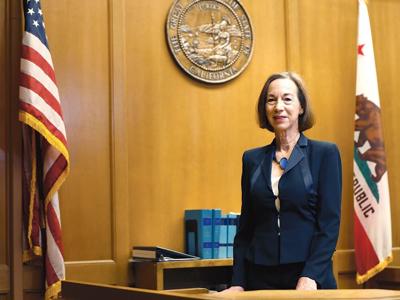
“We haven’t had any hearings as of yet. It’s still pretty new,” says Monterey County Superior Court Judge Julie Culver, who was tasked with leading the preparations for launching CARE Court involving multiple departments, including Monterey County Behavioral Health and the Public Defender’s Office.
One unique aspect of CARE Court is that family members, friends, roommates or others can petition for a loved one to be enrolled, as well as first responders and officials from other agencies. “It’s a new way to approach mental health,” Culver says.
Another aspect is that the person in question, called a “respondent” in court, can choose anyone to act as their supporter throughout the process. This could be a family member, trusted friend or other person. In addition, respondents are assigned a public defender to ensure their rights are protected.
Culver reviews the petitions to ensure a potential respondent qualifies for the program. They must be 18 or older and suffer from untreated schizophrenia or another state-approved psychotic disorder, among other requirements. (Information on how and where to petition is available at bit.ly/MoCoCareCourt.)
Culver can approve or deny a petition. If approved, it’s sent to the staff at Behavioral Health, who, Culver says, have the heaviest lift. They are the ones who must find the respondent – not easy if they are without housing – and build a trusting relationship with them. The respondent’s participation is voluntary – if they agree, they are provided with wraparound services that include medication, housing and other interventions.
In addition, there are four required evidentiary hearings with each case and Behavioral Health staff must prepare reports about respondents before each hearing, according to Melanie Rhodes, interim Behavioral Health bureau chief. “It’s definitely worthwhile if we can get folks in and get them help and get them stabilized without needing higher levels of care,” Rhodes says.
Michelle Wouden, chief deputy public defender for Monterey County, says public defenders have advocated for years for a way to prevent the cycle people with serious mental health issues fall into. “We’re hopeful this will avoid criminalization and future incarceration,” she says.




(1) comment
I cannot express how truly grateful I am for this article. The timing is nothing short of miraculous. I was beginning to take on a sense of hopelessness for getting my loved one help.
Welcome to the discussion.
Log In
Keep it Clean. Please avoid obscene, vulgar, lewd, racist or sexually-oriented language.
PLEASE TURN OFF YOUR CAPS LOCK.
Don't Threaten. Threats of harming another person will not be tolerated.
Be Truthful. Don't knowingly lie about anyone or anything.
Be Nice. No racism, sexism or any sort of -ism that is degrading to another person.
Be Proactive. Use the 'Report' link on each comment to let us know of abusive posts.
Share with Us. We'd love to hear eyewitness accounts, the history behind an article.