
There have been at least seven “Infrastructure Weeks” in Washington, D.C. since the Trump administration took office. The failed attempts have turned into something of a running gag. Call the past week “Transportation Week” in Monterey County, but in this case, it’s no joke.
Transportation to and from the U.S. Open came off better than expected. Commuters were surprised when throngs of vehicles choking roadways didn’t materialize, after officials urged locals to avoid thoroughfares.
The shuttle system was created over two years of planning by the Pebble Beach Company, the U.S. Golf Association, Caltrans and law enforcement. Over four days, shuttles carried more than 225,000 golf fans between Pebble Beach and off-site parking at CSU Monterey Bay and other satellite locations.
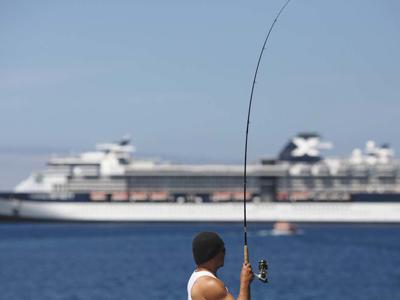
On June 17, the day after the U.S. Open wrapped up, the city of Monterey hosted an informational panel on cruise ships, attended by about 175 people. Cruise ship visits rose from 11 in 2018 to an expected 15 this year, prompting public concern over air, water and marine noise pollution. (Originally 18 were scheduled, but three were canceled, mostly for safety reasons due to winds and choppy waters.) In February, more than 100 surfers and kayakers paddled out into the bay in protest.
The takeaway from eight experts – representing various local, state and federal agencies – on Monterey’s panel was that the ships are subject to strict regulations and inspections. The overall environmental impact to the sanctuary was presented as mostly benign. Monterey receives between $150,000-$200,000 a year in revenue from cruise ship visits that in turn pays for related costs to the city, said Brian Nelson, a marine specialist for the harbor.
The tourist transportation focus was back on land on June 18, as the city and the Monterey County Convention and Visitors Bureau sorted out a roadblock over funding to the bureau in the 2019-20 budget. A draft of Monterey’s budget released earlier this spring included the same contribution to the MCCVB as last year, nearly $900,000. The agreed-upon formula – 6 percent of the city’s annual transient-occupancy tax revenue – would’ve meant $1.1 million. The MCCVB board had already approved its own budget expecting the full amount and, without an increase, the board would have to make cuts, says President and CEO Tammy Blount-Canavan.
At a May 29 Monterey budget meeting, Blount-Canavan and MCCVB board members urged Monterey City Council to reconsider. She argued that the 42,000 booked room nights delivered by the MCCVB in the first three quarters of this year “equates to nearly $28 million in spending, and of that, nearly $900,000 in [transient-occupancy tax] alone,” she told council. “That’s a 115-percent return on the city’s annual investment.” If the city needed more revenue, cutting back on marketing and reservation operations was not the right move, she argued.
Councilmember Alan Haffa, noting a “significant tension” between overtourism and the need for tourist revenue, attempted to negotiate, offering more funding in exchange for MCCVB creating a shuttle plan for hospitality workers to alleviate traffic.
After much debate at the June 18 meeting, council voted 5-0 to pass the budget, moderately increasing MCCVB funding to $989,400. The bureau must present a rideshare plan by October.


(0) comments
Welcome to the discussion.
Log In
Keep it Clean. Please avoid obscene, vulgar, lewd, racist or sexually-oriented language.
PLEASE TURN OFF YOUR CAPS LOCK.
Don't Threaten. Threats of harming another person will not be tolerated.
Be Truthful. Don't knowingly lie about anyone or anything.
Be Nice. No racism, sexism or any sort of -ism that is degrading to another person.
Be Proactive. Use the 'Report' link on each comment to let us know of abusive posts.
Share with Us. We'd love to hear eyewitness accounts, the history behind an article.