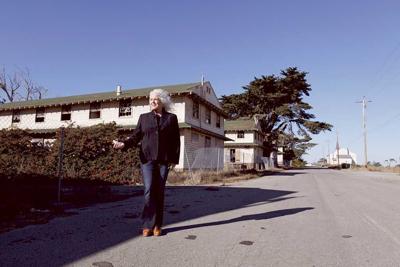

When the board of the Fort Ord Reuse Authority meets Oct. 13, they will ostensibly vote on a plan for what happens when the agency sunsets in 2020. More precisely, they will vote on a plan to make a plan.
But the board members will have no clear idea of what the implications are for the options they could potentially choose: Despite months to prepare them, there are no fiscal or legal analyses in a report from FORA staff to board members.
“You can’t know all the answers until you give some direction about what direction you want to go in,” says FORA Assistant Executive Officer Steve Endsley, who authored the report.
Endsley’s report recommends forming a joint powers authority, a new entity that would in effect be a successor agency with the same “financing and regional powers” as FORA.
FORA formed in 1994 to oversee the economic development of the former Fort Ord, and was originally set to dissolve in 2014. The 2012 legislation that extended FORA’s existence states that its board must approve a transition by Dec. 30, 2018.
There is no plan yet; Endsley says the board will vote on what the plan should be and then staff will hammer out the details in 2018.
This is despite FORA convening a “Transition Task Force” – an ad hoc committee comprised of a handful of board members – in 2016 and 2017 to help come up with a plan.
Yet now, just two-and-a-half years before the new sunset date, it still remains unclear how the sunset could play out, and how FORA’s estimated $70-179 million of remaining obligations will be financed. Estimates vary widely depending on who you ask, but that amount covers road projects, habitat protections and other requirements.
Marina City Councilmember and FORA board member Gail Morton has sat on the task force since it was formed, and is frustrated by the lack of detail provided by FORA staff. She says the most fundamental question she’s had was never answered. FORA is partly funded by a mechanism that siphons off tax revenue from the state and local jurisdictions. That funding mechanism disappears when FORA does, Endsley says, and the question Morton has is this: Is it possible to create a new funding mechanism for the already-approved developments – most of which are not yet completed – that would help pay for those remaining obligations?
Endsley does not know the answer.
County Supervisor and FORA board member Jane Parker is likewise frustrated. “FORA staff haven’t done what we’ve asked them to do, which is to present a transition plan,” she says. If FORA staff felt the financing issues were too complicated, she adds, “They should be recommending a consultant to map out some options.” Those options, and who will pay for the remaining obligations, remain unclear.
Yet FORA staff are feeling some urgency about getting an agreement approved – Endsley proposes a special meeting in late October to make sure that happens – because the funding mechanism would require state legislation that FORA staffers want on the 2018 legislative calendar.
But State Sen. Bill Monning, D-Carmel, plays down the rush. “Even though the clock is ticking, we’ve got some time,” he says.





(0) comments
Welcome to the discussion.
Log In
Keep it Clean. Please avoid obscene, vulgar, lewd, racist or sexually-oriented language.
PLEASE TURN OFF YOUR CAPS LOCK.
Don't Threaten. Threats of harming another person will not be tolerated.
Be Truthful. Don't knowingly lie about anyone or anything.
Be Nice. No racism, sexism or any sort of -ism that is degrading to another person.
Be Proactive. Use the 'Report' link on each comment to let us know of abusive posts.
Share with Us. We'd love to hear eyewitness accounts, the history behind an article.