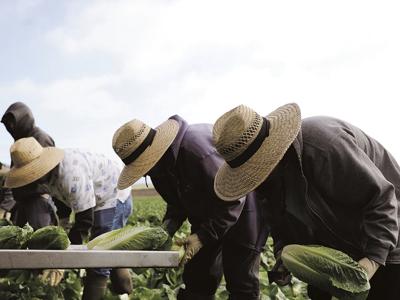

On July 13 and 14, agribusiness and technology leaders from around the world met in Salinas for the Forbes AgTech Summit. The future of agriculture was discussed with panels on genetic editing, data-crunching and “smart farms” plugging into the cloud to monitor and respond to soil conditions. Drones and robots were also on display, showcasing the latest technological innovations in farming.
The implication is clear: Capital – not labor, the historic backbone of the industry – will be the future of agriculture.
Labor wasn’t off the table entirely; conference attendees took a tour of Tanimura & Antle’s new housing for seasonal farm workers, highlighting a push to create more workforce lodging.
But in a July 14 panel entitled “Labor’s New Frontier,” a discussion on increasing challenges with labor – including lack of federal immigration reform, a shortage of workers and rising labor costs – caused one grower to express his frustration.
“We would do anything to get rid of as much labor as we can.”
“We would do anything we could to get rid of as much labor as we can,” said Harold McClarty, president of Central Valley-based stone fruit grower HMC Farms. “Labor will be the deciding factor in our business, more than water.”
In a later panel, Dan Harburg, director of business development for Cambridge, Massachusetts-based Soft Robotics, revealed a vision for the future.
“Robotics are the new type of workers,” Harburg said, “not the people who have been cutting cabbage.”
While automation of harvesting produce has yet to be perfected and could still be decades away, labor groups and those looking after the interests of farm workers view the shift toward robotics with concern.
“There is only so much we can do to stop that frontier,” says Cesar Lara, executive director of the Monterey Bay Central Labor Council. “For unions, our top challenge is to make sure those remaining get paid well. Manual labor these days needs more skill.”
While the number of farm workers will likely decrease, Lara points to salad plants in the Salinas Valley as an example of the future. The facilities that process and bag leafy greens into ready-to-eat packages are more automated than in years past, with the number of employees falling from more than 2,000 to around 1,000 over a decade.
Immigration from Mexico is now at net zero – with just as many Mexicans in the United States moving back to Mexico as there are people moving here – and many children of farm workers are finding more opportunity outside of the fields.
But still, there are more than 60,000 workers in the Salinas Valley at peak harvest, according to Mike Meuter, an attorney with the nonprofit California Rural Legal Assistance. “Farm workers make major contributions to the local economy,” he says. “Mechanization would have a devastating effect.”
Tom Nassif, CEO of the Western Growers Association, says automation is an economic necessity for U.S. growers to stay competitive in the global market.
“It’s not a question of getting rid of labor, it’s about harvesting,” he says. “We have crops rotting in the fields.”


(0) comments
Welcome to the discussion.
Log In
Keep it Clean. Please avoid obscene, vulgar, lewd, racist or sexually-oriented language.
PLEASE TURN OFF YOUR CAPS LOCK.
Don't Threaten. Threats of harming another person will not be tolerated.
Be Truthful. Don't knowingly lie about anyone or anything.
Be Nice. No racism, sexism or any sort of -ism that is degrading to another person.
Be Proactive. Use the 'Report' link on each comment to let us know of abusive posts.
Share with Us. We'd love to hear eyewitness accounts, the history behind an article.