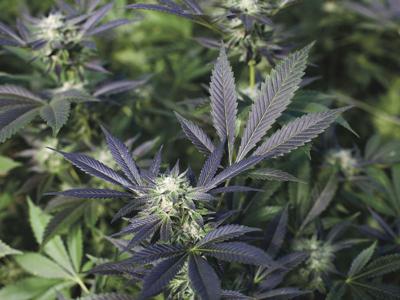

At first glance, Monterey County’s annual crop report for 2020 appeared to spell good news for the county’s cannabis industry—in only its fourth year on the recreational market, cannabis production jumped in value to $484.1 million. While overall crop production fell by 11.3 percent as compared to 2019, cannabis grew by 7.7 percent, supplanting broccoli and wine grapes as the third most valuable crop in the county, behind only strawberries and leaf lettuce. The numbers solidified Monterey County as the fourth most valuable cannabis-growing county in California.
Steady growth over the years attracted a rush of new cultivators anxious to get in on a hot market. However, local experts say demand has peaked, for now, and the market, soaked with supply, is headed toward a period of correction where prices and revenues will tank, businesses will struggle, and many will seek buyouts or be forced to shut down.
“It’s very scary,” says Michelle Hackett, president of Salinas-based Riverview Farms. “This time last year, the market was booming. A pound of greenhouse product went for $1,200. Now, it’s between $700 and $800 at best.”
Hackett says Riverview is in a relatively good position as an operator who owns its land. Cultivators who are leasing will struggle, she says, while rent remains a fixed cost and revenue per harvest falls. She says the industry’s abundant “boutique” culture will shift to a “race to the bottom, where it will be about who can provide the highest quality at the lowest price.”
Bob Roach, executive director of the Monterey County Cannabis Industry Association, says cannabis is following the same arc as other new and attractive crops. Industry insiders expected the market to correct itself eventually; however, no one was sure when. This timing, he says, is especially concerning as farms are preparing to harvest the crops they planted while demand and the market were still strong.
“I see a lot of mergers and acquisitions in the future. It’s harder when you’re smaller, you have less of everything. There is an economy of scale that benefits the larger companies,” Roach says. “Newcomers to the market are going to face a more difficult environment.”
Between 2019 and 2020, cultivation licenses approved by the county jumped from 470 to 544, and total cultivation area grew from 3.8 million to 4.4 million square feet, according to the crop report.
Aaron Johnson, a cannabis attorney and founder of the Coastal Growers Association, predicts a more than 25-percent revenue drop for the local market over the next year. Johnson says supply has steadily increased over the years and the pandemic’s heightened demand potentially delayed the market correction.
He says growers and county officials will need to maintain an open dialogue during this correction period to ensure taxes aren’t further hampering industry success. However, Johnson blames outside pressure as well. The number of cultivators across the state has skyrocketed while growth of dispensaries has slowed, he says, increasing competition for the limited number of legal outlets. Allowing for interstate commerce would help, he says, but that would require a federal legalization of cannabis.


(1) comment
The market correction ahead for cannabis is more fundamental than most imagine. - Growers and sellers have somehow been able to hold onto the black-market price. That price is mostly comprised of the "risk premium" - that amount which compensates the seller for the risk of going to jail.
With legalization, the risk premium is gone. After the imminent collapse of the crumbling, fraudulently enacted federal marijuana prohibition, average quality marijuana will sell for $25 to $40 an ounce, retail. It's just a plant.
Experienced growers have admitted the production cost for an ounce of outdoor grown marijuana is around six dollars an ounce. International and global markets will develop quickly, adding further downward pressure.
It is to be expected that marijuana prices will naturally float a little above the next closest product - fine tobacco. Plus, a few boutique stores will remain open, but most marijuana will be sold wherever more harmful beer and wine are available.
This is bad news for sellers, but it's good news for consumers who have essentially been price-gouged ever since legal sales began.
Welcome to the discussion.
Log In
Keep it Clean. Please avoid obscene, vulgar, lewd, racist or sexually-oriented language.
PLEASE TURN OFF YOUR CAPS LOCK.
Don't Threaten. Threats of harming another person will not be tolerated.
Be Truthful. Don't knowingly lie about anyone or anything.
Be Nice. No racism, sexism or any sort of -ism that is degrading to another person.
Be Proactive. Use the 'Report' link on each comment to let us know of abusive posts.
Share with Us. We'd love to hear eyewitness accounts, the history behind an article.