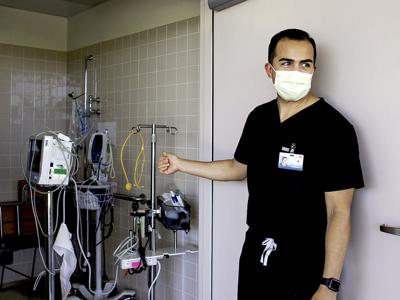

As Covid-19 spread across the globe approaching pandemic status, Monterey County’s four hospitals were already planning for a surge of patients, including Mee Memorial in King City, the only hospital for a nearly 50-mile radius. The state required the hospital’s directors to plan for a 40-percent increase in patients, and they did, says Interim Chief Medical Director Robert Valladares. He and the staff spent long days and weekends preparing and outlying the cash necessary to purchase equipment.
By the time shelter-in-place went into effect in mid-March, Mee Memorial was ready for the pandemic. What hospital officials weren’t ready for was the huge financial hit that followed within a few short weeks. Patient levels at the hospital and clinics dropped off by nearly 60 percent in April. Emergency department visits went from 50 a day to just eight to 10 a day, Valladares says. Patients with chronic conditions like diabetes, high blood pressure and obesity were staying away from clinics.
“We went from planning for a surge to planning on keeping our hospital open through the end of the year,” Valladares says.
Faced with mounting costs and no cash cushion to draw upon, the hospital laid off 55 employees on April 30, implemented salary reductions and a hiring freeze and suspended services like cardiology and labor and delivery.
Rural hospitals like Mee Memorial received some money in the first round of the CARES Act, the federal coronavirus relief bill that was supposed to cover three months of expenses, but it only covered one month, Valladares says. And unlike Monterey County’s three other hospitals, Mee Memorial has little in cash reserves – it operates on a month-to-month basis.
Struggling to survive has been an issue for decades for rural healthcare systems, which don’t receive enough government funding, advocates say, and are often overlooked by big donors. Yet their existence can mean the difference between life and death for residents: Mortality rates increase by 6 percent in regions where rural hospitals close, forcing patients to drive long distances for care, Valladares says. If an urban hospital closes, patients can go to another nearby hospital and the impact on mortality rates is zero.
The lack of funds forces the hospital to do less with more. That was evident in attempting to set up a triage tent in early March at Mee Memorial. Their tent was falling apart, so Valladares got creative. He and staff devised a plan to sequester patients with Covid-19 symptoms by converting a decontamination shower into a screening room and using the four-bed ICU unit – which had closed last summer in another cost-cutting move – as the “tent.”
Valladares also got active on local social media, dispelling rumors that the hospital was closed after people saw barriers go up at the main entrance in an attempt to direct foot traffic.
He also tried to allay fears that patients ran the risk of catching Covid-19 at the hospital, an issue all local hospitals have seen. That fear makes no sense, Valladares reasons, because the hospital takes every step to remain safe – “but somehow it’s safer to go to the hardware store or the grocery store?”
The push worked: Emergency room visits ticked upward over the weekend of May 2-3, to about 20 patients a day.


(1) comment
We better get back to work or America could be at the mercy of other countries for food!
Welcome to the discussion.
Log In
Keep it Clean. Please avoid obscene, vulgar, lewd, racist or sexually-oriented language.
PLEASE TURN OFF YOUR CAPS LOCK.
Don't Threaten. Threats of harming another person will not be tolerated.
Be Truthful. Don't knowingly lie about anyone or anything.
Be Nice. No racism, sexism or any sort of -ism that is degrading to another person.
Be Proactive. Use the 'Report' link on each comment to let us know of abusive posts.
Share with Us. We'd love to hear eyewitness accounts, the history behind an article.