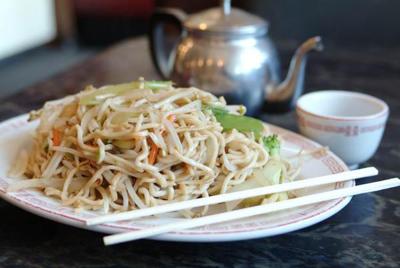
During a recent dinner party I asked our friend Carl, who is Chinese, what his favorite restaurant is in Monterey. “Chong’s,” he replied without hesitation. He told me that Chong’s features many dishes from China’s southernmost area of Canton, which distinguishes it from other area restaurants serving dishes from northern China.
Northern Chinese who followed Korean immigrants to the Monterey Peninsula account for the many Northern Chinese restaurants featuring Mandarin cuisine here. In most Chinese restaurants around the country, including San Francisco’s Chinatown, you will find Cantonese cuisine, because the overwhelming number of Chinese immigrants to the US came from Canton, now known as Guangdong.
Chong’s take-out menu says its cuisine is Szechuan from western China, but a look at the menu shows a preponderance of Cantonese classics, like shrimp with black bean sauce, as well as Chinese-American classics, such as Chop Suey, which were concocted by Cantonese chefs in America.
After our meals, our server confirmed that all the chefs at Chong’s have Cantonese origins.
The mild climate of Canton and its access to the sea make for a cuisine that prizes fresh vegetables, fish, and seafood served with light sauces. Cantonese food is consequently held in high esteem throughout China—similar to the way that French food is esteemed in parts of Europe.
Hong Kong reigns as the capital of Cantonese cuisine, and many innovations using new agricultural products with traditional cooking methods come from this gastronomic capital.
When I saw that Chong’s offered steamed fish on its menu I immediately ordered it (seasonally priced last week at $18) while Laurent took the shrimp with cashew nuts ($7.95). A cup of egg flower soup comes with the meal, along with rice. (The rice is a nice extra since many restaurants now charge for this).
Chong’s dresses up its version of the egg flower soup with tofu rods, chicken, tomato, celery, snow peas, and straw mushrooms. I liked the soup, but the celery made me think I was eating American chicken soup.
My steamed rock cod was big—probably twelve inches from head to tail. Mounded up shredded Chinese chives and cilantro covered the fish, which was surrounded by deep green broccoli with long stems. Chinese cookbooks poetically call broccoli prepared in this way “jade tree.” The fish looked so dramatic on its platter with the sauce setting off the greens and the dark skin of the fish that I just admired it a few moments and soaked up the envious stares of my fellow diners. I imagined I was eating in a Hong Kong restaurant looking out at the twinkling lights of the harbor as I inhaled the savory scent that wafted towards me.
The succulent sauce, made from sesame oil, soy sauce, and a bit of freshly grated ginger, enhanced the flavor of the pungent chives and cilantro. Chinese chives have a more pronounced onion taste than American chives, and that went especially well with the fish and broccoli. The flesh of the fish slid off the bones, which are big in rock cod, making them easy to remove. Something this good does come at a higher price than most of Chong’s other menu items, which average $7. But even the fussiest foodie would like this dish.
Laurent’s shrimp with cashews mixed textures and colors. The shrimp had been stir-fried along with snow peas, straw mushrooms, carrots, and zucchini. The nutty flavor of the sesame came through in the slightly thickened sauce. The generous portion makes it perfect for family-style dining.
Laurent and I visited the following day to sample more. This time we tried the lemon chicken ($6.95) and spareribs with black bean sauce ($6.50). A light, crunchy crust coats moist, white meat chicken in Chong’s version of lemon chicken. The addition of slightly sweet lemon sauce makes it feel like eating crunchy lemonade. This is one of my favorite Cantonese dishes.
The spareribs arrived in one-inch pieces and did require some rather indelicate removal of the bones. These specialties of the Cantonese countryside get coated with mashed, fermented black beans and garlic before they are steamed. Their flavor is earthy and salty. Fermented black beans may require some getting used to, but they are a favored ingredient all over South China.
During our two visits to Chong’s we noticed that Chinese families and workers from downtown Monterey filled the tables. Chong’s, owned by John Ng, has been around for forty years, keeping locals and lucky tourists who happen onto its location near the Monterey Transit Plaza, well fed on Chinese classic cuisine at affordable prices. Chong’s recipe for longevity adds to Monterey’s good fortune.
CHONGS'S SZECHWAN RESTAURANT
485 Tyler, Monterey | 373-5153
11am-10:30pm, Mon-Fri
Noon-10:30pm, Sat; Noon-10pm, Sun



(0) comments
Welcome to the discussion.
Log In
Keep it Clean. Please avoid obscene, vulgar, lewd, racist or sexually-oriented language.
PLEASE TURN OFF YOUR CAPS LOCK.
Don't Threaten. Threats of harming another person will not be tolerated.
Be Truthful. Don't knowingly lie about anyone or anything.
Be Nice. No racism, sexism or any sort of -ism that is degrading to another person.
Be Proactive. Use the 'Report' link on each comment to let us know of abusive posts.
Share with Us. We'd love to hear eyewitness accounts, the history behind an article.