
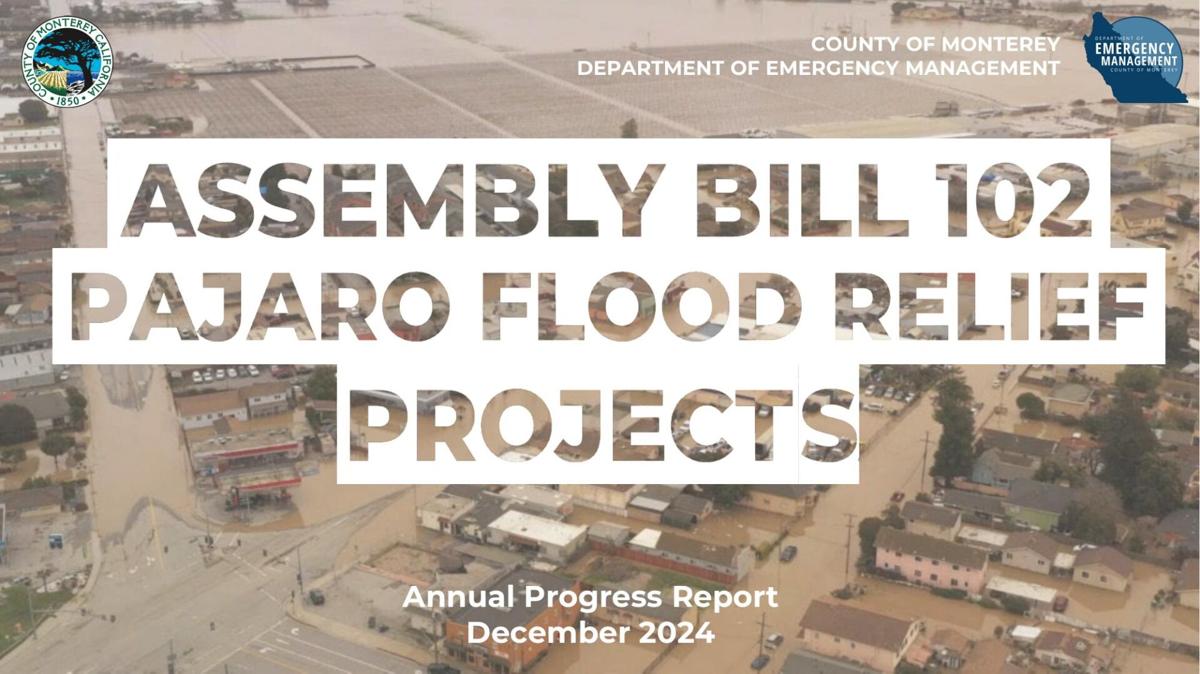
Nearly two years after floods in the North County town of Pajaro displaced most of its residents, the community’s recovery process is still ongoing. That includes the distribution of the funds meant to bolster recovery.
The State of California allocated $20 million in aid to the community, a gift remarkable in its size and its flexibility. It was up to the Monterey County Board of Supervisors to decide how to allocate the money, and based on feedback from the mostly low-income community, they decided half of the money would go directly to residents and business owners. Another $2 million would go toward infrastructure, $1.2 million to parks, $3.5 million to the library, and so on. The plan was approved a year ago, on Dec. 6, 2023.
According to a progress report released on Dec. 18, only $2.6 million of the $10 million in direct aid has been distributed so far. (Another $287,000 has gone to administrative costs.)
“It’s important to note that this process was never sold as a quick solution,” says Kelsey Scanlon, director of the County’s Department of Emergency Management. “We’re being very mindful about the time and attention necessary to get these families back on their feet.”
She adds that case workers are helping residents and business owners apply to any other programs available to them, from the local to the federal level. (Scanlon notes in the report that the $20 million is in addition to $14 million more from other government programs and philanthropy that went to Pajaro’s recovery.)
“The disaster case management process and collecting documentation is very much intended to be mindful of the experience of the disaster victims and to help them navigate a very complex process,” Scanlon says. “That is also very much intended to ensure that the people who are participating in the program are getting what they need, and that the people who are not supposed to be in the program are identified and directed to a different program that might be more appropriate.”
Some funding was earmarked for individuals regardless of immigration status, helping those who did not qualify for funds from the Federal Emergency Management Agency. Nonprofits active in the community – Catholic Charities and Community Bridges – are tasked with distributing $6 million in funds. They have so far distributed $1.1 million, according to the county progress report.
For the first phase, covering food spoilage, those groups approved 688 of 757 applications and distributed $464,600. Because unspent funds remain, the county will make a second round of phase-one funds available for those who qualified the first time.
The second phase is still ongoing and focuses on housing assistance, personal property and vehicle repair. So far, 384 cases from 84 households have been approved and $633,975 distributed.
In a community that prefers cash over credit cards and where many don’t have a bank account, proving losses has been a challenge, but Ray Cancino, CEO of Community Bridges, says they have adapted to what is practical. “It’s not just receipts, it’s also photos. People have been creative,” Cancino says, noting Pajaronians have used not just photos but also text messages and videos to prove losses.
The Monterey County Workforce Development Board has so far distributed $1.6 million out of $4 million earmarked for small businesses. For the first phase, losses and damages, the workforce board has approved 34 out of 89 applications and distributed $1.2 million. For the second phase, it has distributed $258,859 to 29 out of 58 applications; $517,717 was approved and will be disbursed once projects are completed.
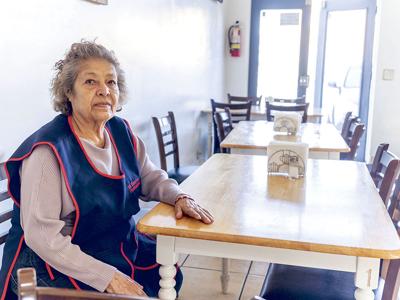
Maria Colin Paniagua, owner of the Mexican restaurant Mi Rancho, says she hasn’t received any funds.
“Two years have passed, and nothing,” she says.
County projects – like road, park and library improvements – have yet to break ground, but are in development. The library repairs are set to begin in January.

(2) comments
See my comment when this money was first issued. I mentioned that it would only be used to line pockets & now here we are
It appears that 10% of the money spent went for administration, which seems high, particularly when it is not being administered quicky enough. They need their money now, not 10 years from now.
Welcome to the discussion.
Log In
Keep it Clean. Please avoid obscene, vulgar, lewd, racist or sexually-oriented language.
PLEASE TURN OFF YOUR CAPS LOCK.
Don't Threaten. Threats of harming another person will not be tolerated.
Be Truthful. Don't knowingly lie about anyone or anything.
Be Nice. No racism, sexism or any sort of -ism that is degrading to another person.
Be Proactive. Use the 'Report' link on each comment to let us know of abusive posts.
Share with Us. We'd love to hear eyewitness accounts, the history behind an article.