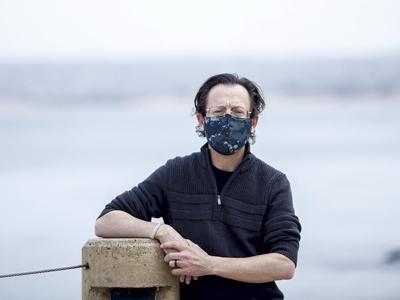

Fourth of July in Seaside is torture for Robert Fullmer, a Navy veteran who grapples with post-traumatic stress disorder stemming from his service in the Persian Gulf War in 1990. The “war zone,” as locals have nicknamed the barrage of fireworks, reminds Fullmer of the actual war zone he once survived. The first holidays after moving to town in 2017, he locked himself in his room and sobbed.
“Last year I went out into it and sat in it until I couldn’t take it anymore,” Fullmer says, taking deep breaths and fighting back tears as he speaks. “So it’s getting better.”
Life in general is getting better for Fullmer who after decades of suffering from both PTSD and bipolar disorder – including self-medicating, losing a business, attempting or planning suicide as well as spending a few years homeless in San Francisco until he could be rehoused and rebuild his life – finally has a therapist who is helping him effectively deal with PTSD. “My life has completely changed,” he says. “I’m no longer suicidal. I have an amazing friggin’ life today.”
Previously, Fullmer was receiving care from a therapist at the Major General William H. Gourley VA-DoD Outpatient Clinic in Marina. When that therapist quit, the VA approved Fullmer to receive care from a therapist in the community. Fullmer’s therapist was being reimbursed through TriWest Healthcare Alliance, a third-party administrator for the VA. In 2019, TriWest was awarded a contract with the VA worth up to $26 billion to manage veterans’ community care in 13 Western states. It stemmed out of the MISSION Act, passed by Congress in 2018, that promised to improve care for veterans.
Then last summer, TriWest began implementing a new system called the Community Care Network, which required previously approved therapists to be recredentialed and sign new contracts. Fullmer’s therapist was never told. She realized something was amiss when reimbursement claims for Fullmer and several other veterans in her care were denied in the fall.
Fullmer and four others were able to shift to private insurance, but at least one other veteran had to stop therapy. Fullmer has since been on a mission to get answers on the behalf of other veterans negatively impacted, making calls to the VA and TriWest, only to hear each blame the other for the issue.
One of his calls was to the office of Rep. Jimmy Panetta, D-Carmel Valley, a veteran himself who serves on the House Committee on Armed Services. Panetta spokesperson Sarah Cronin says Fullmer isn’t the only one affected – they’ve been hearing from other veterans experiencing the same issue and are investigating. Caseworkers are responding, contacting providers and the VA as they try to resolve individual cases.
The Weekly contacted the VA and TriWest seeking information on how many therapists were dropped or how many veterans may have lost coverage, but neither answered questions about how widespread the issue is. Both provided written statements explaining the changeover to CCN and suggested therapists contact TriWest directly. The VA encourages “any veteran who feels that they are having delays in receiving needed mental health services” to contact the VA in Palo Alto, “so that we can resolve their issues.”



(0) comments
Welcome to the discussion.
Log In
Keep it Clean. Please avoid obscene, vulgar, lewd, racist or sexually-oriented language.
PLEASE TURN OFF YOUR CAPS LOCK.
Don't Threaten. Threats of harming another person will not be tolerated.
Be Truthful. Don't knowingly lie about anyone or anything.
Be Nice. No racism, sexism or any sort of -ism that is degrading to another person.
Be Proactive. Use the 'Report' link on each comment to let us know of abusive posts.
Share with Us. We'd love to hear eyewitness accounts, the history behind an article.