
2020 was an unusual year in the California Legislature, too. The Covid-19 pandemic sent lawmakers home (and onto video conferencing software) for an unprecedented two months in the spring, and once they did return to the capitol, those lawmakers faced a very different reality. Add economic fallout and a devastating wildfire season on top of the pandemic, and you’ve got a much more public health and safety-focused legislative term than anyone could have expected back in January 2020.
According to the Senate Office of Research, the Legislature greatly reduced the number of bills it heard in 2020 in order to focus on Covid-19 response.
“In a typical year, the Legislature sends anywhere from 870 to 2,143 bills to the governor for consideration,” the office wrote in a session-end report. “However in 2020, the Legislature passed 428 bills, which makes this year an outlier when comparing bill outcomes with those of past years.” Of those 428 bills passed, Gov. Gavin Newsom signed 372 into law.
But while some members chose to focus more narrowly on the crises at hand, not everyone took that approach. “Yes it’s important to deal with wildfires and yes it’s important to deal with the pandemic… but that doesn’t mean all other business of the state has to stop,” says Assemblymember Mark Stone, D-Scotts Valley, whose coastal district stretches from Point Lobos up through Santa Cruz and Boulder Creek. “We have plenty of bandwidth, if you will, to deal with more than one issue at a time.”
So what legislation are local lawmakers most excited to see take effect this year? We talked with Stone, as well as Assemblymember Robert Rivas from Hollister, Sen. Anna Caballero of Salinas and former Sen. Bill Monning of Carmel to find out. Here are some highlights.
AB 2165 – For Rivas, whose district encompasses Gilroy and the Salinas Valley, as well as some stretch of the coast around Big Sur, farmworker protection during the pandemic was a central priority of the 2019-2020 legislative session. Rivas was a lead author on the California Farmworker Covid-19 Relief Package, which included a number of component pieces. One of those is AB 2165, which will make it easier and more secure to sign and file electronic documents with California’s courts. Previously local courts could institute their own rules to dissuade electronic filing, or at least make it very difficult – an issue for rural Californians, like farmworkers, with limited in-person access to courthouses.
The other major provision in the package, AB 2043, directed the California Division of Occupational Safety and Health to enforce Covid-19 guidance and fund bilingual outreach to educate farmworkers about safety and rights during the pandemic. Given its time-sensitive nature, this bill took effect immediately when signed. “This is a major victory for California’s most vulnerable essential workers – farmworkers,” Rivas said when the whole package was signed on Sept. 28, 2020.
AB 376 – One of Stone’s successful non-Covid related pieces of legislation is AB 376, which will create a student loan Bill of Rights for borrowers. The legislation consists of a bunch of rules for student loan servicers, all aimed at creating more consistency for what borrowers (students) can expect. Stone views it as an important step in eventually reducing student loan debt.
“It’s not a significant reduction to student loan debt,” Stone says, “but it is making sure that the student loan servicers are very clear with the borrowers, giving them honest options and giving them true explanations of what they should and shouldn’t be doing.” At a national level, Stone says, the amount of “excess interest” paid because loan servicers give borrowers faulty or incomplete information is “potentially in the billions.”
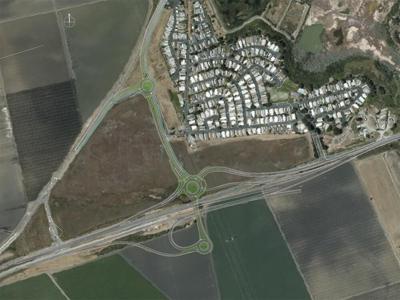
SB 1231 – Bill Monning termed out as senator for the 17th District in 2020, but not before passing legislation with big impacts down the line. The most significant locally, he says, is SB 1231, which provides for the development of the Castroville interchange by allowing for protection of the Santa Cruz long-toed salamander. “It’s one of the highest fatality rates on Highway 156 in all of Monterey County,” Monning says, of the current stoplight at Highway 156 and Castroville Boulevard.
Construction on the four-lane expressway, which will run parallel to the current road, is set to begin in 2022.
AB 3088 – The pandemic brought new challenges to one of California’s long-standing issues: housing. This is where a bill like AB 3088, co-authored by Caballero, comes in. The legislation provides that tenants cannot be evicted between March 2020 and Jan. 31, 2021 for failure to pay rent that is due to Covid-related economic hardship. The bill was the result of some compromise between tenants groups and landlords, so from August 2020 through January 2021 renters must pay 25 percent of their rent in order to avoid eviction. The legislation also provides protections for property owners at risk of foreclosure brought on by the pandemic.
“The Covid-19 pandemic has disrupted the economy and hurt families all over the state who are not working and struggling to pay their bills,” Caballero said when the bill was passed on Aug. 31. “The spread of the virus continues and with no real end in sight, this proposal is critical to ensure that no family is evicted because they can’t afford to pay.”
Lawmakers recognize that the legislation is only a stopgap measure, though. “It’s just a bridge to a more permanent solution once the federal government finally recognizes its role in stabilizing the housing market,” Newsom said when signing the bill. “We need a real, federal commitment of significant new funding to assist struggling tenants and homeowners.”
Other highlights of the session include Stone’s AB 2782, which requires owners of mobile home parks to give residents certain information and notice when deciding the close the park; Caballero’s SB 1447, which provides tax credits for small businesses hiring back employees; and Monning’s SB 200, which sets aside $130 million per year over 10 years for the remediation of contaminated drinking water.


(0) comments
Welcome to the discussion.
Log In
Keep it Clean. Please avoid obscene, vulgar, lewd, racist or sexually-oriented language.
PLEASE TURN OFF YOUR CAPS LOCK.
Don't Threaten. Threats of harming another person will not be tolerated.
Be Truthful. Don't knowingly lie about anyone or anything.
Be Nice. No racism, sexism or any sort of -ism that is degrading to another person.
Be Proactive. Use the 'Report' link on each comment to let us know of abusive posts.
Share with Us. We'd love to hear eyewitness accounts, the history behind an article.