
Living on the Monterey Peninsula, near the ocean, can be a blessing. Trying to plant and grow a garden in soil that is sandy because of that proximity to the ocean can be vexing.
Sand doesn’t contain or capture nearly as much nutrients as dirt and clay, leaving plants hungry. Sand doesn’t host the teeming varieties of microorganisms that process organic matter into stuff that plants can eat. And because there is a lot of space between the particles in sandy soil, water drains out of reach of roots in just a couple of days, instead of staying wet for longer.
And then there are the cats who are inclined to treat sand like their own kitty litter. Not to mention gophers.
But if you have a sandy yard, you don’t need to go looking for lava rocks just yet. There are solutions. Lots of them, in fact.
In search of advice, the Weekly directed some questions to four authorities on the issues, and they provided advice on turning sandy yards verdant. They include Marina mayor – and Bureau of Land Management botanist – Bruce Delgado; Marina Tree and Garden Club President Juli Hofman; Elkhorn Native Plant Nursery general manager Rob de Bree; and Richard Boynton, who owns All Things Green Landscape Services in Marina.
What should a person with a sandy yard do first?
Delgado: Go on an organized garden tour. See what you like. Second, contact a local landscape gardener that does natives. Or do it yourself. You might have more trial and error, but it might be more interesting.
Hofman: Add lots of compost, top dress with mulch and you’ll never have a drainage issue. Over time, with lots of organic matter, sandy soil will greatly improve.
Boynton: Grow things that are adapted for this type of soil. Look for California natives or plant species considered Mediterranean.
What weather or climate factors should be considered?
De Bree: Wind can dry out plants even on cold days, especially when plants are planted new.
Boynton: Salt air and ocean winds. In some places it’s near impossible to grow trees because they are flattened or defoliated and distorted by the wind. Humidity, fog and relatively low growing season temperatures promote fungus diseases like rust and mildew, so stay away from plants that need a lot of spraying, like roses, to be healthy.
Hofman: There is much overlap in plant communities, since there are lots of microclimates within a few minutes – like Carmel Valley and Big Sur. Look at your average rainfall, soil conditions and sun available.
What is the least work-intensive solution?
Hofman: Gardens are all about work! But you can minimize future maintenance and care by choosing the right plant for the right spot. Planting a cypress close to a fence or under a power line is asking for trouble. Lawns are high care – a mound of well-chosen blooming perennials are not. Be fearless about replacing something that does not thrive.
Boynton: Large areas of a single treatment like some kind of rock (remember the good fabric), bark or wood chips end up needing little work except weeding over time.
Delgado: Once you get some plants in the ground, they’ll reproduce and grow. After a year or two, you might do less and less and your garden will do more work.
What is the most elaborate or work-intensive solution?
Boynton: Lots of flowering plants give the most lush and beautiful appearance and it ends up taking a lot of trimming, removing dead flowers, replanting and replacing, more watering and feeding.
What native or non-invasive plants do well in sand?
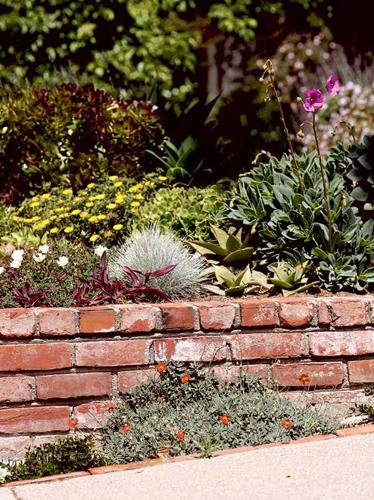
De Bree: Seaside daisy, iris douglasiana, sea thrift or sea pink, yarrow, cultivars such as paprika and terra-cotta, Bonny Doon or silverleaf manzanita, coast aster, Point Saint George, sand dune sedge, giant coreopsis, American dune grass or strand grass, Mrs. Beard creeping sage, beach strawberry, field sedge.
Hofman: Coffeeberry, black sage, California lilac, coyote bush, lemonade sumac, bush lupine – all grow great around here. Many of the Channel Islands plants like Catalina ironwood, island snapdragon, island alumroot, Catalina cherry.
Boynton: Manzanita, yarrow, monkey flower, sages (salvia species), barberry, bunch grasses, California fuchsia, Matilija poppy, island tree poppy, currants and gooseberries, buckwheats, penstemon (I refuse to use its other name, “beard tongue,” because it’s so stupid), toyon. The exhaustive list would be about 500 plants.
Delgado: Black sage, sticky monkey flower, California poppy, rushes, sedges, flannel bush, sunflower bushes, annual lilies, farewell-to-springs. Collect seeds and start with a small area of your yard. Some [seeds] do better if you pour boiling water over them, some if you put them in your fridge first, some you just throw on the ground.

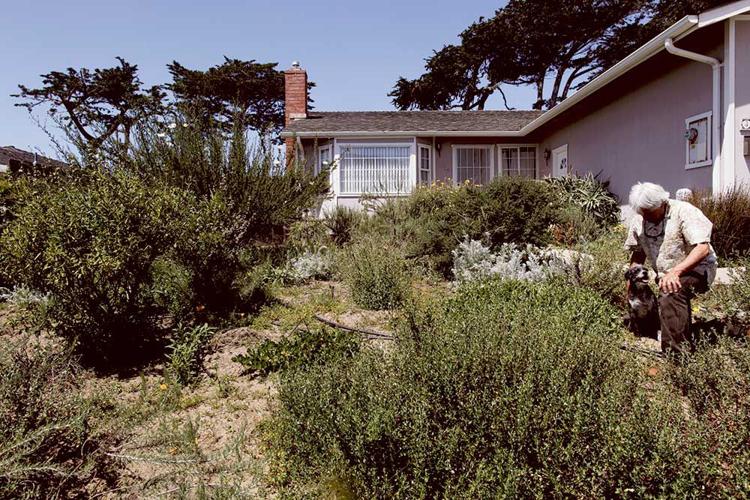
Succulents, native species, and Mediterranean perennials populate an experimental corner of a sandy yard in Seaside.
What trees thrive in sand?
De Bree: Monterey pine, Monterey cypress (cupressus macrocarpa), box elder.
Hofman: Look at our club website (marinatreeandgarden.org) for a list of trees that do well in Marina’s sand, wind and salt air.
Boynton: New Zealand Christmas tree, tristania, Catalina ironwood and cherry, strawberry tree, arbutus marina.
Delgado: Oak trees are pretty good once you get them started. I like to discourage [Monterey cypress] from Marina because other plants don’t grow too well underneath them, they’re not native, and they get pretty large.
How to prevent cats from turning a sandy yard into their kitty litter?
Hofman: Cats like open sand to do their business in. If you have a lot of plant cover and deep mulch, they go elsewhere.
De Bree: Have a dog.





(0) comments
Welcome to the discussion.
Log In
Keep it Clean. Please avoid obscene, vulgar, lewd, racist or sexually-oriented language.
PLEASE TURN OFF YOUR CAPS LOCK.
Don't Threaten. Threats of harming another person will not be tolerated.
Be Truthful. Don't knowingly lie about anyone or anything.
Be Nice. No racism, sexism or any sort of -ism that is degrading to another person.
Be Proactive. Use the 'Report' link on each comment to let us know of abusive posts.
Share with Us. We'd love to hear eyewitness accounts, the history behind an article.