
El Niño stoked fears last winter about the effect of the weather on the homeless population in Monterey. After those fears were substantiated with the cold-related deaths of two men in December, many residents demanded the creation of a temporary warming shelter.
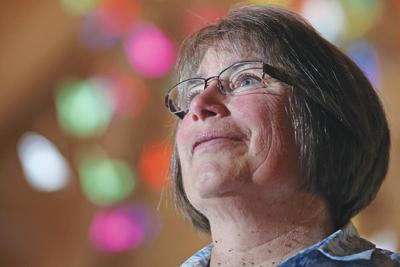
Cindy Storrs, then pastor at Monterey United Methodist Church, stepped up and offered her church as a winter warming shelter during a City Council meeting on Dec. 16. More than a month later, council shot down an ordinance that would have allowed churches to shelter up to 25 people nightly after more than a dozen neighbors complained.
Storrs was hurt and disappointed that neighbors and the city blocked her plan to shelter up to 25 people, and let six homeless women sleep in the church parking lot through the One Starfish program. And she stayed the course.
With operations managed by the Interfaith Homeless Emergency Lodging Program (I-HELP), the church opened its doors to anyone seeking shelter, even though it meant an act of civil disobedience by sheltering more than the six the city allows. But the temporary shelter, which ended April 22, was efficient and quiet, so no one even noticed.
“One of the strengths in a leader is to take action even when there are obstacles,” says Brian Bajari, a pastor and homeless advocate who ran Monterey’s Church on the Beach for seven years. “Cindy and her congregation stepped up to provide needed shelter even when they faced ridicule in doing so.”
On July 1, Storrs becomes the first employee at Gathering for Women, a nonprofit founded in 2014. As director of operations, Storrs will ramp up efforts to serve the hundreds of homeless women on the Peninsula. Gathering for Women currently provides lunch, clothing and access to services every Tuesday at the Unitarian Universalist Church in Carmel. With Storrs at the helm, the nonprofit is poised to extend its reach.
“We’re looking for a home that’s at least 5,000 square feet,” Storrs says. “With a commercial kitchen and office space, we’ll be able to provide more permanent and consistent services.”
Over the course of her 40-year career, Storrs has always sought to bring together a diverse array of people, civic groups and government bodies to uplift the marginalized. She was among a group of homeless advocates working to establish a permanent shelter in the early 1990s while she was a pastor in Lake County. After decades of community engagement, a shelter was finally established there in 2015, after Storrs had returned to her native Monterey County.
“I hope it doesn’t take 25 years to get a shelter here in Monterey, but I know it’s going to take a few,” she says. “I don’t think we can afford not to do anything. One way or another, the community pays for this. You can easily spend $1 million on a person in a year with ER and other emergency costs; it’s much more efficient to provide housing and services.”
While Storrs believes Monterey United Methodist Church will serve as a shelter again next winter, she sees a movement for more lasting programs.
“The shelter debate has been going on here for years,” she says. “But there’s a lot of energy in the community right now to come up with permanent solutions.”


(1) comment
I can appreciate her good intentions, however there is definitely a difference between helping and enabling here.
Welcome to the discussion.
Log In
Keep it Clean. Please avoid obscene, vulgar, lewd, racist or sexually-oriented language.
PLEASE TURN OFF YOUR CAPS LOCK.
Don't Threaten. Threats of harming another person will not be tolerated.
Be Truthful. Don't knowingly lie about anyone or anything.
Be Nice. No racism, sexism or any sort of -ism that is degrading to another person.
Be Proactive. Use the 'Report' link on each comment to let us know of abusive posts.
Share with Us. We'd love to hear eyewitness accounts, the history behind an article.