One of the world’s largest gatherings of thinkers and achievers takes place this week in Monterey. Most of us are not invited.
The best we can do is figuratively press our noses to the glass of our computers and get a sense online of what might transpire at and come out of this annual event.
TED, which stands for Technology, Entertainment, Design, runs from Feb. 27 to March 1 at the Monterey Conference Center, and boasts a lineup of renowned participants. Former vice president Al Gore and designer Isaac Mizrahi will be there. Musician/activist Bob Geldoff and paleoanthropologist Louise Leakey are set to show. Writer Amy Tan and Aspen Institute CEO Walter Isaacson also will take the stage.
Collectively, the more than 50 speakers are smart enough to save the world and have enough IQ left over to cure the common cold and explain what’s up with Joan Rivers’ face.
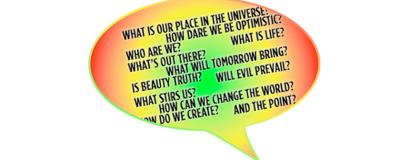
The idea of the conference is for the high-powered players from all three disciplines to talk about global issues from a 30,000-foot view and share their ideas with those assembled. This year’s theme is “The Big Questions”; each speaker will choose from a list of 12 to frame their remarks. Among them: How dare we be optimistic? Is beauty truth? How do we create? What is our place in the universe? Speakers can reveal new products, show photos of their work or answer the question through a performance.
Bringing such diverse talents and voices together yields what the TED website calls “aha” moments.
One such moment occurred in 2006 when Jeff Han showed a high-resolution multi-touch computer screen. His demonstration “drew spontaneous applause and audible gasps from the audience” over the notion that the era of the point-and-click mouse could be ending. It foreshadowed the introduction of the touch-screen Apple iPhone the next year.
There’s no word yet on this year’s potential “aha” moments, but the TED website will keep us informed. It does promise “plenty of profundity and challenge, for sure… but also plenty of room for cool, exciting and whimsical.”
In a television interview last week with Charlie Rose, TED owner and “curator” Chris Anderson said people attend to discover where their ideas fit in with everyone else’s, and that participants often are moved to tears and/or standing ovations.
“We tell speakers, ‘This is the chance to share your big idea,’ ” said the Oxford-educated Anderson, a former journalist whose Sapling Foundation acquired TED in 2001. The foundation’s goal is to help spread great ideas, so TED was a natural match.
Past TED attendees have called the sessions “the ultimate brain spa.”
The website puts it this way: “This immersive environment allows attendees and speakers from vastly different fields to ‘cross-fertilize’ and draw inspiration from unlikely places. This is the magic of TED.”
Making magic is a pretty heavy burden. Moreover, it begs the question: Does the magic result in anything that will affect us in our daily lives? Yes, says Anderson, pointing to the work of geneticist Craig Venter, one of this year’s TED speakers. Scientists at his J. Craig Venter Institute are working on custom-designing organisms that can produce, from scratch, chemicals we can use, such as biofuel.
“It’s tough, hard science,” Anderson told Rose. “That’s the kind of stuff that people get really excited about at TED.” (For more on what has come out of TED, see story on pg. 25.)
At the very least the event creates opportunities for all the speakers to reach millions of people online. Judging from the online comments – many applaud or say they were moved by the work the speakers describe – average people are excited by what they see.
The event also is lucrative in the real sense to three speakers – each year three TED prizewinners, chosen in advance, receive $100,000 to further their work. Each also is granted one wish “to change the world,” which they reveal during the conference.
One of last year’s winners, documentary photojournalist James Nachtwey, talked at the conference about the importance of photos in spurring public discussion, recording history and helping to change it. His work includes coverage of the violence in Northern Ireland, wars in Central America, apartheid in South Africa, orphanages in Romania and the war in Iraq.
His TED wish was for help in “gaining access to a story that needs to be told” and in developing innovative ways to use photography in the digital age.
This year’s winners are Karen Armstrong, an authority on comparative religions; Neil Turok, a cosmologist and education activist; and Dave Eggers, an author, publisher and activist. (See stories, pgs. 20, 22 and 24.)
Anderson acknowledges that the event “could be accused of being elitist.” But, as Anderson told Rose, much of the content for TED is free on the organization’s website (ted.com/pages/view/id/48). There, you can check out the list of speakers, topics and videos from past TED conferences; no date has been set for availability of this year’s speeches. You can become a member of TED.com, create a profile and connect with other members from all over the world. And you can check out the TED blog.
TED speakers run some of the most admired companies in the world, have designed some of the best-loved products, and collectively have won every prize from the Nobel to the Pulitzer to the Oscar to the MacArthur “genius” grant, according to the website. Past participants include former president Bill Clinton, Microsoft Chairman Bill Gates, musician Paul Simon and Amazon founder Jeff Bezos.
The idea of being in such rarefied company has helped create enough anticipation that tickets – despite running $6,000 – sold out a year in advance (and a free anarchic version, BIL, sprouted up – see pg. 27). In fact, the conference is so popular that it already has received more applications than available spaces for the 2009 conference next February in Long Beach, its new permanent home. The move from Monterey, where the conference has been held since 1990, will accommodate all attendees.
It’s also the most recent sign of TED’s evolution – the conference has come a long way since its original incarnation in 1984. Highlights back then were demonstrations of the Sony compact disc and an amazing new machine called a Macintosh computer.
(0) comments
Welcome to the discussion.
Log In
Keep it Clean. Please avoid obscene, vulgar, lewd, racist or sexually-oriented language.
PLEASE TURN OFF YOUR CAPS LOCK.
Don't Threaten. Threats of harming another person will not be tolerated.
Be Truthful. Don't knowingly lie about anyone or anything.
Be Nice. No racism, sexism or any sort of -ism that is degrading to another person.
Be Proactive. Use the 'Report' link on each comment to let us know of abusive posts.
Share with Us. We'd love to hear eyewitness accounts, the history behind an article.