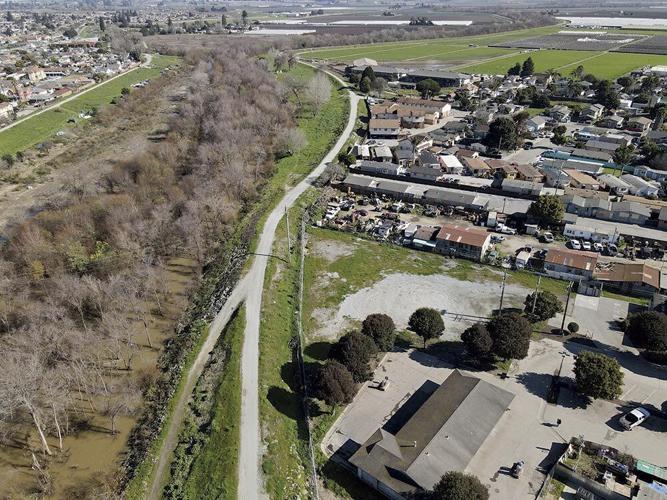



Reach 4 is the third phase of the Pajaro levee project. It will provide 100-year flood protection to the town of Pajaro.
AS CARS VROOM ALONG PORTER DRIVE HEADING TOWARD EITHER WATSONVILLE OR SALINAS, IT LOOKS LIKE AN EVERYDAY SCENE IN PAJARO; far from the images of water that rushed into the town nearly one year ago, on the morning of March 11, 2023, just a few hours after the Pajaro River levee broke, displacing hundreds of residents from their homes.
To the naked eye and for the thousands of commuters who travel through the town, the scene seems back to normal. But for many people who live there, own businesses, or work in Pajaro or the surrounding areas, they are still under water.
Some drained their savings accounts, borrowed money from friends and relatives, or used their credit cards to cope with the financial losses they suffered during the flood.
The floodwaters have long since receded, but it continues to impact them.
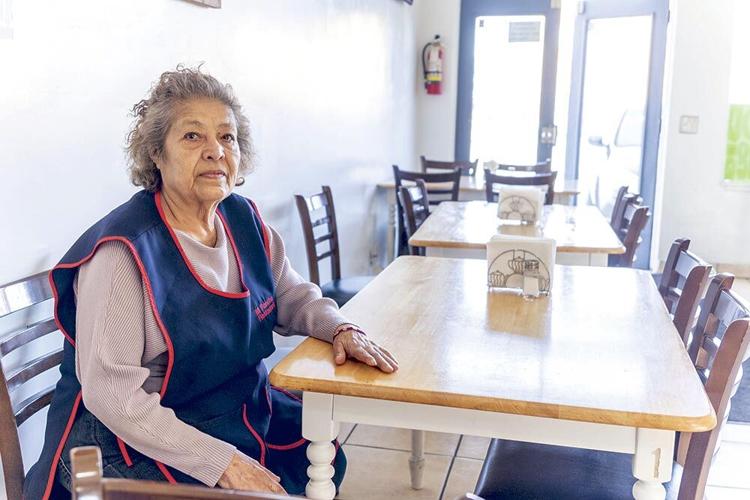
ON A RECENT FRIDAY AFTERNOON, Mexican music plays in the background at Mi Rancho, a Mexican restaurant that relocated to Pajaro from Watsonville about six months before the flood. The small restaurant is empty while Maria Colin Paniagua waits for customers to arrive. She spent the first three months drawing her customers to her new location, and says revenue remains down by 30 percent since the flood. The money she makes is barely enough to pay the bills and her two employees. Colin Paniagua pays $4,300 a month in rent (including the restaurant and four rooms she subleases), and sometimes she invests her Social Security check of $700 into her restaurant.
“I don’t have it easy,” Colin Paniagua says in Spanish, as she notes she’s four months behind and had to borrow $5,000 from her daughter-in-law. “I think most of us are facing the same.”
Frank Chavez, owner of Chaz Design, which specializes in car wraps, says he lost business for about two months, between evacuations and cleaning to reopen.
“Our savings were pretty much completely gone,” Chavez points out.
He says revenue is down by about 50 percent compared to previous years, after losing clients, materials and equipment during the flood.
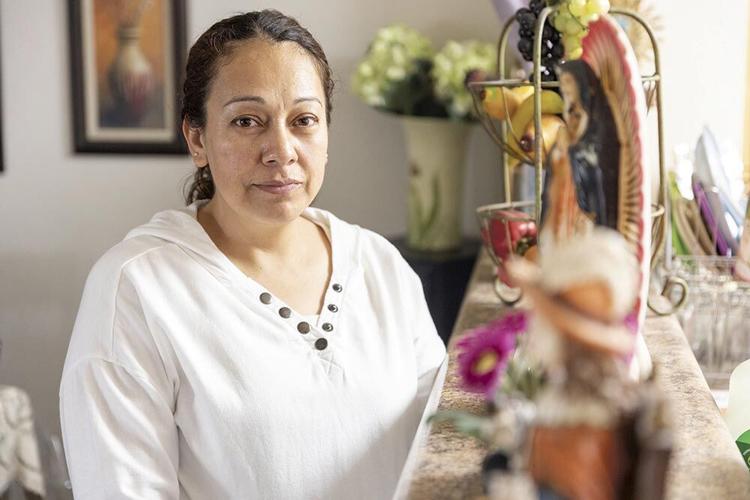
Many residents stayed in the area while others moved to nearby cities, including Watsonville and Hollister. Felicitas Mendoza, a longtime Pajaro resident who runs a daycare in her house, says in Spanish she thought about moving, but home prices outside of Pajaro – $750,000 or higher – weren’t in her budget. She didn’t work for five months; first because of the evacuation, and later because the water seeped into her garage where she stored a refrigerator, daycare furniture and toys she used for her business.
Maria Antonia Contreras, a farmworker who works in the Pajaro Valley, lives on the second floor of the Nuevo Amanecer apartments in Pajaro and was among those who refused to evacuate last year. Despite their stay, she and her family – including her husband and three children – are currently surviving on unemployment benefits and credit cards while they wait for the upcoming strawberry season.
“We are getting into debt,” Contreras says in Spanish.
Contreras and her family live in a two-bedroom apartment and pay $1,000 a month in rent. Last year, they worked for less than five months, some days less than five hours, and only saved for two months of rent.
“We hope this year is going to be better,” Contreras says.
The aftermath of the flood also brought to light the unsafe conditions many residents, mostly undocumented farmworkers, lived in. About 80 people residing in apartments at 29 San Juan Road were forced to move after receiving a 60-day eviction notice in October from landlord Rose Rentals LLC.
The apartments these multigenerational families lived in had non-operational windows, roach infestations and lacked smoke and carbon monoxide alarms. The property owners (Joseph, Maria de Luz and Edward J. Nunez) received an administrative citation from the Monterey County Department of Housing and Community Development for these and other issues on Sept. 28. One unit, Apartment P, was red-tagged.
Residents received help from different organizations, including Community Bridges, Raices y Cariño and Casa de la Cultura. Community Bridges gathered $81,956 to help the tenants with rent, deposits or hotels. That included $50,000 in grants from the Community Foundation for Monterey County and $10,000 from the United Way of Santa Cruz County, respectively, as well as donations from over 130 individuals ranging from $5 to $5,000. Each household also received a $250 Walmart gift card donated by the Monterey Peninsula Foundation.
Ray Cancino, CEO of nonprofit Community Bridges, says residents who moved out are continuing to struggle despite the financial support they received, as rent in neighboring cities is at least $1,000 more than Pajaro. The result is that some tenants, both those evicted from San Juan Road and others, have moved out of the area.
“They don’t have another option except for displacement to other, more affordable communities across the state,” Cancino says.

Maria Colin Paniagua is shown at her restaurant, Mi Rancho, in Pajaro. The restaurant was empty on a recent Saturday afternoon, a day and time it used to bustle with customers before flooding in March 2023. Business has not rebounded.
THE FLOOD DEMANDED AN URGENT RESPONSE, but it also shined a light on many longstanding issues in Pajaro. County officials have sought to transform the devastation of the floods into an opportunity for planning for long-term resilience in this rural community of about 3,000 people, located on the south bank of the Pajaro River which forms the Monterey-Santa Cruz County line.
That process officially began on Aug. 30, when dozens of people – including residents and business owners, first responders, county officials and more – met at Our Lady of the Assumption Catholic Church in Pajaro to discuss the long-term recovery plan. With markers and papers, people wrote down in English and Spanish the services and improvements they wanted in their town, from financial relief for residents and business owners, removing trash and abandoned cars and ensuring the town would be protected from future flooding.
The Monterey County Department of Emergency Management held several meetings and created a community-led task force, with six committees focusing on housing, public safety, economic development, agriculture, natural and cultural resources and health and social services. This process was meant to guide the allocation of $20 million in state funds designated for Pajaro’s recovery efforts.
Based on the information DEM collected from these meetings, it drafted a proposal that included $6 million for direct financial support to businesses and individuals, regardless of immigration status. DEM’s recommendations also earmarked $6.7 million for natural and cultural resources, including $3.5 million for upgrading the Pajaro library to offer additional space for community gatherings; $3 million for community grants to support beautification, education programs and interpretation services; $2.7 million for street improvements and signage; and $1.15 million for emergency preparedness and response – including $500,000 to purchase vehicles such as a flood rescue boat.
On Dec. 5, the Monterey County Board of Supervisors heard from the public on DEM’s allocation proposal, with vocal calls for more ($12 million) to go toward direct cash relief.
“We want to ensure residents and small businesses are given financial relief first,” said Sister Rosa Dolores Rodriguez, founder of Casa de la Cultura and chair of the Pajaro Disaster Long-Term Recovery Alliance.
The supervisors delayed the vote and reconvened the following day to consider moving around funding based on public input.
The board ultimately approved an alternative proposal, which increased relief funds to $10 million by cutting funds for recreation upgrades at Pajaro Middle School ($2 million), a welcome sign ($500,000) and a housing study ($500,000).
DEM Director Kelsey Scanlon said in December that her department would return to the board with a plan to implement the relief disbursements as soon as possible. The supervisors approved the plan on Tuesday, Feb. 27 that outlines the application and eligibility procedures. Officials will share information on the program during a series of meetings scheduled to begin in March.
One year later, this portion of direct aid is now set to start flowing to the people.
SINCE ITS CONSTRUCTION IN 1949, the Pajaro River levee has breached several times. Prior to 2023, the most recent flooding occurred in 1995, causing $95 million in damages. It nearly happened again in 2017.
While the levee has been on the radar of the U.S. Army Corps of Engineers for over 50 years, it was considered a low priority based on the cost-benefit formula used when planning future projects.
“The areas of Pajaro and Watsonville have very depressed property values and low-income residents,” says Mark Strudley, executive director of the Pajaro Regional Flood Management Agency.
Strudley adds that the formula is changing, with the Corps of Engineers now including other factors, such as recreation, groundwater recharge, habitat and ecosystem benefits.
The levee is vulnerable to breaching in part because the Corps of Engineers scraped the riverbed and used that material to build the levee. Now, it imports the materials, compacts it and performs other engineering practices to make it stronger.
“That part of the levee where they repaired it is stronger than it ever was, even when it was built,” Strudley says.
The levee breached in three areas in March 2023: a partial erosion beneath Highway 1, which caused disruptions in the region after the highway was closed for several days (repairs will conclude in April); the river mouth near the Pacific Ocean and the 400-foot breach located a quarter-mile away from the intersection of San Miguel Canyon and San Juan roads.
MANY PAJARO EVACUEES FLED IN THE DARK, leaving their homes open and carrying only what they were wearing. They stayed with relatives, at hotels, in their cars or at the Santa Cruz County Fairgrounds, where the county set up a disaster shelter.
Every day, residents went to the Pajaro levee bridge seeking updates, resources and news about when they could return home. DEM estimated about $790 million in damages, including more than $600 million to the ag industry and $100 million in housing (250 residential structures were damaged or destroyed during the flood). It also impacted local infrastructure, including streets, water and sewage systems. When residents could return home, they arrived to a do-not-drink advisory and damaged belongings.
In December, attorneys representing hundreds of Pajaro and Watsonville residents and business owners filed a lawsuit against the state of California, Caltrans, the counties of Santa Cruz and Monterey, City of Watsonville, Monterey County Water Resources Agency, Santa Cruz County Flood Control and Water Conservation District and PRFMA.
The lawsuit alleges those agencies failed to design, maintain, repair the levee and flood control systems, which caused injuries and damages to Pajaro residents, renters, homeowners and business owners. Two of the firms representing the complainants are Kabateck LLP and Greenberg and Ruby Injury Attorneys, APC, both from Los Angeles County. According to a previous Weekly report, the plaintiffs are seeking damages for over $10,000 per individual. It could take years to play out in court.

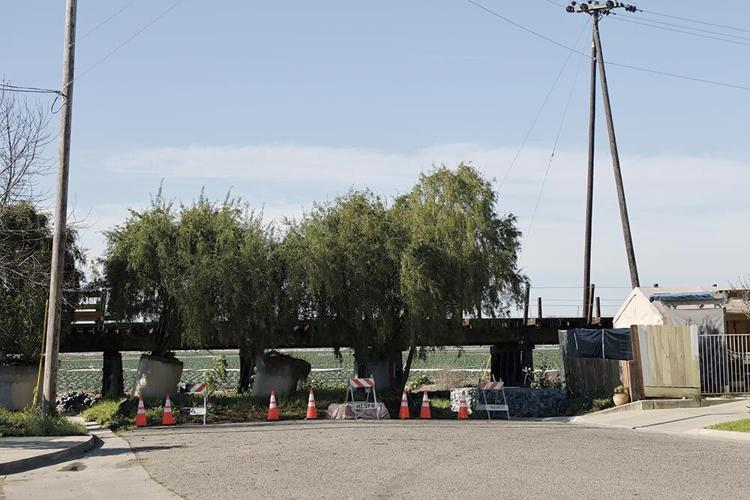
Cayetano Street, Florence Avenue and Jonathan Street join together and back up against agricultural fields. The area flooded in March 2023, causing damage to nearby homes as well as the farm.
THE PAJARO FLOOD DREW NATIONAL ATTENTION with words in headlines such as “neglect,” “racism” and “preventable disaster.”
Evacuees were desperate to receive aid and return to their homes, while local, state and federal governments took immediate measures to aid Pajaro residents. For example, on March 28, 2023, the Monterey County Board of Supervisors approved a moratorium on evictions for people and businesses in Pajaro.
On April 3, 24 days after the flood, President Joe Biden signed a Presidential Declaration of Disaster for the County of Monterey – and two months later, the state launched the Storm Assistance for Immigrants Project, providing cash aid for people who live or work in winter storm-impacted areas.
About 12,600 people live in the floodplain. The population is largely Latinos or Mexican Indigenous, low-income, immigrants (many undocumented) and farmworkers. The Pajaro Valley population continues to grow, despite being prone to flooding.
EVEN BEFORE THE FLOOD, local, state and federal officials knew the levee was desperately in need of work. The disaster put the pressure on to speed up efforts on a long-awaited project, and to bring more attention to the rural community’s needs.
Speaker of the California State Assembly Robert Rivas, D-Hollister, contributed to related bills, including Senate Bill 496, co-authored with State Sen. John Laird, D-Santa Cruz. With this bill, the Department of Water Resources will pay 100 percent of the local and state cost-share for the project, or $210 million (normally, residents in the area would cover 10 percent). Most of the total price tag, $599 million, will be paid for federally.
U.S. Senators Alex Padilla and Laphonza Butler and U.S. Representatives Jimmy Panetta, D-Carmel Valley, and Zoe Lofgren, D-San Jose, have called for continued federal funding for the project. They previously secured $149 million through the Bipartisan Infrastructure Law.
“The residents and businesses of Watsonville and Pajaro have been waiting for decades for urgent flood protection and during that time have suffered significant damage and loss of life due to flooding,” they wrote in the letter.
Assembly Bill 876 speeds up the process of the levee’s construction and exempts it from certain state and local environmental laws and regulations.
The $599 million levee reconstruction project that will provide 100-year flood protection will begin this summer at Salsipuedes Creek in Watsonville, an area that currently has no levees.
“We’re in the final stages of design on the first segment of that project, which is called Reach 6,” Strudley says.
Reach 6 is along the Salsipuedes Creek between East Lake Avenue and Green Valley Road. Reach 1, the levee segment that’s under Highway 1, won’t be part of the project. The section that will protect Pajaro is Reach 4, which is scheduled in the third phase of the project. Strudley estimates construction could start in three to four years.
Once Reach 4 is completed, it will provide 100-year flood protection for the town of Pajaro.
While the design for Reach 6 is done, Strudley says the design for other project segments has not yet begun, and “as such, there may be opportunities in other project reaches to make adjustments to specific project features that lower costs and increase flood protection.”
“All three of those places where the levee broke last year, were places where the Army Corps in the past decided not to deliver a new project because of the benefit-cost ratio,” Strudley says. “I think that was eye-opening to the Corps.”
Strudley hopes the other two areas where the levee broke will be repaired in the future through a different project.

Frank Chavez, owner of Chaz Design, says he lost thousands of dollars and hasn’t received any financial aid for his losses. Chavez says he filed a claim with his insurance but it was denied because his coverage didn’t include flooding.
THERE ARE TWO DIFFERENT PERSPECTIVES ON PAJARO’S RECOVERY EFFORTS. Officials say projects in the area are moving; some residents and business owners feel frustrated and neglected with the pace, noting the county’s financial assistance hasn’t rolled out yet.
Chavez is frustrated by what he views as a lack of attention on Pajaro.
“This is California. We do pay our taxes, we do pay our dues and it’s nice to be treated like other places get treated,” Chavez says. “I’m sure that if this would have happened in an area like Monterey, Carmel, things would have been different. It really is frustrating.”
The Pajaro Branch Library, located in an historic Queen Anne-style house, and Pajaro Middle School both remain closed. Every Friday, the Bookmobile, a library on wheels, goes to Pajaro Park. Students attending Hall and Ohlone elementary schools stay there for sixth grade, while PMS students attend Lakeview Middle School in Watsonville.
PMS has flooded twice in the past 30 years. Repairs on the 2023 damage started this month. Crews will paint the school, replace the electrical system and construct new floors in classrooms, the gym and the library. The district will also upgrade the boys’ locker rooms, and hopes to build a wellness center in the future.
“It’ll look brand new inside and out,” says Murry Schekman, interim superintendent of Pajaro Valley Unified School District.
The $4.6 million project was awarded to Castroville-based Ausonio, Inc., and while the district is anticipating moving $2 million from its general fund to cover the cost, Schekman is hopeful the state would subsidize it.
On Dec. 5, he spoke up during the Board of Supervisors meeting to ask them to keep a proposed $2 million line item for PMS for a new turf field. When school officials asked students what they wanted at PMS, “nine out of 10 kids will say ‘give us a new field,’” Schekman says.
But they did not get the money amid other demands.
Instead, the district has set aside $500,000 for the field and in January, launched a campaign to raise the other $1.5 million it needs by August.

Maria Antonia Contreras hopes for a better strawberry season so she and her family can recover financially from last year’s flood.
CANCINO SAYS THE RESOURCE CENTER COMMUNITY BRIDGES OPENED IN PAJARO WILL REMAIN OPEN FOR AT LEAST ANOTHER YEAR. Cancino adds the County should have a space to increase engagement and connection between Pajaro residents and county government without having to travel to Salinas or Monterey.
“The community also needs a place of consistent resources, of consistent connection to coordinating between two counties, have consistent engagement and opportunities for people to have a trusted place to go to for different social service needs,” Cancino points out.
Since the flood, business owners in Pajaro meet every Wednesday at Casa de la Cultura to share updates and information about the Pajaro recovery plan, especially with business owners who are Spanish speakers.
“I’m expecting something similar to a chamber of commerce forming out of this community,” says County Supervisor Glenn Church, who represents Pajaro.
Residents and business owners want better lighting, cleaner streets and sidewalks and regular levee maintenance and upgrades to prevent future floods.
Church also hopes the county will have a plan in place in the future to act promptly in case another flood occurs – and to discuss future infrastructure projects in the area.
Church points out that despite the recovery process moving slower than residents would like, the Pajaro Disaster Assistance Program is now in motion.
“What’s going on in Pajaro is now moved out to be a priority and there are a lot of good things that are going to be coming about in the next few years,” Church says.
Chavez says he wants Pajaro to be on the map for local officials.
Contreras says her family will never forget the flood. The evacuation orders were issued on March 10, the day her eldest son Adrian Rocha turned 18, and the town reopened on March 23, when her daughter Adilene turned 16.
She says her son looks at the river level every time he walks over the bridge and worries it will happen again.
“We all suffer one way or another,” Contreras says. “We don’t want to go through that again.”
(0) comments
Welcome to the discussion.
Log In
Keep it Clean. Please avoid obscene, vulgar, lewd, racist or sexually-oriented language.
PLEASE TURN OFF YOUR CAPS LOCK.
Don't Threaten. Threats of harming another person will not be tolerated.
Be Truthful. Don't knowingly lie about anyone or anything.
Be Nice. No racism, sexism or any sort of -ism that is degrading to another person.
Be Proactive. Use the 'Report' link on each comment to let us know of abusive posts.
Share with Us. We'd love to hear eyewitness accounts, the history behind an article.