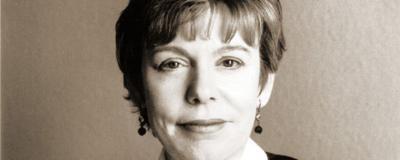
Although author Karen Armstrong has diligently studied and written about the world’s religions, she’s as stumped as anyone about one of life’s – and TED’s – biggest questions: “What is our place in the universe?” And she doesn’t think advances in science and technology have brought us closer to the answer. “We thought in the 19th century that science was going to answer all our questions,” Armstrong says. “In fact science has revealed even more complexity.”
So if cool technology, like transmitting telescopic images of the cosmos to your desktop (which Microsoft is expected to unveil this week at TED), doesn’t bring us closer to life’s meaning, then religion must, right? That’s also wishful thinking, according to Armstrong.
“I think religion is at its best when it holds us in an attitude of wonder and awe,” Armstrong says. “I think to expect answers from religion is to slightly miss the point.”
Armstrong is one of three TED Prize winners this year – the conference recognizes three especially luminous do-gooders and grants a specific wish of theirs that will better the world (and also throws in a cool $100,000). While honored, the brazen British scholar admits she hadn’t heard of the award before she won it. Then again, she has been busy writing more than a dozen books, including The Battle for God and Islam, a Short History. Her most recent work, The Great Transformation, traces the rise of religious and philosophical traditions during the 9th century B.C., from Hinduism in India to monotheism in Israel.
A former nun, Armstrong left a British convent in 1969 because she was disenfranchised by the restrictive order. “I’ve had a rather peculiar religion,” she admits. “I’m in recovery or convalescence from a difficult religious experience when I was young.”
Now 63, Armstrong takes spiritual nourishment from Christianity, Islam and Judaism. At a time when war and suicide bombings are polarizing Christians, Jews and Muslims, Armstrong has emerged as a unifying voice, emphasizing the commonalities among the three religions.
Foremost, she says all three traditions believe in the golden rule. “They also say that selfishness and greed and egotism are the bane of our lives,” Armstrong says. “If we can get beyond that endless self-preoccupation then we can experience the divine.”
The three religions also share revulsion for violence, Armstrong says. Yet in the course of the 21st century, all religions have developed violent fundamentalist movements. “It is like a rebellion against modernity,” Armstrong says. “Every one of them that I’ve studied in Judaism, Christianity and Islam is convinced that modern liberal or secular society wants to wipe out their faith.
“When people feel their backs against the wall that’s when they can lash out.”
Armstrong is writing a book about the growth of militant atheism. She wouldn’t reveal her TED wish to the Weekly, but chances are it will have something to do with building spiritual bridges among the world’s faiths. Throughout her religious studies, the importance of compassion has been Armstrong’s recurring discovery. “I think religion at its best… helps us to recognize the sacred, absolute sacred mystery and inviolable mystery of every single human being we come in contact with.”
She may not hold the keys to the immense universe, but Armstrong’s edifying philosophy makes the divisions between us seem a lot smaller.
(0) comments
Welcome to the discussion.
Log In
Keep it Clean. Please avoid obscene, vulgar, lewd, racist or sexually-oriented language.
PLEASE TURN OFF YOUR CAPS LOCK.
Don't Threaten. Threats of harming another person will not be tolerated.
Be Truthful. Don't knowingly lie about anyone or anything.
Be Nice. No racism, sexism or any sort of -ism that is degrading to another person.
Be Proactive. Use the 'Report' link on each comment to let us know of abusive posts.
Share with Us. We'd love to hear eyewitness accounts, the history behind an article.