


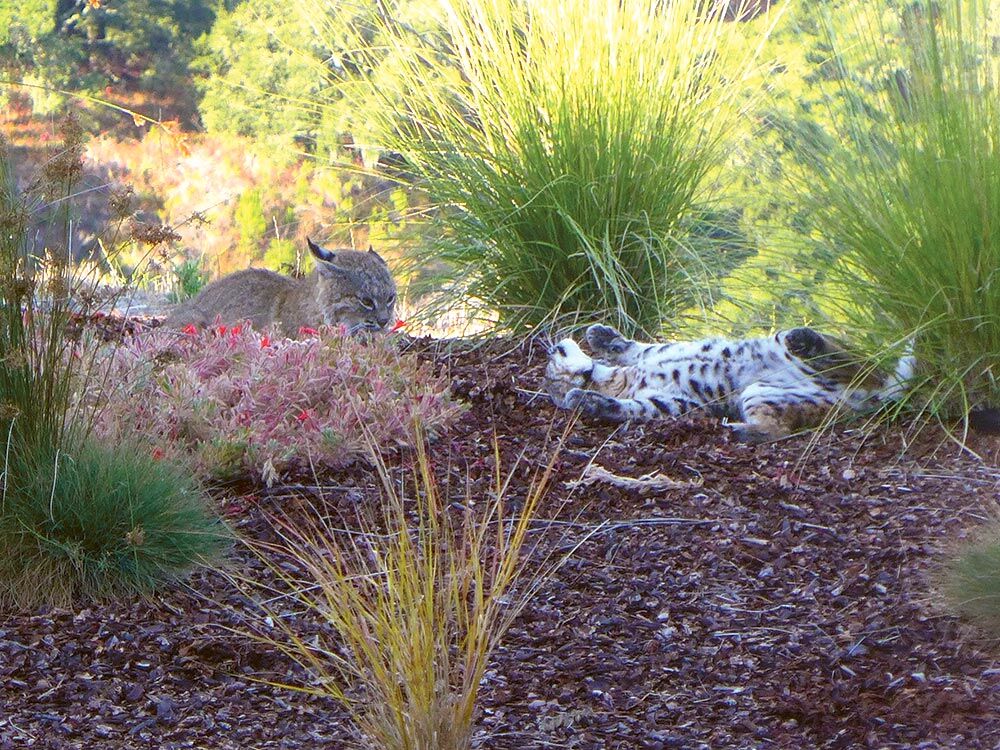
During shelter-in-place, Tony Singer has captured photographs of wildlife including deer, lizards and raptors come in his Laureles Grade yard, but his favorite is bobcats. “There’s something so neat about how they are so self-sufficient,” he says.
ON A SUNNY WEEKEND IN JULY, A GROUP OF MIDDLE-AGED FRIENDS FROM CENTRAL CALIFORNIA RENTED KAYAKS AT LOVERS POINT. SOON AFTER DEPARTING FROM THE BEACH, ONE OF THE MEN HAD TO PEE. Since they were coming up on another small beach nearby, the man decided to paddle over, beach his kayak, unzip, and let it out. Unbeknown to him, he had just urinated on the Hopkins Marine Station’s private beach just north of Lovers Point, which is a known refuge and pupping ground for dozens, sometimes hundreds, of harbor seals year-round and is always closed to the public.
While seal-watchers on the Monterey Rec Trail watched in horror, the urinator caused every single seal to flee and scoot back into the water, which is aptly called flushing the beach. Within minutes, Michael Smith, the manager of Adventures By the Sea kayak rental shop at Lovers Point, started getting phone calls. They came from angry residents who’d seen it, and from the Pacific Grove Police Department, which asked him to hold the group of kayakers when they returned their boats until officers arrived.
When they returned, the man and his crew got a lecture from Smith and a warning from the police. They could have faced up to $10,000 in fines or a year of jail time for violating the Marine Mammal Protection Act and another $1,000 in fines for trespassing on the privately owned beach.
“It just seems like in general, the people who are from very far inland or out of state, they come here and have absolutely no clue,” says Smith, who makes a point to emphasize local guidelines to every renter at the shop. Smith laments that a lot of the education goes in one ear and out the other.
Initially, shelter-in-place left many people with canceled vacations and cabin fever. Roads were empty, beaches closed, airports deserted. Outside, things were quieter, if only for a moment. As Zoom meetings wore on, working out in front of the couch got old and debates over the effectiveness of masks continued, people have increasingly turned to natural spaces for entertainment and exercise, isolation and socializing.
The abundant wildlife of Monterey County, both on land and in the sea, has always served these purposes for locals and tourists alike. Yet with upticks of inexperienced park visitors and locals spending more time at home, opportunities for humans and wildlife to meet face to face are plenty. It is difficult to say whether our local wildlife has been negatively or positively impacted by our shifting behaviors during shelter-in-place, but our relationships with the animals we share our communities with are more visible than they were pre-pandemic.
EACH SPRING WHILE HARBOR SEALS ARE GIVING BIRTH, OR PUPPING, on Monterey’s protected beaches, people gather by the dozens or hundreds along the chain-link fence that runs along the Rec Trail next to the Hopkins Marine Station. Monterey Bay National Marine Sanctuary volunteer docents in blue vests relate interesting facts and share the ways they identify returning individuals each year, with distinct markings. (The seals have names – and their own Facebook page.)
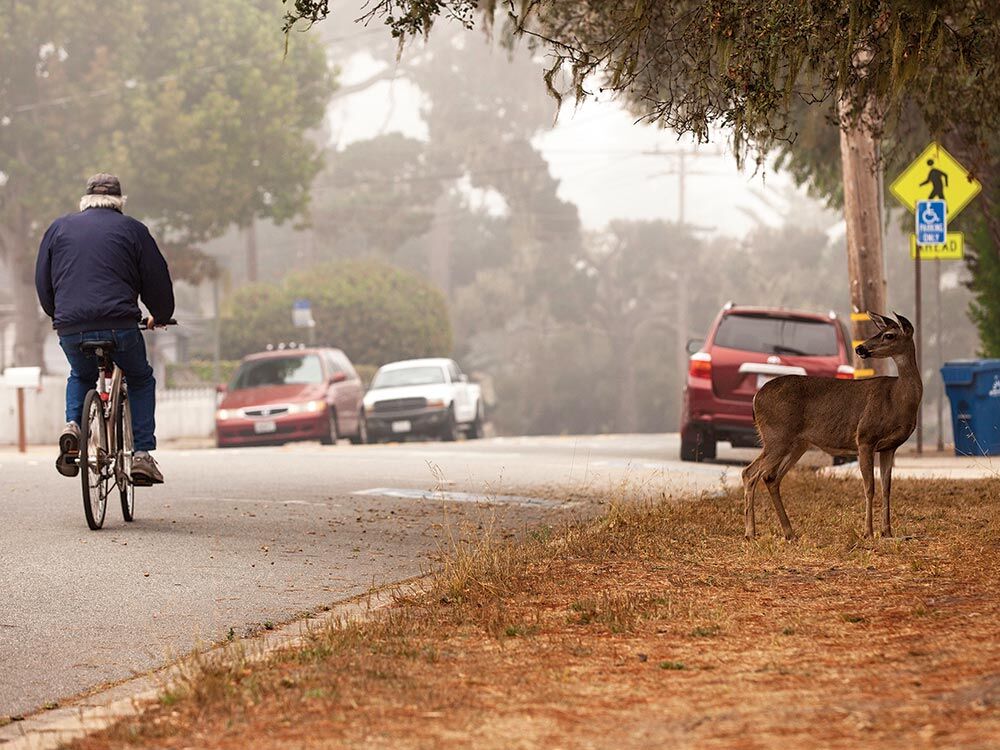
Below, deer are a regular presence in Pacific Grove.
The docents also act as de facto rangers, making sure people behave themselves around the seals since a main concern each spring is mother seals being scared away by people who are too loud or who get too close to take “seal-fies,” which can result in abandoned newborn pups or over-exhausted mothers.
Dr. Cara Fields, the medical director at the Marine Mammal Center, typically sees 40-100 abandoned or injured seal pups each year. This spring, however, pupping season coincided with the very beginning of shelter-in-place.
“This year we saw far fewer [pups] at the center and it very well may be associated with the reduced number of people on the beaches,” Fields says, though she’s quick to point out that other factors, like this year’s mild weather and food availability, could also be at play.
While Fields is hesitant to entirely attribute the lower numbers to a dip in tourism, scientists around the world have shown that shelter-in-place has impacted our planet in definite ways. Soundscape ecologists have reported that cities around the world were significantly quieter immediately following the shutdown. Seismologists saw huge drops in human-caused vibrations within the Earth’s crust. Researchers at the UC Davis Road Ecology Center saw a 13-percent reduction in California greenhouse gas emissions from transportation and a 21-percent drop in wild animal roadkill across the state.
Animals that travel at night, like mountain lions, are typically at greater risk of being hit by cars as they cross roads that cut through their habitat. Mountain lions in California are currently being considered for addition to the state’s endangered species list, in part because of vehicle collisions. In California, these big cats experienced a 58-percent reduction in mortality on the roads during the first 10 weeks of shelter-in-place, compared to the 10 weeks prior.
Still, it’s hard to prove a trend across the board and in every community. Locally, the SPCA Monterey County did not see any significant reductions in roadkill incidents overall this spring, though they reported an increase in vehicle collisions with mother opossums (also nocturnal) who were carrying their young across the tarmac.
ON THE MORNING OF MARCH 20, SHELTER-IN-PLACE ORDERS BEGAN IN CALIFORNIA. On Easter, all parks in Monterey County were closed. Over the Fourth of July and Labor Day holiday weekends, all beaches in Monterey County were closed. While some visitors may have turned around and gone home, these closures had the unintended effect of funneling people to the spaces that have remained open.
Tim Gadus of Monterey first heard this deer around 6am, then went outside to see what was happening and snapped this photo. “I could clearly see his nose and heard him snort a few times,” Gadus says. During SIP, he says there’s been less traffic on his block, near the Presidio, and he’s observed more wildlife: “The deer seem confident in their wandering up and down the street.”
Throughout SIP, Monterey Peninsula Regional Park District experienced a significant increase in visitation, sometimes double or triple the normal amount for a weekend. “MPRPD chose to remain open during shelter-in-place, while local cities, counties, and other park agencies chose to close their parks,” Caine Camarillo, supervising ranger for MPRPD, writes by email. “This led to record-setting visitation numbers at MPRPD parks, much more than any previous summer.”
Besides more people, there are more new people recreating outdoors, who may not know proper etiquette – like not building campfires or not feeding wildlife. It’s a balance for advocates who want people to enjoy nature, but not overrun it.
“When the initial shelter-in-place orders happened, it seemed like people were staying home more, which may have given wildlife a reprieve,” says Mike Splain, executive director of the Ventana Wilderness Alliance. “Since then, it’s come to light that the safest place to be is outdoors, and the number of people out there has skyrocketed. I think whatever good effects we got out of [shelter-in-place] are being negated by there being so many people out on the trails.”
Before the Dolan Fire closed much of Big Sur, the problem of overcrowding had escalated, along with illegal raves, campfires, human feces and trash.
Some public lands, like Elkhorn Slough National Estuarine Research Reserve, have remained closed to the public throughout SIP. Reserve Manager Dave Feliz hopes new outdoor pandemic hobbies will carry over into the future.
“I think people have reenergized an affection they had for the outdoors,” he says. “It’s one of the places they can go and be safe. We want them to appreciate the outdoors and help protect it.”
ON JULY 19, SEVERAL VIDEO REPORTS ON SOCIAL MEDIA SHOWED AN ADULT BLACK BEAR SNIFFING AROUND PEOPLE’S BACKYARDS IN THE JACKS PEAK FOOTHILLS. A few days later, a speaker named Tom Rowley spoke during the public comment period of a Monterey City Council meeting to warn the public that the bear that was sighted in the foothills was not an adult, but a cub likely accompanied by a mama bear. “The big danger is, it may look cute, it may look friendly, but don’t feed it, don’t take unnecessary risk,” he urged.
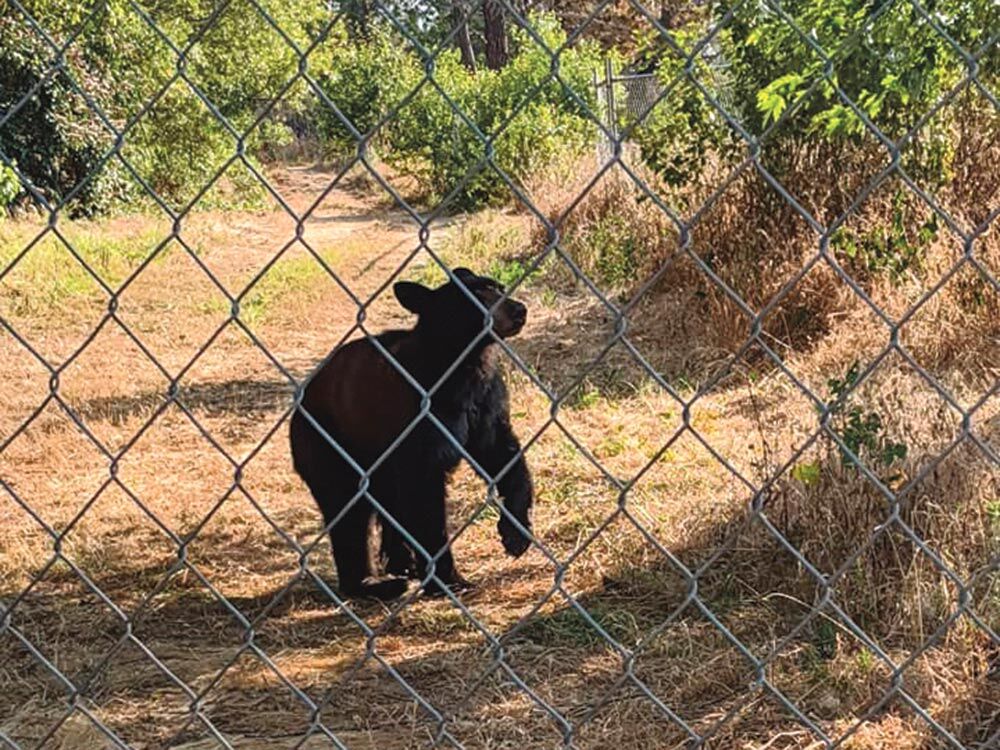
Top right, hikers in Palo Corona Regional Park in Carmel captured this photo of a black bear during shelter-in-place.
On that same day, a resident of Marina posted a photo of a young black bear on the other side of her sliding glass door. “This guy has been in the neighborhood all day, taking lemons and berries as he goes from yard to yard,” she wrote.
Camarillo, the MPRPD ranger, reports that a black bear was recently spotted and photographed by a visitor at Palo Corona Regional Park in Carmel.
Are the black bears getting bolder or changing their foraging routes while we shelter in place? Or are we noticing them more as we work from home and frequent parks more than ever before?
These are important questions when considering the appropriate course of action to deal with potentially dangerous wildlife, but as Beth Brookhouser of SPCA Monterey County sees it, wildlife has mostly been going about business as usual, largely unaffected by our crisis.
“We did hear from people surprised to see wildlife during the day. But when we spoke with them, it appears that the wildlife aren’t acting any differently. It was the people,” she says. “They were home during the day and looking out their window and noticing that a family of deer walked through their yard every afternoon. Before, they were at work and they had no idea.”
In July, Tony Singer snapped a photograph from the window of his Carmel Valley home of a bobcat sauntering through his backyard, its pale green eyes glinting in the evening sun. Singer says he sees a variety of species come through his yard, from mule deer and their fawns to red-tail hawks, lizards and skunks, but the bobcats are a rare favorite for him.
Singer has run his business out of his house for 17 years, so he’s familiar with the goings-on of the wildlife on his rural property at the top of Laureles Grade. Still, he says the shutdown has pushed him to focus on turning his yard into a garden.
While Singer reports that wildlife presence in his neck of the woods has generally remained unchanged since SIP began, he has noticed an uptick in baby deer trailing along behind their mothers. “The only thing that’s surprised me this season is the deer,” he says. “In particular there are more babies. I’ve seen mothers with one, two and three babies.”
The SPCA Monterey County received many calls about “abandoned” fawns this spring, with some people going so far as to scoop up the fawns and bring them to the center, only to realize that they just kidnapped Bambi.
“[Does] are notorious for plunking their baby down on someone’s front porch or yard,” says Ciera Duits-Cavanaugh, the SPCA’s Wildlife Center manager. “That’s where it’s safe and that’s where they sit and stay while mom goes off and forages for the day.”
Mama deer have been using our homes and city parks to hide their babies all along. It’s only now, with our human world on pause, that we are noticing these common behaviors that seem so new to us.
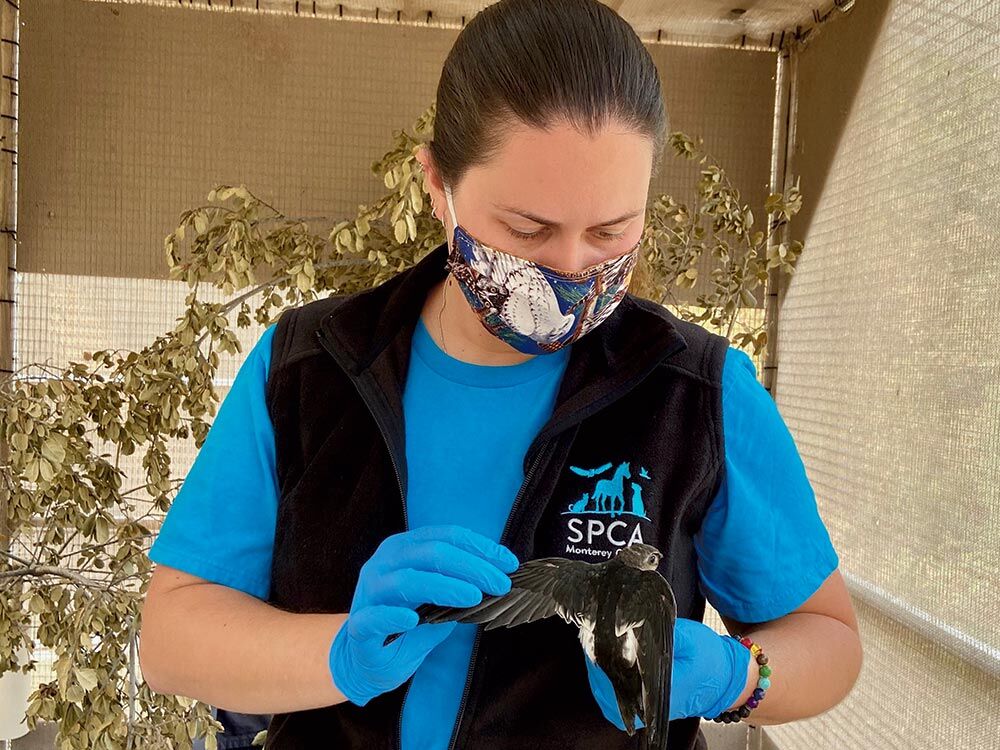
Ciera Duits-Cavanaugh, SPCA’s Wildlife Center manager, examines a wild patient.
WHEN MONTEREY’S TOURISM SEASON TRADITIONALLY RAMPS UP EVERY SPRING, different species of wildlife are impacted in different ways. In the coastal urban areas, raccoons have more trash to sift and sort through, seagulls and squirrels add more French fries to their diets, anemones sustain more finger pokes. In larger parklands like the Ventana Wilderness or the oak woodlands of Fort Ord National Monument and Toro County Park, rarely seen animals like bobcats, rattlesnakes, kestrels and badgers may be marginally impacted by increased human presence, since they already tend to avoid people and are able to forage and rest in remote areas.
Jenny Duggan, a wildlife biologist and assistant professor of applied environmental science at CSU Monterey Bay, points out that some of the animals we share our environment with, like seals, are more vulnerable to human presence than others.
“We need to worry more about the species that are in smaller parks and in places where there are not large expanses for the wildlife that’s found there,” she says. “If they’re very specialized for being in the intertidal [zone] or somewhere within the coastal area, they don’t have that flexibility where they can just shift or move away from humans and avoid them when they’re being disturbed.”
One example of a species that can’t escape human encroachment is the black oystercatcher. These shorebirds, with their neon-orange beaks and shrill whistling calls, are a favorite among birdwatchers, but their situation becomes more dire every year. These birds only live within the narrow strip of rocks between the land and the sea known as the intertidal zone. They rarely, if ever, fly out to sea or move inland, as they are not adapted to finding food anywhere else. They forage, rest, breed and care for their eggs on the rocky coastline, but are only successful when their habitat and nesting sites are undisturbed by people, dogs and urban development.
Duggan notes that animals in more widespread habitats like the open ocean or chaparral forests, as well as highly adaptable animals that coexist with urban areas such as deer and seagulls, are less at risk of being negatively impacted by people’s behavior shifts during shelter-in-place.
WHILE MANY OF OUR INTERACTIONS WITH LOCAL WILDLIFE THIS SUMMER HAVE LIKELY BEEN ENDEARING, urban wildlife is still wild. Remember that first month of quarantine when we all blasted past our 10,000-step goals while walking our dogs around our neighborhoods? The deer and their offspring probably remember that too. Tim Perkins, a Monterey resident who lives just one block from busy Lighthouse Avenue, had a scary late-night interaction in April when two mama deer and two fawns escorted Perkins and his dog down the street.
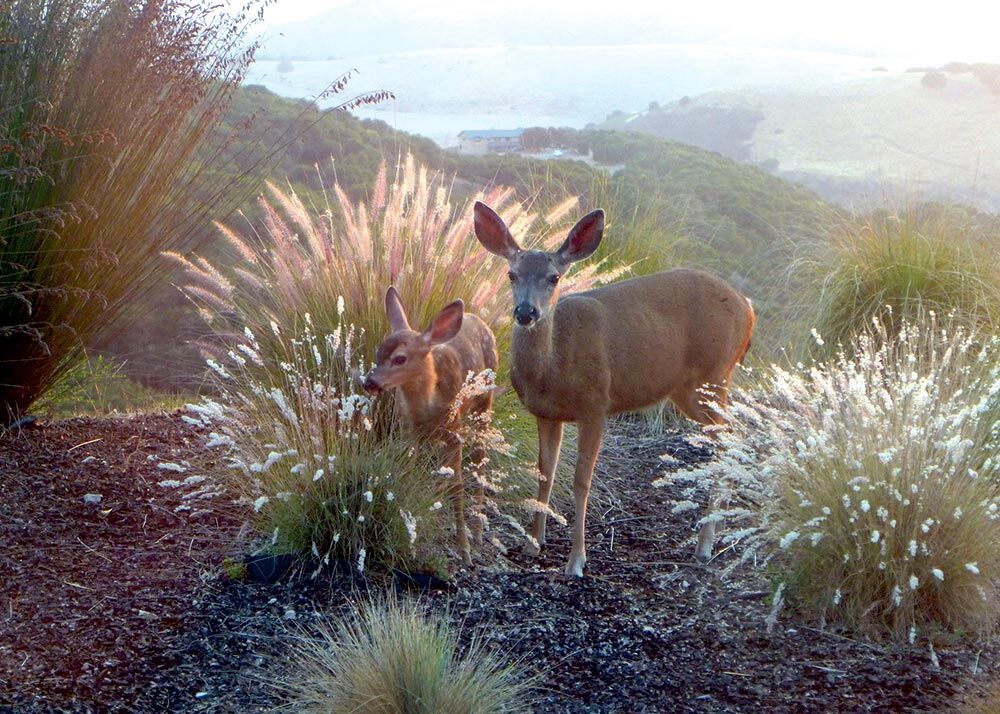
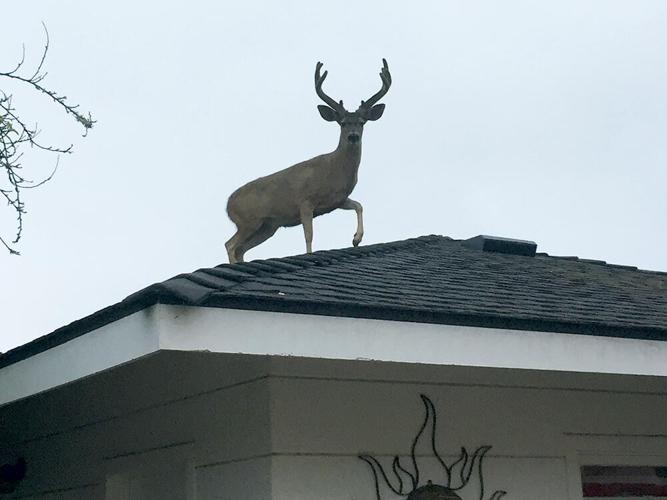
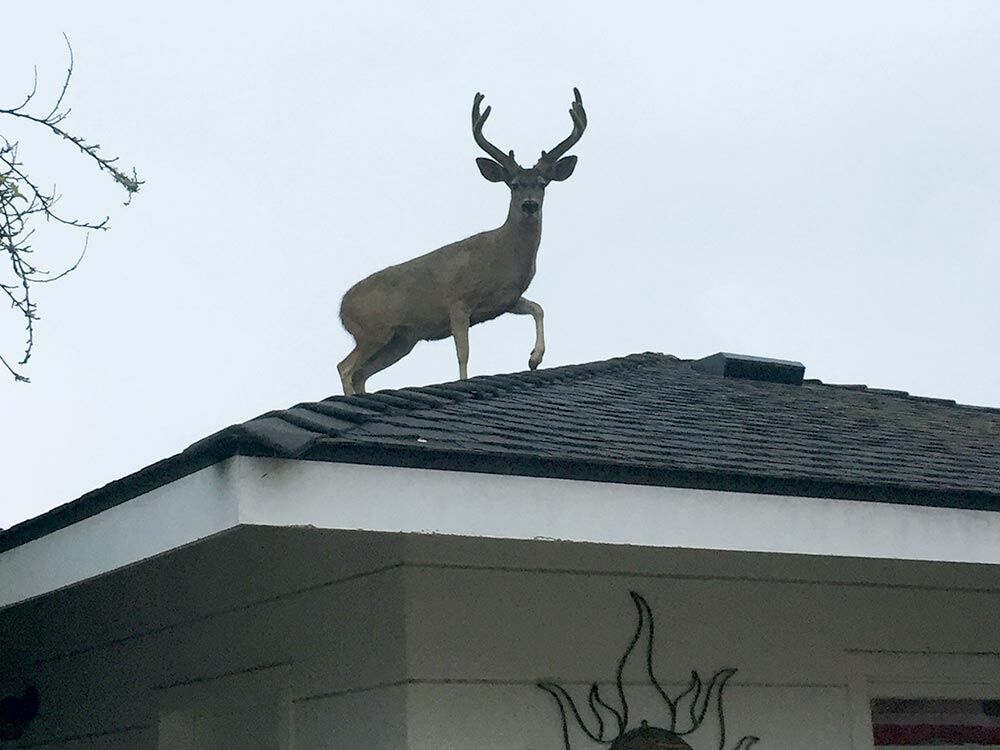
These deer are among the wildlife seen during SIP in the photographer’s Laureles Grade backyard.
“I was freaked out, I was alone, I was just walking along, not really paying attention and then suddenly there’s all these deer closely following us, making sure we were carrying on,” Perkins recalls.
This experience took place in the spring when, unsurprisingly, many fawns were being defended from well-intentioned walkers and their perhaps not-so-well-intentioned dogs. In the summer, Perkins says his wife was out walking their medium-sized basenji, Bella, again and as she rounded the corner, “there were deer standing right there and Bella just went ballistic at them.” But the deer didn’t budge. Perkins heard the commotion and rushed out of his house waving a golf club to get the deer to back off. “They just stand there and stare at you,” he says. Perkins banged his driver on the ground, hoping the noise would scare them off, but the deer began walking toward him, then eventually turned around, wandered on to the neighbor’s yard, ate some grass and then slowly walked off.
“They just have no fear at all,” he says.
For Perkins and his wife, urban wildlife are more of a nuisance than something to fawn over, as the deer and gophers have repeatedly made meals out of their garden while a family of raccoons walk through their yard almost every night, stopping in the middle to stare at and terrorize the dog.
At Elkhorn Slough, Feliz has found peace in watching the migratory bird populations come and go since our world came to a halt. He lives onsite at the reserve and since SIP began, he reports that the wildlife presence has remained relatively unchanged. As this human-centric catastrophe stretches toward its seven-month mark, many – if not most – species are carrying on as usual.
“When the pandemic started, the shorebirds were still here. Then they left, went up to Canada to nest and now they’re back. They’re unaffected by this, which is sort of heartening to know… that life goes on,” he says. “We know that all those cycles are still happening. The red-necked phalaropes are showing up like they do every year. The red-tails are raising their young. Life went on and that says a lot, despite this crisis going on in the human world.”
(0) comments
Welcome to the discussion.
Log In
Keep it Clean. Please avoid obscene, vulgar, lewd, racist or sexually-oriented language.
PLEASE TURN OFF YOUR CAPS LOCK.
Don't Threaten. Threats of harming another person will not be tolerated.
Be Truthful. Don't knowingly lie about anyone or anything.
Be Nice. No racism, sexism or any sort of -ism that is degrading to another person.
Be Proactive. Use the 'Report' link on each comment to let us know of abusive posts.
Share with Us. We'd love to hear eyewitness accounts, the history behind an article.