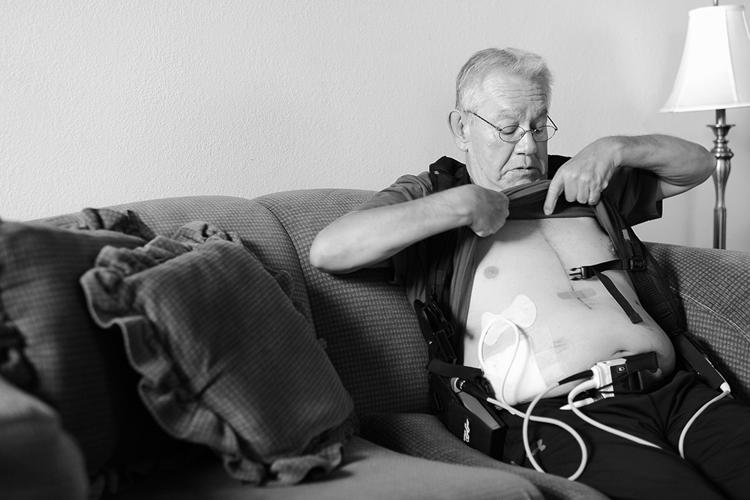
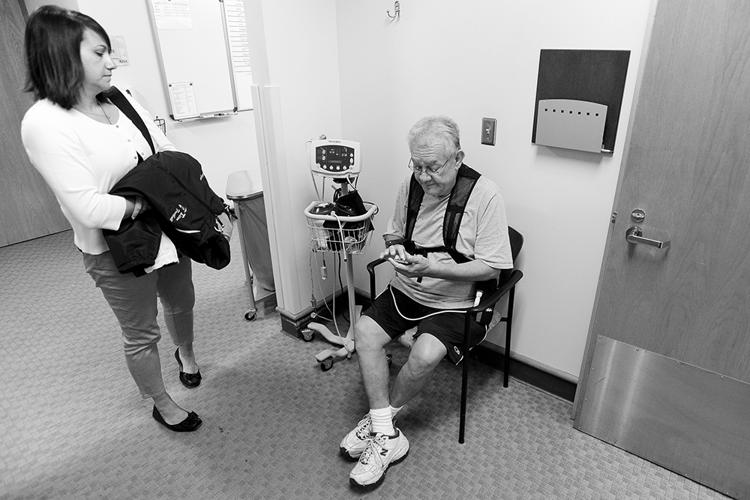
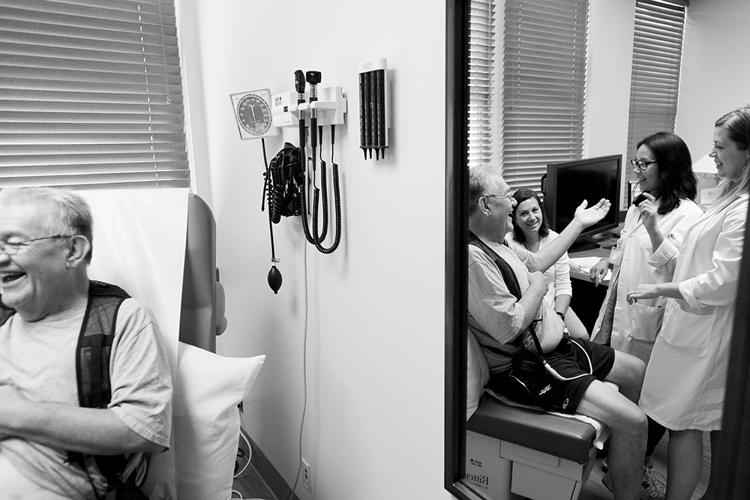
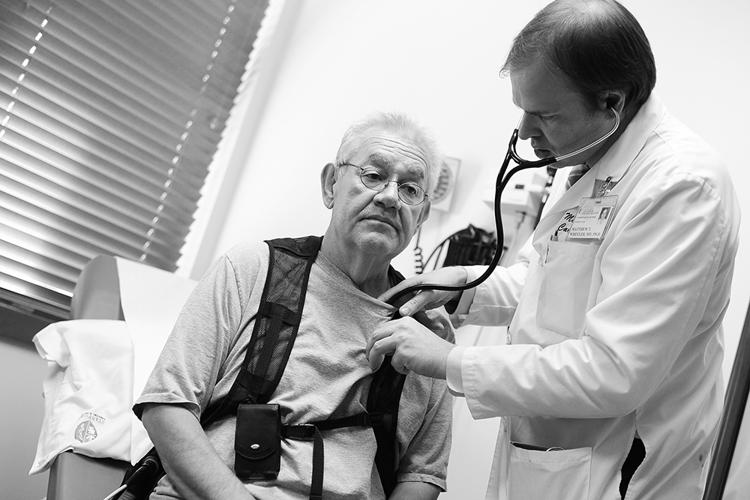

A nurse fiddles with the tube poking out of George Grimm’s stomach. It’s connected to the machine in his chest that’s keeping him alive.
“Marie hurt me,” Grimm complains.
“I’m always getting in the way,” the nurse replies dryly. She’s seen Grimm often enough to recognize his teasing. The staff at Stanford Medical Center is so familiar now, Grimm says, they’re like family.
“I love you guys,” he tells her.
On a previous visit, Grimm told the nurses that if it wasn’t for them and the docs who saved his life, his family would be “burying me under the pitching mound.” That’d be the pitching mound at El Dorado Park in Salinas, where he’s spent a good portion of the last three decades coaching children’s baseball teams.
And he’s only partly joking: If he’d died in the Salinas Sports Complex parking lot last year, after the first of six cardiac arrests, he’d gladly spend eternity under the El Dorado ballfield.
But what the future holds is no laughing matter: Grimm will spend the rest of his life attached to a portable machine, or with another person’s heart sewn into him. Either way it’s a life of pills, carefully watched diets and uncertainty.
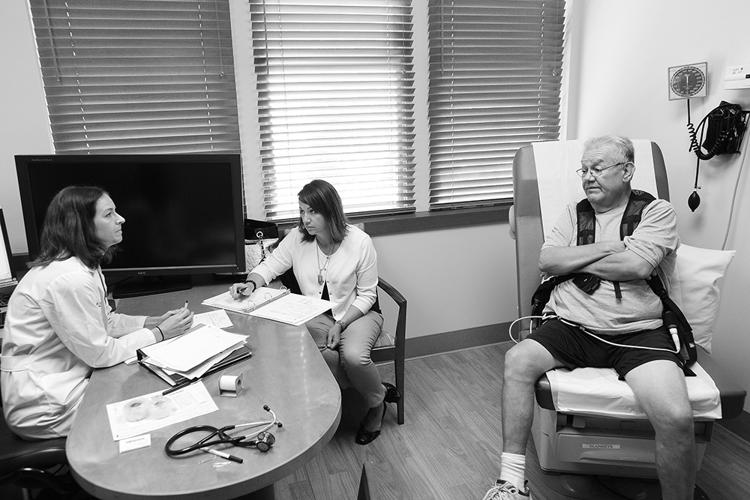
The good news is, he’s alive. Dr. Dipanjan Banerjee, his Stanford physician, says if Grimm had come to the medical center just three years earlier under the same circumstances, chances are he wouldn’t have even gotten the life-saving machine now whirring in his chest.
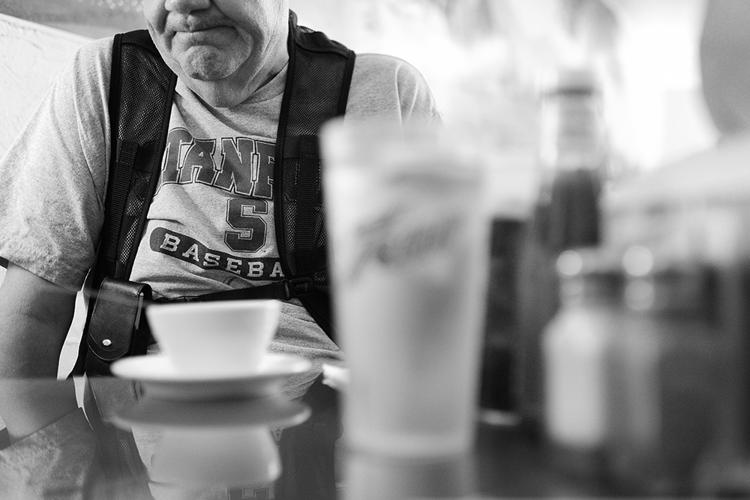
This May, Grimm had a left ventricular assist device, or LVAD, implanted in his heart. The machine helps his heart pump, and is connected through a tube that runs out of an open wound in his abdomen to a battery pack and small computer he wears strapped to a black vest.
The technology gives people who previously would have needed a whole new organ the chance to live relatively comfortably without one. The LVAD has only been approved as a substitute for heart transplants in patients with heart failure since 2010.
Because the treatment is so new, many doctors and patients still don’t know about LVADs. Grimm, says his doctor, is one of the lucky ones.
• • •
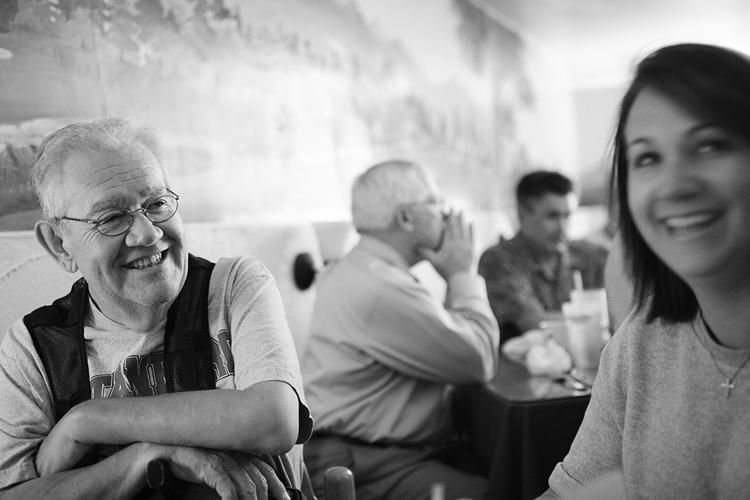
On a recent Wednesday, Grimm’s family and friends join him for lunch at Dudley’s, an Oldtown Salinas restaurant he’s eaten at almost every day for the past 18 years. (He no longer orders the salt-laden turkey burgers.) The restaurant, where his wife is a waitress, has been a hub for his loved ones’ efforts to raise awareness of his possible heart transplant – still his best option for long-term survival, despite the LVAD.
The crew has spent weeks planning a fundraiser called “Pony Up for Papa,” a play on Grimm’s nickname and the PONY (Protect Our Nation’s Youth) baseball league he’s long been part of.
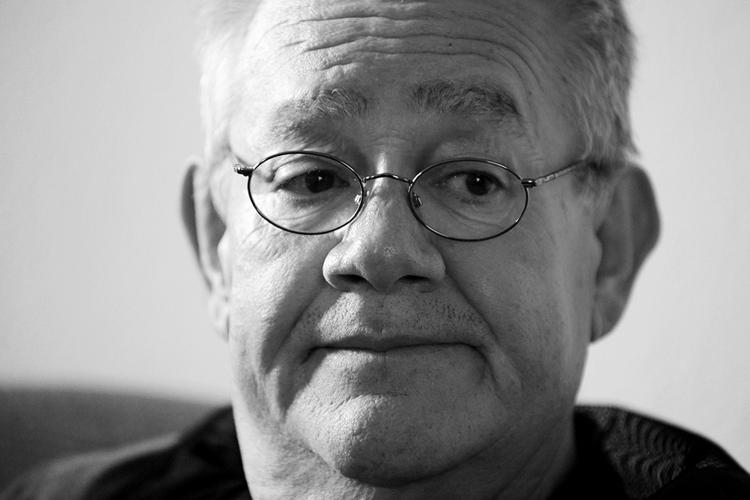
Grimm sports a T-shirt, shorts, wire-framed glasses and a shock of white hair. He looks like he’s in relatively good shape, but he’s lost 60 pounds in eight months. At 59, he’s eight years older than his grandfather was when he died of a heart attack.
At the table is Mindy Carpenter, his daughter Tracie’s best friend. Carpenter tells everyone she’s his daughter – Grimm would be offended otherwise. Next to her is Diane Malloy, a longtime family friend. To these women, and to many of the kids Grimm has taught baseball to over the years, he’s known as “Pops.”
Malloy met Grimm in the early 90s, when she was a single mother raising two children and Grimm had just helped found Salinas’ branch of PONY Little League. The hairdresser says she can never repay her friend for facilitating the scholarships that helped put her son through baseball and her daughter through cheerleading.
Grimm’s spent a lot of his own time supporting the baseball league, and money purchasing team equipment like cleats and uniforms. “He’s single-handedly run this league for many years,” Malloy says. “I don’t know how he’s done it.”
His PONY work coincides with decades of volunteering for Salinas Recreation T-ball, Hartnell Little League, the National Alliance for Youth Sports for the Salinas Valley and other organizations – on top of his day job as a truck broker. He’s also the legal guardian for his two grandsons.
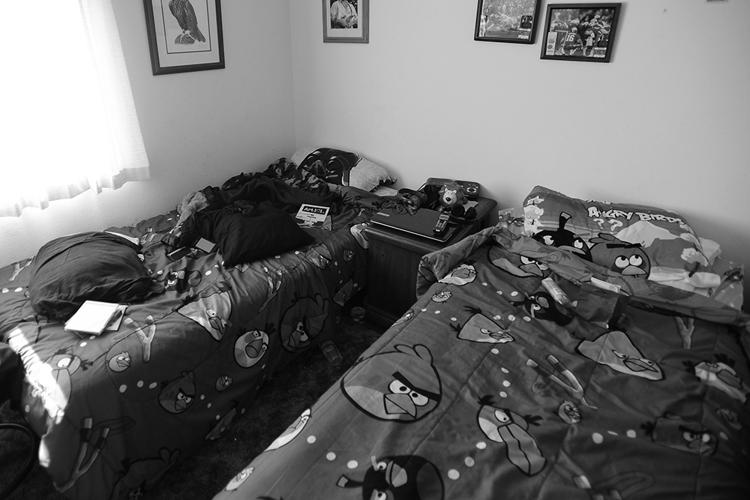
“I don’t feel as sorry about my health as much as everybody else does, because it’s going to be what it’s going to be,” Grimm says. But he’s got two red-headed reasons to keep fighting: his son’s kids, 12-year-old Killian and 13-year-old Orion, who have been living with him for about eight years.
“I want [my health] to be good enough to see these boys graduate from high school and be productive citizens,” Grimm says.
He’s not alone.
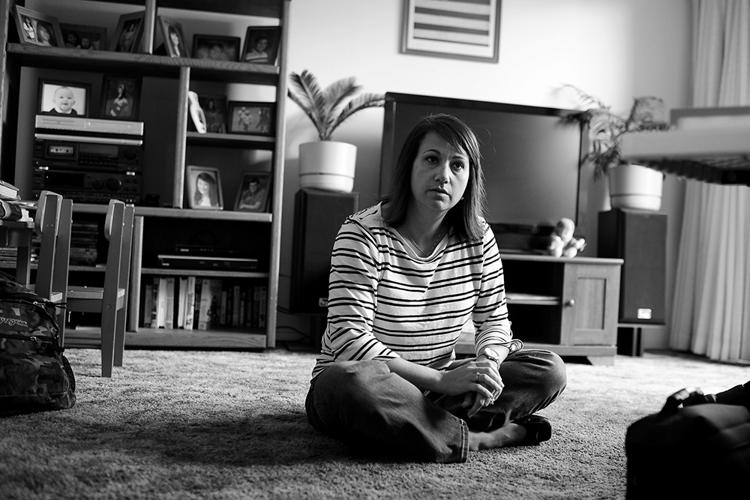
“I wake up at night and do a lot of ‘What ifs,’” his wife Lynn says, tears coming to her eyes. Malloy chokes up too. They reach for napkins from the table dispenser.
“We’re not emotional, so watch out,” Grimm jokes.
• • •
His first major cardiac arrest hit in the parking lot of the Salinas Sports Complex in November 2012. Grimm was taking Orion to the championship game of the Alvarez Titans, the football team of which Grimm had been vice president. He remembers having trouble parking in the handicap section because it was roped off (Grimm’s considered disabled because of heart-bypass and back surgeries), and then pulling off to find parking in the main lot. He doesn’t remember what happened next.
When he woke up, he was barreling toward the emergency room of Salinas Valley Memorial Hospital. Within two months, Grimm suffered five more cardiac arrests. After multiple follow-ups, Grimm met a Stanford doctor (SVMH’s heart center has a partnership with the university) who referred him to Stanford Medical Center for further treatment.
It wasn’t a complete surprise; he’s suffered from heart failure since 1995, and in 2005 he had bypass surgery and a defibrillator put in. He no longer drinks alcohol, but he’s got a family history of heart problems, which claimed both his grandfather and his mother.
“Over time there’s more and more people with heart failure in the U.S., because, ironically, we’re getting better at treating it,” says Banerjee, his Stanford doctor and medical director of the hospital’s Mechanical Circulatory Support Program. “More people are surviving, but they’re getting sicker because they’re living longer.”
Nearly 6 million people in the United States have heart failure, and about 700,000 new cases are diagnosed every year.
When Grimm got to Stanford, he was too sick for a heart transplant, which doctors consider the best option for people with severe heart failure. Instead docs opted to set him up with an LVAD. Stanford, the site of America’s first heart transplant in 1968, only started installing LVADs regularly about three years ago, when the FDA approved the Heartmate 2 – the most popular brand of LVAD – as a viable long-term substitute for heart transplant. (Former U.S. Vice President Dick Cheney may be the most famous recipient; he had an LVAD for 20 months before his heart transplant.)
“[Grimm] was lucky his cardiologist recommended he might need [LVAD] therapy they couldn’t offer locally,” Banerjee says. SVMH installs some LVADs, but not the permanent kind Grimm has. Many referring physicians are either unaware of LVAD technology or reluctant to recommend it, he adds; he’s traveled the state telling doctors about the procedure.
Grimm could attempt to spend the rest of his life with the LVAD, but it’s a gamble: The machines, on average, don’t last more than five years due to wearing out or clotting. Replacing the machine requires more surgery – and with that, more chances for complications and infection.
“We don’t think yet of LVADs as a long-term option,” Banerjee says, “except for patients who don’t have any other options.”
The better route, for those eligible, is a heart transplant, which averages 10 successful years and is less risky overall. Because Grimm was so ill early in his treatment, physicians didn’t know if his body could handle a transplant. But now it looks like he may be ready, and doctors are working to get him on the eligibility list.
That’s what Grimm’s hoping for. Meanwhile, he needs to start raising money for the procedure which may include a kidney transplant too. His friends and family are ball-parking $50,000 for now; his insurance covers some, but not all costs.
In October, Grimm’s army of supporters will hold a fundraiser in anticipation of the transplant. They talk about “paying it forward,” something Grimm’s been doing for years. This time, it’s Grimm’s turn to receive a helping hand.
“That’s my biggest thing, pay it forward somewhere,” Grimm says. “It’ll always come back one way or another. Either here or heaven.”
Meanwhile, he’s doing his best to use that forward momentum to get him through endless checkups, meds and healthy food at Dudley’s. “It sucks,” he says.
He pauses. “I shouldn’t say it sucks. I’m alive, and I’m not under a pitching mound at El Dorado Park.”
THE PONY UP FOR PAPA FUNDRAISER FOR GEORGE GRIMM is Oct. 5 at the Salinas Sports Complex. There will be a barbecue ($10), raffle ($5) and bake sale. For more information, call Tracie Wyrick at 596-9277 or visit the “Pony Up for Papa” Facebook page.
VITAL SIGNS ~ Putting Monterey County heart disease in context.
• The top five causes of death in Monterey County, from 2005-08, were heart disease, cancer, stroke, respiratory disease, and accidents, but not for African-Americans, who succumb to heart disease less and cancer more.
• The most recent data shows 29 percent of Monterey County teens ages 12-17 are overweight or obese; 18 percent of Monterey County teens reported drinking two or more cans of soda per day in 2009. Obesity is a risk factor for heart disease.
• Heart disease is also the leading killer in the United States and many European countries, followed by cancer. In China, where pollution is rampant, cancer ends more lives.
• About 84 million people in the United States suffer from some form of cardiovascular disease, causing about 2,200 deaths a day. That averages one death every 40 seconds.
• Five years ago, heart transplants almost doubled the installation of Ventricular Assist Devices, which were then not considered as reliable. Today VADs outpace heart transplants at a rate of about three for every two transplants.
Sources: John Hopkins Hospital, Centers for Disease Control and Prevention, Monterey County Health Department, Stanford University Medical Center, The China Post
(0) comments
Welcome to the discussion.
Log In
Keep it Clean. Please avoid obscene, vulgar, lewd, racist or sexually-oriented language.
PLEASE TURN OFF YOUR CAPS LOCK.
Don't Threaten. Threats of harming another person will not be tolerated.
Be Truthful. Don't knowingly lie about anyone or anything.
Be Nice. No racism, sexism or any sort of -ism that is degrading to another person.
Be Proactive. Use the 'Report' link on each comment to let us know of abusive posts.
Share with Us. We'd love to hear eyewitness accounts, the history behind an article.