
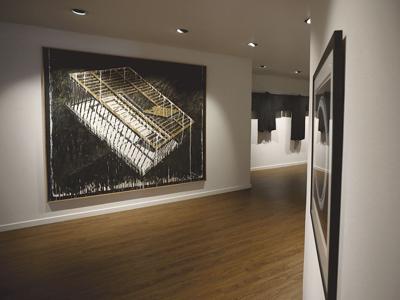
This is the latest wave of artistic response from those directly affected by the traumatic events of 1942-1946 that marked the U.S. history like an ugly, if rarely acknowledged, scar.
In the last decades of the 19th century and the first decades of the 20th century, about 200,000 Japanese people emigrated to Hawaii to work on the islands’ sugar plantations. Some 180,000 moved to the U.S. mainland, the majority starting farms and small businesses on the West Coast, which makes the tragedy that followed a quintessentially Californian experience.
In winter of 1941, just about two months after the attack on Pearl Harbor, U.S. Executive Order 9066 signed by president Franklin Delano Roosevelt sent more than 120,000 Japanese-Americans to what this group of artists don’t shy away from calling “concentration camps.” California defined anyone with 1/16th or more Japanese lineage as sufficient to be interned. They were transported away from their homes and communities and jobs and personal possessions and imprisoned for as many as four years in tar paper barracks in heavily guarded camps throughout the American West.
“As a Californian, I feel responsible,” says Gail Enns.
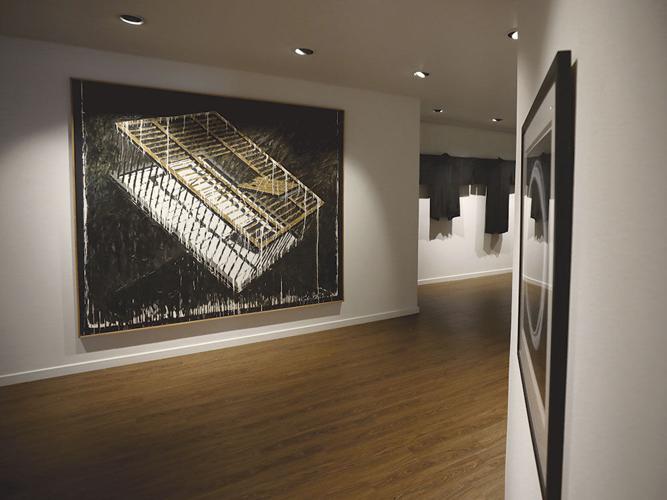
Enns is the curator of an exhibit opening Thursday, Sept. 9, at the Monterey Museum of Art that features pieces by eight Japanese-American artists, all directly addressing internment. She first encountered the art of sansei artists – sansei refers to third-generation Japanese immigrants – eight years ago in Sand City, and since then helped to put together 17 exhibits around the same theme.
Having one in Monterey is special, Enns says, because Monterey was one of very few places that welcomed Japanese-Americans back, with early attempts to proclaim it a sanctuary city for returning families.
But it was not all a rosy story. During World War II, some 3,500 Japanese and Japanese-American people in Monterey County were forcibly removed from their land and their homes to internment camps. Many families never returned.
It was not until 2018 – 72 years later – that the Monterey County Board of Supervisors issued a formal apology to members of the Japanese-American community, on the anniversary of the federal executive order on internment.
Enns and Carmel Valley-based sansei photographer Jerry Takigawa have been working together for years; other artists presented in the exhibit, except for now Georgia-based Tom Nakashima, reside and make art in California.
The third-generation Japanese-American artists represent the last connection to people who lived through this painful chapter in American history. Selected works of eight artists featured in this exhibit, titled “Shadows from the Past: Sansei Artists and the American Concentration Camps,” showcases the collective impact of the wartime internment and lives in diaspora.
In addition to the exhibit, MMA will hold a virtual panel discussion with insights on the works and invite live questions from the audience. There will also be a history panel, treasures from the Japanese-American Civil Liberties Collection and the Remembrance Lantern Workshop by one of the artists, Na Omi Judy Shintani.
Enns visited the museum a week before the exhibit opening, during the installation of the artists’ work. She was stunned to see the art going up: “It is really exquisite. I can’t believe how quietly elegant it looks.”
As the exhibit was being installed, the Weekly asked the participating artists about their work and revisiting this chapter of history now, during a time that anti-Asian hate crimes have been surging. A selection of their answers follows below.

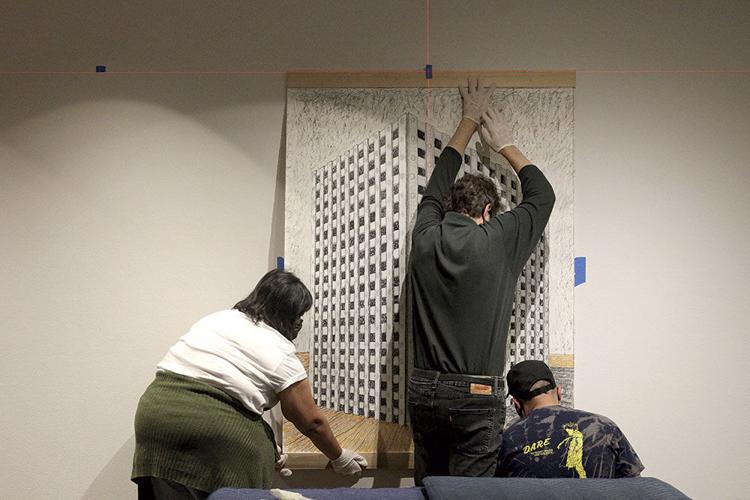
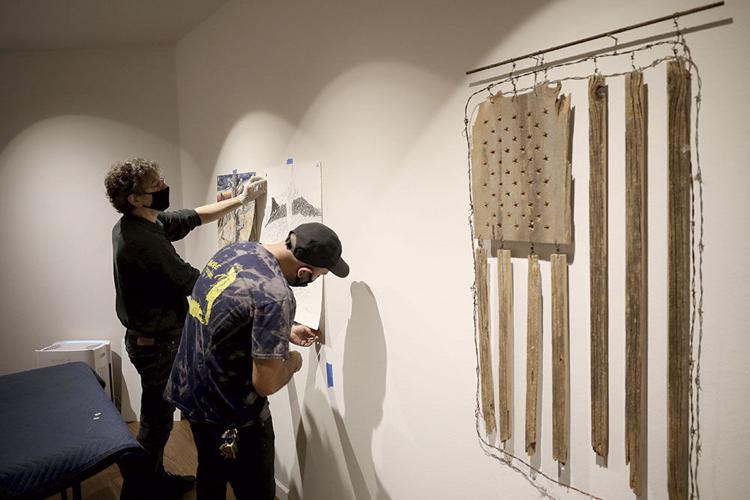
John Rexine, Noah Gonzalez and Noelani Castro from the Monterey Museum of Art’s installation team hang pieces for the upcoming show.
Weekly: Why did you become an artist?
Wendy Maruyama: I have always been a visual person. As a deaf person, it seems to be natural for me to respond to things I see and to be able to make things with my hands. I am also a woodworker.
Masako Takahashi: I just don’t feel like myself unless I’m making something. As a child, I was encouraged to make art. I entered a painting contest when I was 4 and won the first prize. In high school, I won a scholarship to the Art Institute in San Francisco (then called the California School of Fine Arts). I was an art major at Bard College, and later at UC Berkeley.
Na Omi Judy Shintani: Because of my mother. I was 3 years old and very active. She was trying to find something for me to do. We tried ballet, swimming; an art class did the trick.
Reiko Fujii: When I was 45 years old, my two children were becoming more independent. To avoid the empty nest syndrome, I decided I would go back to school to study art and work towards a master’s degree. I am interested in the creative process of incorporating video, photography, glass, installation and book arts into multidisciplinary art pieces, using my family’s and my own Japanese-American experiences.
Lucien Kubo: I have been active in the grassroots movement for social change. That has informed and inspired my art. As artists, we must be part of this reality. Whether it is about immigration, democracy, social justice, equality, global warming and the environment, art and involvement can be powerful tools.

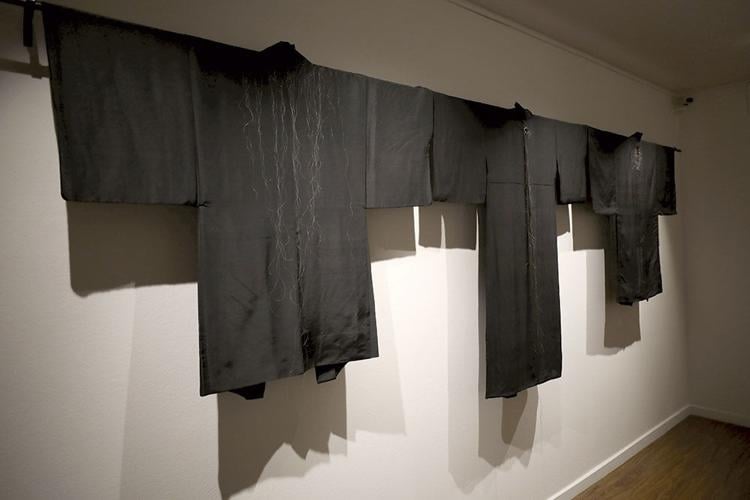
Masako Takahashi’s piece “Generations” is made of vintage silk kimonos embellished with the artist’s hairs, “a tribute and reference to the endurance of those who have gone before me.” The kimonos are installed in a line with their sleeves just touching, indicating an unspoken intimacy.
What is your family story related to internment? How did you learn about it?
Fujii: My parents never explained what they meant when they talked about “friends from camp.” When I was young, I always thought they were referring to some kind of summer camp. When I was in high school, my Auntie Haru explained it to me. She thought the experience in the camps and the stress related to returning home culminated in my mother’s psychotic breakdown the day after I was born.
Takahashi: I was born in a concentration camp called Topaz, Utah. It’s like a birthmark, something you may not dwell on, but cannot forget because it’s part of you. I lived most of my life without focusing on the subject, but when my father passed away I was overcome with a sense of my ancestry. The kimono installation, “Generations” [featured as part of this exhibit], is the result.
Jerry Takigawa: My family’s story is typical. The heads of households were taken early by the FBI to military prisons. The rest of the family moved later to assembly centers and then to the camps. Because of the careful way my parents depicted the incarceration as I was growing up, I didn’t experience the full impact of that event until much later in my life. I could see it was a result of racism, economic opportunity and war hysteria – a failure of political leadership. In short, it was a mistake.
Lydia Nakashima Degarrod: My father grew up in Peru and suffered from the actions of the Peruvian and U.S. government during World War II. They were deported to camps in the U.S. My father, who was a teenager, had to escape to Chile to avoid being sent to a camp. He didn’t speak much of this difficult period of his life. I learned about it mostly from my mother after he passed away.
Kubo: My parents and their families were interned in Topaz. We visited this camp and spent the day walking until we found the concrete foundations of my parents’ barrack, their high school, and the hospital. It was a desolate place and I will never forget that day.
“It’s like a birthmark, something you may not dwell on, but cannot forget because it’s part of you.”
Shintani: My grandfather from my father’s side had an oyster farm in Washington. He was taken first, supposedly because he knew something about submarines and they suspected maybe he was a spy. My mother’s family was in Hawaii when Pearl Harbor happened. There were too many Japanese in Hawaii to incarcerate all of them, but they took community leaders, including my grandfather, to a camp in Santa Fe. I didn’t know any details until I was in my 40s.
Maruyama: When the war broke out, my grandfather chose to move his family inland rather than go into the incarceration camps. But their circumstances were equally harsh. Eventually they relocated to Colorado after discovering that Japanese-Americans were not welcomed in Utah. I didn’t even know about the Executive Order 9066 until about eighth grade.
Almost 80 years have passed. How has your thinking about the events of 1942-46 evolved in the context of your artistic experience?
Maruyama: Even though 80 years seems like a long time, it happened not that long ago. What saddens me is that things have not changed at all. I also think that my parents’ and grandparents’ generation were incredibly resilient and I can’t imagine going through what they had to go through if this were to happen today.
Takigawa: Over the past six, seven years, I’ve researched my family history. My parents’ silence about the camps was designed to protect me from their feelings about what happened. But, like all secrets, their trauma was silently passed on to their children. I now have a better understanding of my own motivations and viewpoints by uncovering the past.
Takahashi: Current events, sadly, remind me all too constantly of the concentration camps of the past, including my own. At least I was not separated from my family. Many Japanese-Americans have recently been demonstrating against the disastrous incarcerations at our southern border.
Degarrod: Growing up in Chile, I was a witness to my grandfather’s and my father’s sense of displacement which I didn’t fully understand until I was an adult. The events of World War II resulted in the severance of their connection to Japan. Working on the installation gave me the opportunity to reflect on these events and atone some of my family’s pain.
Pick one of your pieces from the exhibit and describe it please.
Degarrod: “Scattered Seeds of the Cotton Bolls” is an installation of 75 flowers which I made to honor my family’s memories and to atone their suffering. I achieved this in the making of the papers, by mixing the fibers of mulberry and yerba buena, an herb used in Latin America for soothing pain, and in the embroidery of the flowers by combining European techniques along with Sashiko, a Japanese way of mending torn clothing.
Takahashi: The kimono is an iconic Japanese garment. In Japan, black kimonos are worn by women and men for formal occasions like weddings and funerals. Installed, my kimonos touch gently at the sleeves, implying a passing along of something Japanese from one to the other. In some exhibitions I’ve installed as many as seven in a row, as at the Monterey Museum of Art.
“Art is a mirror – an opportunity for understanding – and a window to open minds.”
Fujii: “The Detained Alien Enemy Illuminated” is a light box, where images fused onto the enclosed bottles are visible through the translucent Crystal City Detained Alien Enemy Detention Center address label images. These envelope images from camp are fused onto the windows on the front. All of the images on the bottles are of family, friends and acquaintances, representing stories they experienced while they were unjustly imprisoned in the desert for up to four years.
Takigawa: Yes. Yes. 2016, shows my parents together in front of a camp barrack. Their black-and-white image has been blurred to freeze a fading memory and there are shreds of paper showing two problematic questions from the government loyalty questionnaire required of the prisoners. Most of the Japanese community felt these two questions were an affront to their integrity, having been incarcerated without due process. I assume my parents answered “Yes” and “Yes” as they were not sent to Tule Lake with those who answered “No” and “No”.
Shintani: Let’s talk about my newest piece, Illuminations. I did a survey of 15 questions to understand what other survivors are thinking. I asked them questions, such as what they would like to ask their ancestors; I wanted to better understand this experience. Illuminations are about understanding thoughts of the descendants.

John Rexine, the director of collections and exhibitions at Monterey Museum of Art (left), and Noah Gonzalez from the MMA installation team hang pieces in the upcoming show.
What do you hope viewers take away from this exhibit?
Fujii: The Japanese-American experience, especially their unjust incarceration, is part of American history. One of my main hopes is that we are educating people about that experience.
Takahashi: I filter my feelings through art-making. I hope viewers translate the work into their own personal language, and find meaning in it.
Kubo: The same racism that created the camps and detention centers is still alive with the white supremacy we see today. I like to think my art is part of a collective Asian voice, calling out for change in this world. We need compassion, democracy, equality and peace.
Shintani: I want people to understand the legacy of this injustice. And how it can live in families, from generation to generation. I feel like both an insider and an outsider.
Takigawa: Art is a mirror – an opportunity for understanding – and a window to open minds. There is a hope that those who experience the exhibition will leave seeing things a little differently. In times of crisis and uncertainty, we are most receptive and most in need of creative energy. It is through art that the heart is open. Art imparts empathy – and empathy illuminates history.
(0) comments
Welcome to the discussion.
Log In
Keep it Clean. Please avoid obscene, vulgar, lewd, racist or sexually-oriented language.
PLEASE TURN OFF YOUR CAPS LOCK.
Don't Threaten. Threats of harming another person will not be tolerated.
Be Truthful. Don't knowingly lie about anyone or anything.
Be Nice. No racism, sexism or any sort of -ism that is degrading to another person.
Be Proactive. Use the 'Report' link on each comment to let us know of abusive posts.
Share with Us. We'd love to hear eyewitness accounts, the history behind an article.