





THAT THE WORSENING CLIMATE CRISIS IS MAKING THE PLANET INCREASINGLY INHOSPITABLE TO HUMAN LIFE is a storyline that finally appears in a number of news outlets. But there are more layers to our destructive treatment of our own home. For example, “forever chemicals” are so abundant in our world that rainwater is no longer safe to drink.
Even though the PFAS story has received some mainstream media attention, the bottom line didn’t come through clearly to the general public. That is essence of what Project Censored’s signature “top ten” list is all about: exposing the suppression (active or passive) of vitally important information from the public, which renders the public unable to act in the way that a healthy democratic public is supposed to.
This year’s compilation adds forever chemicals to a story that is all too familiar. Specifically, the revelation that companies responsible for them have known about their dangers for decades, but kept those dangers hidden – just like fossil fuel companies and climate catastrophe. The intersection of environmental/public health and corporate criminality is typical of how certain long-standing patterns of censored news weave together across the years, even decades.
In the larger 25-story list in their annual book, The State of the Free Press, Andy Lee Roth and Steve Macek describe these patterns at two levels. First, invoking the metaphor that “exemplary reporting is praised for ‘shining light’ on a subject or ‘bringing to light’ crucial facts and original perspectives,” they say: “The news reports featured in this chapter are rays of light shining through a heavily slatted window. Each of these independent news reports highlights a social issue that has otherwise been dimly lit or altogether obscured by corporate news outlets… Censorship, whether overt or subtle, establishes the angle of the slats, admitting more or less light from outside.”
In addition, they say, it’s important to see the “list as the latest installment in an ongoing effort to identify systemic gaps in so-called ‘mainstream’ news coverage.”
Two themes – environmental harm and corporate abuse – dominate the top ten list. That dominance sends another message as well, a message about the fundamental mismatch between our needs as a species living on a finite planet and a rapacious economic system conceived in ignorance of that fact. The climate catastrophe is just the most extreme symptom of this mismatch, but it’s far from the only one. Corporate abuse figures into every story in the list, though sometimes deep in the background. These patterns touch us all.

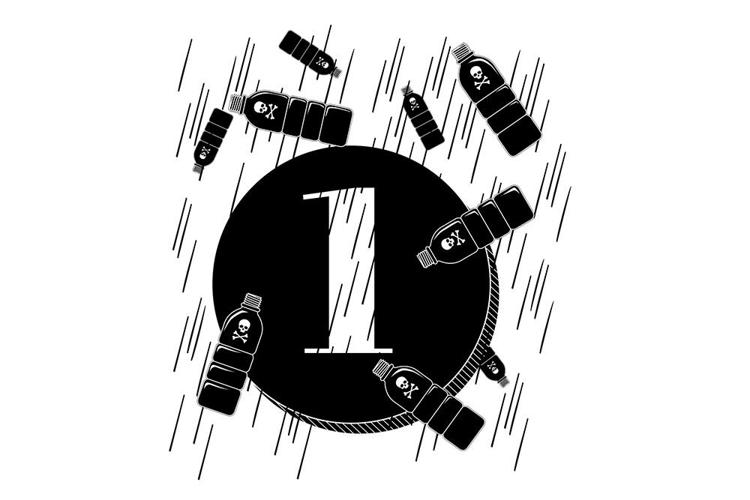
1. ‘Forever chemicals’ in rainwater pose a global threat to human health.
Rainwater is “no longer safe to drink anywhere on Earth,” Morgan McFall-Johnsen reported in Insider in August 2022, summing up the results of a global study of so-called “forever chemicals,” polyfluoroalkyl substances (PFAS), published in the journal Environmental Science & Technology. Researchers from Stockholm University and the Institute of Biogeochemistry and Pollutant Dynamics at ETH Zurich concluded that “in many areas inhabited by humans,” PFAS contamination levels in rainwater, surface water and soil “often greatly exceed” the strictest international guidelines for acceptable levels of perfluoroalkyl acids.
“PFAS were now ‘so persistent’ and ubiquitous that they will never disappear from the planet,” lead researcher Ian Cousins told Agence France-Presse. “We have made the planet inhospitable to human life by irreversibly contaminating it now so that nothing is clean anymore. We have crossed a planetary boundary.”
Meanwhile, researchers at UC San Francisco published a study in the Annals of Global Health using internal industry documents to show that the companies responsible for forever chemicals have known for decades that these substances pose significant threats to human health and the environment.
There’s been coverage of the series of lawsuits developing in response to PFAS. However the story that rainwater isn’t safe to drink remains largely missing.

2. Hiring of former CIA employees blurs the line between Big Tech and Big Brother.
“Google is filled with ex-CIA agents,” Alan MacLeod reported for MintPress News in July 2022. “An inordinate number of these recruits work in highly politically sensitive fields, wielding considerable control over how its products work and what the world sees on its screens and in its search results.
“Chief amongst these is the trust and safety department, whose staff, in the words of the Google Trust and Safety Vice President Kristie Canegallo, ‘decide what content is allowed on our platform’ – in other words, setting the rules of the internet, determining what billions see and what they do not see.”
As State of the Free Press noted, “A former CIA employee is working in almost every department at Google.”
Google isn’t alone – nor is the CIA. “Former employees of U.S. and Israeli intelligence agencies now hold senior positions at Google, Meta, Microsoft and other tech giants,” Roth and Macek wrote.
MacLeod cited the 1983 testimony of former CIA task force head John Stockwell, author of In Search of Enemies, in which he described the dissemination of propaganda as a “major function” of the agency. “I had propagandists all over the world,” Stockwell wrote.
While major newspapers cover Big Tech, they have failed to cover the story about the widespread hiring of former intelligence officials.

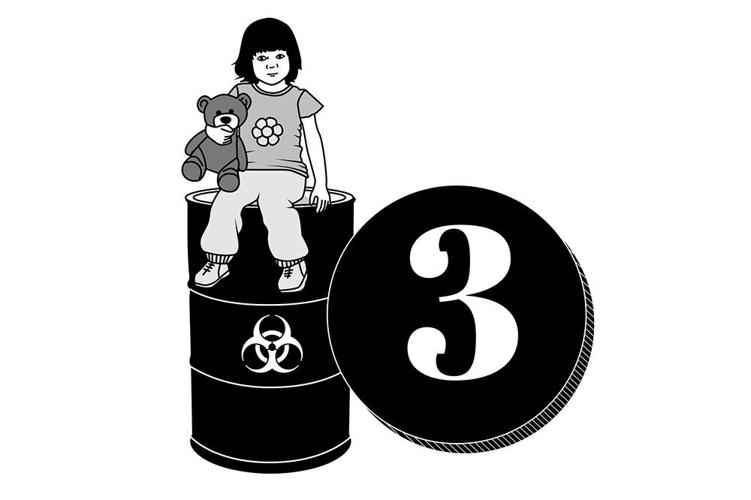
3. Toxic chemicals continue to go unregulated in the United States.
The United States is “a global laggard in chemical regulation,” ProPublica reported, a result of chemical industry influence and acquiescence by the Environmental Protection Agency, according to reporters Neil Bedi, Sharon Lerner and Kathleen McGrory. An example: Asbestos, one of the most widely-recognized toxic substances, is still legal in the U.S., more than 30 years after the EPA tried to have it banned.
Through analysis of a half-century’s worth of legislation, lawsuits, EPA documents, oral histories, chemical databases and regulatory records, ProPublica uncovered the longstanding institutional failure, and identified five main reasons for it:
1. The chemical industry helped write the 1976 Toxic Substances Control Act (TSCA). A top EPA official “joked the law was ‘written by industry’ and should have been named after the DuPont executive who went over the text line by line,” ProPublica reported. The law “allowed more than 60,000 chemicals to stay on the market without a review of their health risks,” and required the EPA to always choose the “least burdensome” regulations.
2. Following early failures, the EPA lost its resolve. In 1989, after 10 years of work, the EPA was banning asbestos. But companies that used asbestos sued and won in 1991, and the EPA decided not to try again.
3. Chemicals are considered innocent until proven guilty. For decades, the U.S. and EU used a “risk-based” approach to regulation, requiring the government to prove a chemical poses unreasonable health risks before restricting it – which can take years. In 2007, the EU switched to a “hazard-based” approach, putting the burden on companies when there’s evidence of significant harm. As a result, ProPublica explained, “The EU has successfully banned or restricted more than a thousand chemicals.” A similar approach was proposed in the U.S. in 2005 but was soundly defeated.
4. The EPA mostly regulates chemicals one by one. In 2016, a new law amended the TSCA to cut the “least burdensome” language, and created a schedule “where a small list of high-priority chemicals would be reviewed every few years; in 2016, the first 10 were selected, including asbestos,” ProPublica reported. But six years later, the agency is behind – so far, it has only proposed one ban (on asbestos). Meanwhile, the EU’s new policy framework should lead to bans of another 5,000 chemicals by 2030.
5. The EPA employs industry-friendly scientists as regulators. “The EPA has a long history of hiring scientists and top officials from the companies they are supposed to regulate, allowing industry to sway the agency’s science from the inside,” ProPublica wrote. A prime example is Todd Stedeford, a lawyer and toxicologist who has been hired by the EPA on three separate occasions – and also by corporate employers who use or manufacture chemicals the EPA regulates.

4. Stalkerware could be used to incriminate people violating abortion bans.
Up to 200 surveillance apps and services that provide secret access to people’s phones for a monthly fee could become a significant legal threat to people seeking abortions.
“Abortion medication is safe. But now that Roe is overturned, your data isn’t,” Rae Hodge wrote for the tech news site CNET just two days after the Dobbs decision. “Already, the digital trails of abortion seekers can become criminal evidence against them.” Writing for Slate, University of Virginia law professor Danielle Keats Citron warned, “Surveillance accomplished by individual privacy invaders will be a gold mine for prosecutors targeting both medical workers and pregnant people seeking abortions.”
This category of tools is known as “stalkerware.” “Often marketed as a tool to monitor children’s online safety or as device trackers, stalkerware is technically illegal to sell for the purpose of monitoring adults,” Roth and Macek noted, but that’s hardly a deterrent. “Stalkerware and other forms of electronic surveillance have been closely associated with domestic violence and sexual assault, according to the National Network to End Domestic Violence,” Citron noted.
Mainstream news outlets have paid some attention to the issues associated with post-Roe digital privacy, but the implications are broader and deeper.

5. Certified rainforest carbon offsets are mostly ‘worthless.’
“The forest carbon offsets approved by the world’s leading certifier and used by Disney, Shell, Gucci, and other big corporations are largely worthless and could make global heating worse, according to a new investigation,” The Guardian reported in 2023. “The analysis raises questions over the credits bought by a number of internationally renowned companies – some of them have labeled their products ‘carbon neutral,’ or have told their consumers they can fly, buy new clothes or eat certain foods without making the climate crisis worse.”
The journalists consulted with indigenous communities, industry insiders and scientists to uncover that about 90 percent of rainforest carbon offsets certified by Verra, do not reflect real reductions in emissions.
Specifically, they found that 21 of 29 Verra projects had no climate benefit; seven had less benefit than claimed by a margin of 52 to 98 percent; and one had more benefit than claimed.
While Verra criticized the studies’ methods and conclusions, an outside expert, Oxford ecoscience professor Yadvinder Singh Malhi, had two PhD students check for errors, and they found none.
A few months after the report, Verra announced it would phase out its flawed rainforest offset program by mid-2025. But the Project Censored team could only find one brief mention of the joint investigation in major U.S. newspapers, a Chicago Tribune op-ed.

6. Unions are winning elections.
Unions grew in power and membership, and workers of color were responsible for 100 percent of union growth, according to an analysis by the Economic Policy Institute. In fiscal year 2022, there were 2,510 petitions for union representation with the National Labor Relations Board, up 53 percent from 2021. There were 1,249 certification elections held, with 72 percent voting to certify a union as their collective bargaining agent. “The entire increase in unionization in 2022 was among workers of color – workers of color saw an increase of 231,000, while white workers saw a decrease of 31,000,” EPI wrote.
EPI also noted that “survey data show that nearly half of nonunion workers (48 percent) would vote to unionize their workplace if they could. That means that more than 60 million workers wanted to join a union, but couldn’t.” (The Protecting the Right to Organize Act and the Public Service Freedom to Negotiate Act would strengthen workers’ rights to form a union. After passing in the House in 2020 and 2021, those bills died in the Senate.)
“Seventy-one percent of Americans now support unions according to Gallup – a level of support not seen since 1965,” Roth and Macek noted. Yet despite recent gains, “the power of organized labor is nowhere close to what it once was. More than a third of workers were unionized in the 1950s, whereas only a tenth were in 2021.
“Corporate media coverage of the labor resurgence of 2022 was highly selective and, in some ways, misleading. It often fails to address the outsized role played by workers of color in union growth.” Nor has it placed recent union successes in the historical context of prolonged decline.

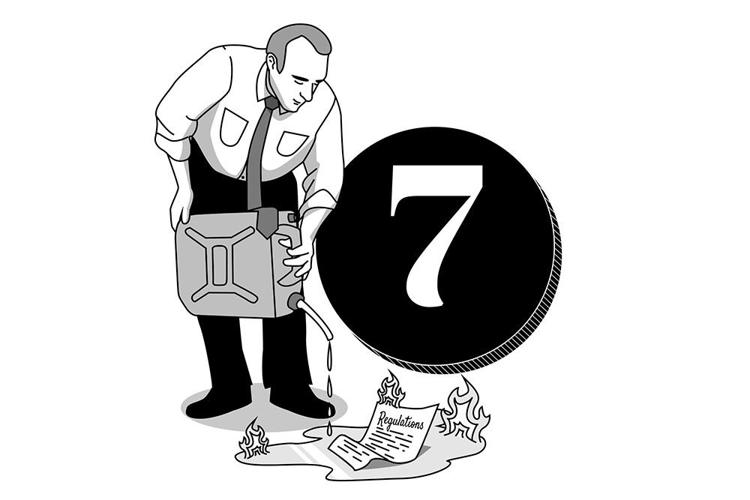
7. Fossil fuel investors sue governments to block climate regulations.
“Litigation terrorism.” That’s what Nobel Prize-winning economist Joseph Stiglitz called the practice of fossil fuel companies and investors suing governments in secretive private tribunals to thwart climate change policies.
Litigants claim climate change laws undermine their profits, and thus they must be compensated under what’s known as “investor-state dispute settlement” (ISDS) legal actions, Rishika Pardikar reported for The Lever, following a paper in Science by lead author Kyla Tienhaara.
“The five countries with the greatest potential losses from ISDS are Mozambique ($7-31 billion), Guyana ($5-21 billion), Venezuela ($3-21 billion), Russia ($2-16 billion), and the United Kingdom ($3-14 billion),” Tienhaara reported. What’s more, “If countries decide to also cancel oil and gas projects that are currently under development, this could introduce substantial additional financial losses from ISDS claims.”
The litigation could have a chilling effect for leaders to take climate action. “New Zealand, for example, recently said that it could not join the Beyond Oil and Gas Alliance, an international consortium of governments working to phase out fossil fuels, because doing so ‘would have run afoul of investor-state settlements,’” Lois Parshley reported for Grist.
Tienhaara’s paper ended with a section titled “An Abolitionist Approach.” She warned, “Reformist approaches would be time-consuming and likely ineffectual, based on the experience of previous efforts.” That means negotiating the “removal of ISDS clauses from trade agreements, as the United States did with Canada in the U.S.-Mexico-Canada Agreement,” is also possible, or for states to withdraw consent to ISDS in cases involving fossil fuel investments, emulating the approach taken by Singapore and others to remove the threat of ISDS claims from the tobacco industry.

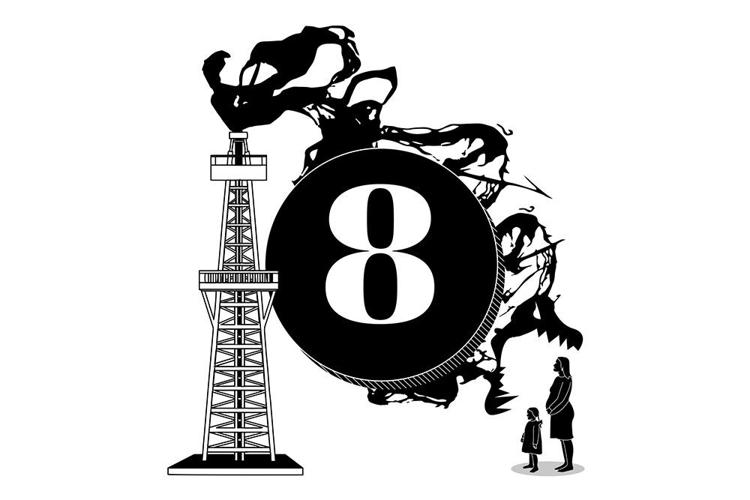
8. Proximity to oil and gas extraction sites linked to maternal and childhood health risks.
Based on 1996-2009 data for more than 2.8 million pregnant women in Texas, researchers from Oregon State University found that for pregnant women within 1 kilometer of oil and gas drilling sites, there’s about a 5-percent increase in odds of gestational hypertension, and a 26-percent increase odds of eclampsia.
Meanwhile, a study from Yale found, “Young children living near fracking wells at birth [less than 2 kilometers are up to three times more likely to later develop leukemia,” according to a story in The Guardian. “Hundreds of chemicals linked to cancer and other health issues may be used in the [fracking] process, including heavy metals, polycyclic aromatic hydrocarbons, volatile organic compounds, benzene and radioactive material.” The study, based on 2009-2017 data from Pennsylvania, compared 405 children aged 2-7 diagnosed with acute lymphoblastic leukemia with an additional 2,080 children, matched on birth year, who didn’t have leukemia.
“The allowable setback in Pennsylvania, where our study was conducted, is 500 feet,” Yale researcher Cassandra Clark said. “Our findings… in conjunction with evidence from numerous other studies suggest that existing setback distances are insufficiently protective of children’s health.”
State and local governments have tried to create health buffer zones, but faced industry pushback. For example, “In 2018, the oil industry spent upwards of $40 million to defeat a Colorado ballot measure that would have imposed 2,500-foot setback requirements for drillers.
California Gov. Gavin Newsom announced new proposed rules that would require 3,200-foot setbacks on new oil and gas drilling, which would be the strongest in the nation, but those rules would not affect existing wells.

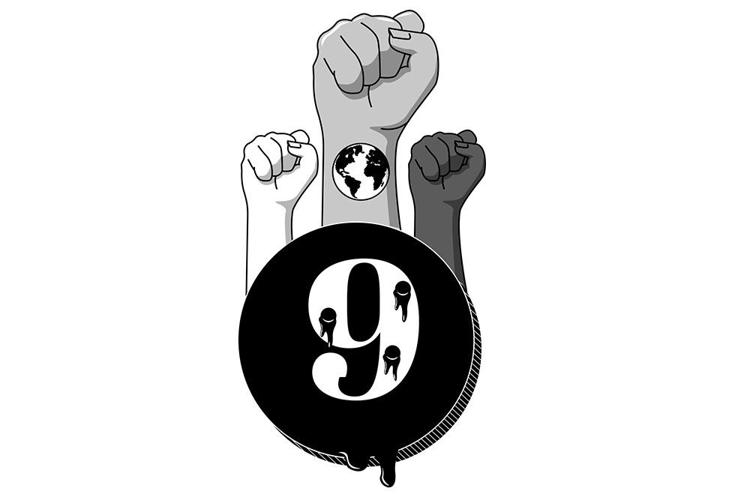
9. A deadly decade for environmental activists.
At least 1,733 environmental activists were murdered between 2012 and 2021, according to the Global Witness study. Patrick Greenfield reported for The Guardian that Brazil, Colombia, the Philippines, Mexico and Honduras were the deadliest countries.
“This has been going on for decades,” scientist, activist, and author Vandana Shiva wrote in a foreword to the report.
The killing of environmental activists has been concentrated in the Global South, with 39 percent of victims from Indigenous communities, despite that group constituting only 5 percent of the world population.
“This is about land inequality, in that defenders are fighting for their land, and in this increasing race to get more land to acquire and exploit resources, the victims are indigenous communities, local communities, whose voices are being suppressed,” the BBC summed up.
Advocates are hopeful that progress is being made, citing the sentencing of a former energy executive to 22 years in prison in Honduras for the murder of world-renowned activist Berta Cáceres in 2016, as well as promising international agreements. The Escazú agreement, the first environmental and human rights treaty for Latin America and the Caribbean, “commits countries to prevent and investigate attacks on environmental defenders.” It took effect in 2021, although some countries, including Brazil and Colombia, have not ratified it so far.

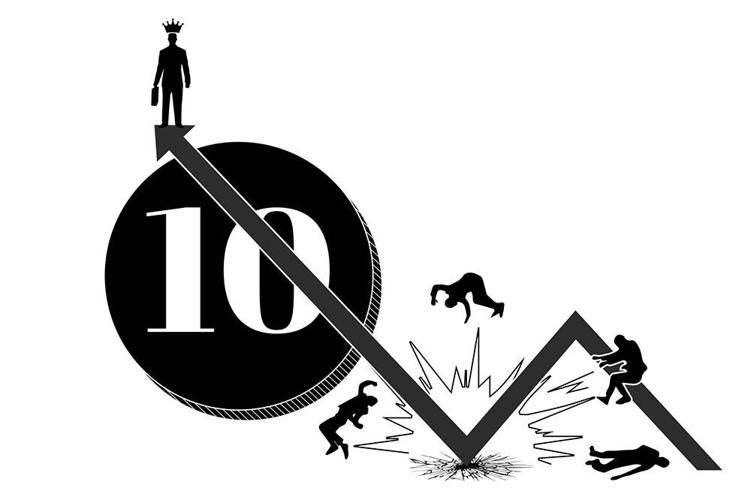
10. Corporate profits hit record high and Wall Street bonuses skyrocket.
“Corporate profits in the U.S. surged to an all-time record of $2 trillion in the second quarter of 2022 as companies continued jacking up prices, pushing inflation to a 40-year high to the detriment of workers and consumers,” Jake Johnson reported for Common Dreams.
This followed Johnson’s reporting that the average bonus for Wall Street employees rose an astounding 1,743 percent between 1985 and 2021, according to an analysis by Inequality.org of New York State Comptroller data. Then, in December 2022, he reported that “earnings inequality in the United States has risen dramatically over the past four decades and continues to accelerate, with the top 0.1 percent seeing wage growth of 465 percent between 1979 and 2021 while the bottom 90 percent experienced just 29 percent growth during that same period,” according to research by the Economic Policy Institute. As a result, the average incomes of the top 0.1 percent rose from 20 times that of the bottom 90 percent in 1979 to more than 90 times as much in 2021.
Meanwhile, the mainstream news coverage has focused on inflation as a pretext for hiking prices. In addition, “The EPI study on the accelerating incomes of the ultrarich was virtually ignored,” Macek and Roth found.
(1) comment
Numbers 1,3, and 8 are incredibly important. The US has a rapidly declining fertility rate and not many people seem to be interested in the why. Our bodies are being bombarded by toxic waste all day and all night. Tragic. With this comes the onslaught of health issues.
Welcome to the discussion.
Log In
Keep it Clean. Please avoid obscene, vulgar, lewd, racist or sexually-oriented language.
PLEASE TURN OFF YOUR CAPS LOCK.
Don't Threaten. Threats of harming another person will not be tolerated.
Be Truthful. Don't knowingly lie about anyone or anything.
Be Nice. No racism, sexism or any sort of -ism that is degrading to another person.
Be Proactive. Use the 'Report' link on each comment to let us know of abusive posts.
Share with Us. We'd love to hear eyewitness accounts, the history behind an article.