




CITIES
Carmel
Dave Potter for Mayor
Carmel is unique and beautiful. We all know that. But what is Carmel-by-the-Sea’s “character” since it’s no longer a hideaway for bohemians and artists, when the median home price today is $3.1 million? With an increase of second-home owners and a subsequent decrease in economic diversity (well, all diversity) in the city, over 40 percent of the 3,134 housing units are generally vacant. Twenty-seven percent of the city’s revenue comes from property taxes, so the recent rise in home values directly benefits city coffers. But how ought the city appeal to locals and those who work in the city, but commute from elsewhere? How ought the city move forward?
Five candidates for two open seats on council and three candidates for mayor offer different visions, from the macro to the micro scale. They diverge on whether to create addresses (we think it’s past time), where much-needed housing should be built (we think at least some should go on the Sunset Center parking lot, instead of piecemealing it throughout the village) and whether the current council was right to kill the cool parklets that local restaurateurs built during Covid.
Councilmember Jeff Baron is running for mayor from a safe seat while he’s midterm on the council. We think he has grown into the role and is a champion of some controversial but important issues: He voted yes to implement street addresses instead of punting it to voters in 2025, and he is a champion of getting state-mandated housing numbers built, despite the discomfort associated with them.
But we see little reason to oust incumbent Dave Potter, a longtime politician. He’s a former Monterey City Council member, California Coastal Commissioner and county supervisor. Health issues are causing problems with his balance and his voice, but his mind remains sharp as a tack.
The city continues to run well. Financial reserves are up 50 percent since Covid, annual hotel tax revenue is up from pre-pandemic 2019 levels, Carmel met a grace period deadline in getting its housing element approved, and four of the city employee unions are under contract. Potter knows city, county and statewide policies like the back of his hand. He has relationships up and down the government food chain.
Also running for mayor is Dale Byrne, the founder of Carmel Cares, a volunteer civic organization that has taken the lead in lots of local beautification projects. Byrne has no experience in local government. We think Carmel would be far better served by either Baron or Potter in the mayor’s chair.
During our interview, Potter’s inner feisty Irishman was on display when he said to the others: “Jeff, I think you should stay on council, I really like working with you. Dale, you should stay in your lane: Your lane is what you’re doing really well with Carmel Cares.”
Potter wants one last term, and we think he’s earned it.
Hans Buder and Bob Delves for City Council
Hans Buder says his professional career is at the intersection of real estate and social impact; his specialty has been financing low-income and mixed-income developments. He is a member of the Forest and Beach Commission, serves on the board of the Carmel Residents Association and chair of the board of Housing Authority of the County of Monterey. He’s got an MBA from Stanford and a MPA from Harvard. We think he would bring a measured approach and background of expertise to council.

Hans Buder for Carmel City Council
Bob Delves is former managing director of a large tech firm, COO of a residential real estate development company and a former mayor of Mountain Village, Colorado. That small, tourism-dependent municipality adjacent to Telluride is not entirely dissimilar to Carmel, and there he managed to get 525 deed-restricted residential units built. He serves on the Carmel Planning Commission.
Candidate David O’Neil is likable and intelligent but 100-percent against change. The other candidates, Danny Hala and Parker Logan, seem unprepared for the job.
Marina
Jenny McAdams for City Council District 3
One four-year term from now, Marina will look different, with hundreds of new housing units and a new neighborhood up at The Dunes. Marina is lucky to have two smart, committed residents running for this seat at a time this city is transforming.
Both Mike Moeller and Jenny McAdams are new to town, and both jumped right in to serve their city. Moeller is a volunteer with a variety of groups including Citizens for Sustainable Marina and Friends of Marina Parks. We encourage him to stay involved and continue playing a role in making his community work better for residents.
McAdams was appointed to a vacant seat in February (due to district lines changing, Moeller was not eligible to apply) and hit the ground running. The former Pacific Grove councilmember has learned from her experience and understands longstanding regional challenges. Her priorities include modifying the streetscape on Del Monte Boulevard to slow down traffic. She is advocating for the developer of The Promenade to commit to local restaurants and art galleries so it feels like a real downtown. “Marina has enough big box stores as far as I’m concerned,” she says, and we agree.
Yes on Measure U
Marina is growing as a city. Its City Hall has long since outgrown its footprint and it’s past time for an upgrade.
This $50 million bond would cost about $54.74 per $100,000 of assessed property value annually. Opponents point out that thousands of homeowners have paid taxes for 30 years to construct the existing police and fire station; now the city wants them to pay additional taxes for the next 30. That is exactly right – nobody expected these facilities to last forever, so we are unsure why they are surprised.
Besides antiquated public safety buildings that need to be doubled in size, City Hall relies on portable trailers to accommodate (barely) its current staff. Senior programs and youth programs are crammed into one aging space.
Measure U requires two-thirds of the vote to pass, unless voters statewide approve Prop. 5 – then it will require just 55 percent of the vote.
Monterey
Tyller Williamson for Mayor
Tyller Williamson emerged on to the political scene in Monterey as a charismatic young voice with lofty ideas. He’s moved beyond that. Politics is the art of the possible, and Williamson has demonstrated in his first two years as mayor that he can get things done. With the help of a supportive City Council majority, he has made good on his promises to include the concerns of renters in the political conversation in town.
An ordinance requiring all landlords with rental property in the city to enter the specifics on size, location and rent was passed in 2023 and took effect in January. The registry will create a baseline with which to monitor changes in the market as well as a public database to increase transparency. Such registries are often (but not necessarily) the precursor to rent stabilization policies. The passage of this measure in a city whose council has historically prioritized and advanced the concerns of homeowners is a dramatic shift and a major accomplishment for Williamson.
His opponent, Monique Kaldy, is a political newcomer advocating on behalf of disaffected landlords and property managers.
Jean Rasch for City Council District 3

Jean Rasch for Monterey City Council
Comprising Monterey Vista and Skyline Forest neighborhoods, this is an open seat as Alan Haffa is not seeking another term. Jean Rasch says she is the best prepared candidate and we don’t disagree: She comes with reams of experience as a volunteer in the city, especially in the Neighborhood and Community Improvement Program, on which she served for nine years. She was a strong advocate to help get Measure S passed, funding citywide infrastructure needs, she helped convene Monterey Undergrounding to reduce wildfire risks in the wildland urban interface. Her initiatives for economic development are thoughtful and detailed, suggesting expansion of the hubs of education, research, health care and technology that exist at Ryan Ranch. She supports the rental registry. She also represents a more traditional Monterey City Council predisposition to neighborhood needs, and we hope she continues to keep an open mind about other demands on the city.
Eric Palmer is also a first-time candidate who graduated from CSU Monterey Bay in 2007 when, as he repeatedly stresses, two-bedroom homes rented for $1,000 a month. He worked for the City of Monterey for many years in communications, and knows how local government makes sausage. Those are his two primary talking points. He is a thoughtful and capable candidate, however we think Rasch is the more experienced choice.
Gino Garcia for City Council District 4
The Casanova Oak Grove and North Fremont neighborhood is now represented by one of its residents for the first time in the city’s history. This November’s election will be the first for voters from this area to select their councilmember in district elections.
Brian Perez is a Marine Reservist and sergeant in the Del Rey Oaks Police Department; he lists enhancing public safety as his priority. He is campaigning against the rental registry, which he views as a tax on landlords, and against the possibility of rent stabilization, but offers no other alternative. He is uninformed on public water ownership, Monterey’s infrastructure funding mechanism and says revitalizing North Fremont is something he looks forward to accomplishing. He does not understand the issues and seems unprepared.
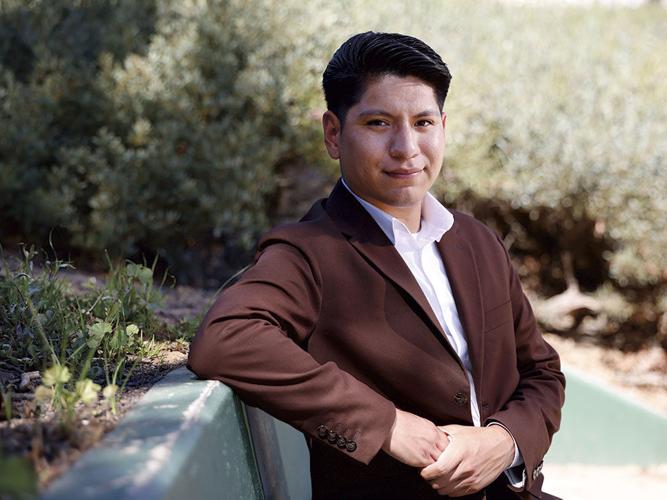
A transportation planner by trade, Gino Garcia is a first-generation Guatemalan American and was appointed by a unanimous vote of the current council to fill a vacancy in 2022. In two years, Garcia has worked his neighborhood to make sure the representation is backed by engagement. He has been a reliable vote for Williamson’s initiatives. He voted to create the rental registry and is in favor of public ownership of the water utility. We endorse Garcia for a full term to continue the initiatives he’s started.
Yes on Measure V, W, X and Y
Measures V, W and Y are common-sense measures that help align the city’s charter with current reality. Measure V updates language to use gender-neutral pronouns, and deletes outdated language on staff positions. Measure W clarifies the timing and process through which a councilmember is replaced midterm in the event they run for mayor and lose, forcing them to vacate their council seat. Measure Y amends the charter to allow Monterey to lease city property at below-market rate to education, nonprofit or government entities. (The city leases out 90 properties, about 11 percent of which are currently rented to nonprofit organizations.)
The only controversial adjustment is Measure X, which would implement term limits for members of City Council, including mayor, of 12 years. We think this is better for democracy and encourages more people to serve. Coupled with the city’s new districts, it would lead to a churn of new leaders and new ideas – it’s a model we hope other local jurisdictions adopt as well.
Pacific Grove
Nick Smith for Mayor
Running for mayor for a second time is Dionne Ybarra, a former chair of the Monterey County Commission on the Status of Women and executive director of the nonprofit Wahine Project. She would bring a fresh outlook and a revitalized interest in transparency and inclusion to a city that could use more of those qualities. She is also direct, sometimes blunt and has proven to be thin-skinned when faced with differing opinions. The fact that our reporting revealed that she has not voted in the four of the last six elections sealed the deal for us; she needs more civic experience and perspective before becoming mayor. We encourage her to speak up at council meetings and bring a public voice to her views.
Dan Miller is a hard no. His temperament is disqualifying. His politics are retrograde.
Nick Smith boasts that he is both even-tempered and experienced. While not a hothead, neither has he distinguished himself as a leader in his eight years on the council. He says his actions speak for themselves. In the past few years he has often looked like a pawn of controversial Councilmember Luke Coletti: refusing to enact a code of conduct with any teeth, voting to spend city’s money replacing restaurant parklets, failing to discipline outrageous behavior of an appointed commissioner and voting against a skatepark concept. He has on occasion bucked Coletti and voted for a roundabout, a cannabis dispensary and for the hotel at the American Tin Cannery – and those are votes we support. We are endorsing him for mayor from an aspirational standpoint, and hope he’ll find the courage and wisdom to become the mayor for all of Pacific Grove, especially when that means crossing some entrenched constituencies.
Chaps Poduri and Tina Rau for City Council
There are six candidates for three seats, but we are only able to endorse two – many are unprepared, vague and/or want to take P.G. backward.
Since being elected to the City Council in 2020 as a freshly minted U.S. citizen, Chaps Poduri has proven to be to be a bright light among local politicians. He rightfully voted in favor of the hotel project at the former American Tin Cannery, pledged his support for the takeover of Cal Am, voted for establishing a cannabis dispensary in P.G., advocated for a skate park in town, he has sought to add support and defense for the much-maligned Diversity Equity and Inclusion task force, voted against requiring restaurants to dismantle their parklets and using city funds to replace them. He spearheaded the process to study the dangerous five-way intersection behind P.G. High School, and that work has produced a $5 million grant from TAMC and approved plans for a teardrop-shaped roundabout. He earns our endorsement to be reelected.
Running for the second time (after she lost in 2022 by 52 votes), Tina Rau has been busy in the intervening years. She rehabbed a dilapidated building in the heart of P.G. that today is home to Pop & Hiss, a record store/performance venue/bar. To call that an upgrade is an understatement.
On the policy front, Rau is in favor of expanding the DEI task force from five to seven members and giving it more support so that citizens will want to serve on it. She supports the roundabout, eliminating Sloat Avenue to allow the hotel at the ATC to move forward, and enhancing the council’s code of conduct. Most importantly, she is running as a problem solver: “I am looking forward to helping the city find solutions to challenges in a holistic approach, so the solution not only works for a small group, but the entire group as a whole,” she says.
A few words about the polarizing candidate Luke Coletti. On the one hand he is always well prepared and well informed for council meetings. He puts in the work; he is smart and dedicated. He is also a candidate who was captured on camera removing yard signs of a campaign he didn’t favor in 2016; was the subject of multiple complaints of workplace harassment by P.G. city staff, including three sustained findings of mistreatment against the former city manager; and has sent bullying letters to the Weekly when he didn’t like our coverage. While his temperament seems to have improved since he got the former city manager to resign, we’ll wait to make any lasting conclusions.
And lastly, it’s his policies that prevent us from endorsing his candidacy: His vision for Pacific Grove is rooted in a bygone era. We hope the P.G. of the future is more welcoming, diverse and enterprising than the Mayberry of yore.
Yes on Measure Z
In most ways it’s just math: Pacific Grove is a tiny city with 15,000 residents. It doesn’t need a seven-person council. By contrast, the city of Salinas is more than 10 times the size at 163,000 residents, and has seven members on its council. Measure Z would shrink P.G.’s council from seven to five.
The talent pool of those willing to volunteer to serve is not that deep (see above, with our endorsement for just two of six candidates). Not unimportant is that with five members instead of seven, the meetings will likely be 25-percent shorter – good for community participation and engagement.
Many in political circles in Pacific Grove see the size reduction as a power grab by the current council majority to cement its hold. To that we say, run great candidates in good campaigns and let the voters decide.
Salinas
Chris Barrera for Mayor
A major realignment of power is underway in Salinas City Hall, and that means hotly contested elections. There are 14 candidates total vying for five seats on the seven-person City Council, including two former electeds – Dennis Donohue and Gloria De La Rosa – trying to get their old positions back.
We recommend staying the course with Salinas’ path forward, instead of going back.
There’s a powerful effort, bankrolled largely by agribusinesses and real estate interests, to go back to the old way of governing in Salinas with $600,000 and counting spent to support a slate of candidates who are viewed as more business-friendly.
That includes Dennis Donohue, a former mayor endorsed by outgoing Mayor Kimbley Craig. Thanks partly to Donohue’s professional experience in ag tech, he is well connected and sees opportunity to expand Salinas’ economic development prospects. “What I bring to the party is a series of state, national and global relationships to facilitate economic development,” he says. He sees the clear need for private investment to make big changes – but he’s not the only candidate capable of facilitating those relationships.
Chris Barrera works as a real estate agent and is president of the local LULAC chapter, advocating for civil rights of Latinos. He supports a number of good, if controversial ideas: an urban growth boundary to prevent further sprawl into agricultural land; a recently adopted rent stabilization policy with a 2.75-percent cap on annual increases; and “beefing up” the police department with more officers (including motorcycle officers). He is not beholden to special interests, and while he has a lot to learn, we think he’s the best person to take Salinas forward.
Ernesto González García is well-meaning and has long been civically engaged, but seems to have only partially developed ideas. We respect his hardline stance on campaign finance reform – ”I truly believe in it, so I’m not taking money from anyone” – but it’s hard to run a serious campaign with no money at all.
Alex Ayala for City Council, District 1
This East Salinas district will have a new councilmember as Carla Viviana González is, fortunately, not running. She has conducted herself professionally only some of the time.
There are two capable and prepared candidates running to replace her. José Luis Barajas is running on a platform to increase housing stock and enhance economic development, both important initiatives. He has a particularly inspired idea to create a new Sports Authority or Commission as a joint partnership of the City, County and school districts, promoting athletic tournaments and the like (one creative form of economic development). He opposes rent stabilization.
Alex Ayala hopes to improve street safety, increase civic participation (he notes District 1 routinely has the lowest voter turnout) and improve customer service at the city. It’s not an innovative economic development idea, but it is concrete: As a general contractor, he sees how slow the process of pulling permits can be. He wants to re-create the success of the downtown revitalization in other neighborhoods. He supports rent stabilization (but not without reservations).
Barajas is backed by $103,000 from many of the same power brokers who are supporting Donohue. Ayala is running a very grassroots campaign with just $5,500 of his own money.
Jesus Valenzuela for City Council, District 3
There are four candidates for a partial, two-year term left vacant when Steve McShane resigned midterm, citing dysfunction on City Council. Worth noting is that part of the negativity came from McShane. And much of it came from District 5 Councilmember Andrew Sandoval, who filed multiple complaints against McShane, acting like a finger-wagging watchdog instead of a colleague. Notably Sandoval is not on the ballot this year, and neither is McShane. A lot of people are saying that Salinas City Council is dysfunctional, but much of the dysfunction happened between these two.
After McShane resigned, Jesus Valenzuela was appointed to replace him, and he quickly proved he is up for the task. He is smart and displays a clear understanding of City Council’s role. He is enthusiastic about the prospect of Amazon jobs, and wants to be sure the next council negotiates the best possible deal for the city with the least impact and the best prospects. He is invested in hearing from all perspectives, including workers and business owners, and making sure the former are welcome. “We are in a transition period of defining who belongs in City Hall, and that makes some people uncomfortable,” he notes.
Cary Swensen, an educator who ran unsuccessfully against McShane in 2022, is running again, but still does not clearly articulate a platform. David Maisonneuve is a self-described “squeaky wheel,” running as a question-asker more than anything else, a role he can fulfill as a member of the public.
Margaret D’Arrigo is experienced in agribusiness, and is running with a lot of support of agribusiness. She has experience as an elected official – formerly on the board of Salinas Valley Health, and now Hartnell College – and is primarily motivated by public safety, although she did not articulate a clear plan for how to improve it.
Orlando Osornio for City Council, District 4
Since he was elected four years ago, Orlando Osornio points to a list of accomplishments he’d like to continue working on: new housing units in Chinatown and cleaning up homeless encampments; the revamped Hebbron Family Center, which just began construction after securing needed state funding; the forthcoming new Ensen Community Park, and other investments in recreation. He wants to see a broader idea of economic development and the types of businesses that the city can support – think the Swap Meet – so it’s not just downtown getting investment.
His challengers include former councilmember Gloria De La Rosa, who promises that her experience makes her the best candidate, but she has answered none of the Weekly’s specific questions about her plans. (She is also running with $114,000 in the bank, largely from business interests; maybe they know her platform.)
Albert Lomeli, a teacher, veteran and Moss Landing Harbor commissioner, is thoughtful and has some good ideas. He wants to see more equitable investment in downtown revitalization efforts beyond Oldtown, and he wants to restore a more respectful communication style to City Hall. However, he is nonspecific in his proposals. We believe Osornio deserves another term to complete the projects he started.
Anthony Rocha for City Council, District 6

Anthony Rocha is running for a second term representing District 6 on Salinas City Council.
Of all the races in Salinas this year, this one is the clearest. Anthony Rocha is a fearless politician, still young and still learning – but smart, able to clearly articulate his thinking and willing to shake things up. That can include hurting people’s feelings (both members of the public and his colleagues on the dais, and we hope he finds a way to communicate more gently – it does matter). But it also includes doing the work he was elected to do, like securing $20 million in funding for Boronda Road improvements. And it includes politically charged things, like ousting Mayor Craig from the board of Monterey One Water to be appointed there himself, where he then scuttled a plan at the last minute to transition billing procedures – he’d heard and seriously considered concerns from constituents. He elevated those concerns and voted based upon them, and that is not the typical way of doing things – and that means he’s earned more than his fair share of political enemies.
“The way I best describe it is a lot of long-time elected officials are having a difficult time of passing the torch and allowing a new generation of leaders with new ideas to come in,” Rocha says.
Challenger Aurelio Salazar Jr. is running a campaign funded by business interests and has not articulated what he’s for, just what he’s against. He has declined to answer the Weekly’s policy questions, and instead prefers to throw around allegations of bad behavior, notably directed at people other than his opponent.
Sand City
Luke Kilpatrick and Marilee Diaz for City Council
The City Council in tiny Sand City has disproportionately big responsibility. For one thing, councilmembers are appointed to serve on regional boards, influencing decisions that directly affect the entire county. And this small city is growing, with the South of Tioga project well underway. Industrial and residential uses continue to coexist; a former public works yard has been transformed into an art park that hosts a monthly First Friday community gathering, and there is talk of developing more such spaces, specifically a food truck park – all helping make Sand City into a destination.
Three people are running for two open seats on council. Marilee Diaz was appointed last year, and deserves a full term; she’s proven herself to be thoughtful and deliberate. She is interested in balancing the needs of residents, visitors and businesses. Her platform includes keeping housing accessible, in part by limiting the number of short-term rentals.
Luke Kilpatrick moved to Sand City in 2020 and immediately got involved in local government, attending meetings and weighing in. He’s earnest and engaged. The parent of a young daughter, he’s especially interested in recreational access and parks.
Opponent Michelle Adams hasn’t clearly articulated a platform or motivation for running.
Seaside
Ian Oglesby for Mayor
Since the Weekly first made Seaside its headquarters in 1991, it’s been wild to witness the one-step forward, two-steps backward march that the city has traversed. After Fort Ord closed, the in-your-face street prostitution was gone, as were the many crack houses. Still today, there are ongoing challenges. But home values are way up, parks and infrastructure are vastly improved and Broadway resembles a downtown.
We remain hopeful that this diverse coastal city realizes its great upsides. Seaside’s engaged residents, restaurants, Blues in the Park and its travel convenience are great assets. Its best days are ahead.
Yet even amid changes, the politics of Seaside sadly remain much the same. There’s an old boys power structure that remains in place, with oversized influence from church leaders that’s led to some less than inspired decision-making and “what’s in it for us” mentality. We hope this is fading.
Ian Oglesby, who’s been mayor for three terms and is a shoe-in for reelection, has an oversized impact on the city. That’s partly because he is so dedicated, but that influence isn’t always all for the good.
We’ve come to respect Oglesby more as he’s grown into the leadership role, and support his reelection compared to his unprepared and inexperienced challengers. His list of goals is long and ambitious for what he hopes to look back on proudly: Seagrove (106 units of very-low, low-, and moderate-income housing now under construction, thanks to clever water swap) will be occupied; a new county courthouse will be under construction, or finished. A new major hotel and conference center (which recently broke ground) at Bayonet and Black Horse will be open. Campus Town will be building out its second phase, and the Main Gate development across from CSUMB will be up and running.
Those are impressive projects that will be welcome changes. They are heavy lifts, but we believe Oglesby can see them through.
We also hope there is some calm coming to City Hall. Since Oglesby was first elected, it’s been largely in turmoil with a lot of staff turnover, including at the top. The former city manager (whom Oglesby helped hire) was terminated in June by the City Council at a cost of at least $750,000 – a lawsuit for wrongful termination is pending.
Dave Pacheco and Shanda LeBoeuf for City Council
Dave Pacheco and Alexis García-Arrazola are both seeking reelection, and together stand unified in lockstep support of the incumbent mayor. A lack of questioning is not good for deliberative decision-making. For this reason we support Shanda LeBoeuf, who currently serves on the city’s Neighborhood Improvement Commission. She’s more independent than Pacheco or García-Arrazola and brings a working knowledge of things that matter to residents – street parking, improvements along the Gen. Jim Moore Boulevard greenbelt – although she has a lot to learn if elected.

Shanda LeBoeuf for Seaside City Council
Pacheco has voted smartly for parks and against some dumb development projects. While we wish he was more visionary and willing to diverge from the mayor, we think he is the best suited to push back against consolidation of power.
García-Arrazola has not made an impact in his four years on council; we were hopeful he would bring a fresh perspective to the body. Diana Ingersoll, a former city employee, offers little in the way of vision.
No on Measure BB
The idea to change the Seaside mayoral term from two years to four was first publicly brought forth by church leaders who support Ian Oglesby (see above). While it would not take effect until 2026, meaning it will not benefit the mayor elected this November, it still looks to us like another power grab and we urge voters to reject it.
Oglesby has already successfully gotten the council to cede more power to him. Changes to city code in 2021 mean the mayor now has the ability to veto items from a council agenda (something Oglesby counters he hasn’t done – although there’s no telling what could happen in the future – and notes that three councilmembers can vote affirmatively to agendize topics).
Beyond Oglesby, this would mean more power for mayors in general. Keep the term consistent with most other local cities, and let the mayor come back to voters every two years for a referendum on their performance.
Yes on Measure CC
Illegal fireworks are a well documented problem in Seaside. They are already illegal. This measure would prohibit the small, legal fireworks (known as “safe and sane”) sold by nonprofits at booths in the days leading up to Fourth of July. Proponents of this measure argue banning these smaller fireworks is the only way to enable law enforcement to locate illegal fireworks and adequately crack down. Given that increased patrol officers and drones in recent years have been insufficient, they are probably right.
Give pets, people with PTSD and firefighters a break and vote yes on Measure CC – and then we hope you urge Seaside City Council to bring back a proper city-sponsored fireworks show for all to enjoy.
Countywide and Special Districts
Yes on Measure AA
The County Board of Supervisors voted to put this 1-percent sales tax increase on the ballot, which would impact transactions in unincorporated Monterey County, bringing the total sales tax to 8.75 percent. (For comparison, the sales tax rate in the cities of Monterey and Salinas is 9.25 percent.) It would generate an estimated $29 million per year.
When the supervisors approved a $2 billion budget for fiscal year 2024-25, they decided to temporarily suspend a $10.4 million contribution to a trust fund for future unfunded pension liabilities – but those liabilities don’t magically go away.
The county needs a way to get ahead before tougher budget years that are in the forecast, and this is a smart and simple way to do that.
Yes on Measure DD
Measure DD is an effort by cannabis business leaders to repeal what is effectively a special tax for the Monterey County Regional Fire Protection District. Cannabis representatives have been asking for breaks on taxes and fees for years now to help the struggling industry, and we don’t expect that repealing this tax will be the change that makes it suddenly pencil out. But we do think cannabis was unfairly saddled with becoming a major revenue source for MCRFD, which perhaps should be more widely spread among taxpayers.
The tax, approved by voters in 2018, is paid by cannabis operations based on size, with yearly payments ranging from $2,000 to $42,000. It generates about $450,000 annually in revenue for the district, but we are not persuaded the presence of the cannabis industry requires $450,000 worth of attention from fire safety officials.
Monterey Peninsula Airport District
Jonathan Ahmadi for District 1 Uwe Grobecker for District 3
This election is not simply about airport oversight, as District 3 incumbent Mary Ann Leffel has shown; she holds a powerful appointed role as a commissioner on LAFCO, a regional body with a mission that includes oversight of land use and annexations, with the stated goal to preserve agricultural land and discourage urban sprawl.
As for MRY, it has been growing rapidly, with daily flights to SFO, LAX, San Diego, Phoenix, Denver, Seattle and Dallas. With larger Boeing 737s and Airbus A319s arriving daily, a new terminal expected to open in 2029, sustainable aviation fuel for sale to private jets since 2022, a new fire station and hangars for private propeller aircraft on the north side, plus Woody’s restaurant (the Reuben rules) there’s much to be excited about.
Yet on Sept. 24, the district announced the airport manager is retiring next June. The new board will have a big responsibility to hire the right person to keep the new terminal on track, and on budget. We think two new board members would be the best choice to lead those changes.
In District 3, Leffel has been increasingly under fire, and deservedly so. The airport board approved a master plan with a new entrance, a plan so controversial and misguided that the city of Monterey immediately sued and won, costing the district hundreds of thousands of dollars (plus inciting a grand jury report). There was a halfhearted recall attempt against Leffel not for her MRY decisions, but her LAFCO decision to obstruct the next steps in the Monterey Peninsula Water Management District’s public buyout proceeding against Cal Am.
Her vote there (along with a majority of commissioners) was effectively a middle finger to local voters’ clear intent, and led to a lawsuit filed by the water district – which also prevailed, costing taxpayers nearly $600,000 in legal fees. On LAFCO, Leffel has repeatedly voted on the wrong side. She is out-of-step with voters and the airport district seat is her runway for regional power. Her challenger, Uwe Grobecker, would be new to public service and expresses more NIMBY tendencies than we’d like, with a focus on airport noise. But we cannot support Leffel for reelection; the time for change is overdue.
In District 1, we are excited for Jonathan Ahmadi’s candidacy. He has an aeronautical engineering degree from UCLA, is thoughtful in his analysis of the current board (and critical of their relationship with the community) and will be a fresh, intelligent voice. His interest in running for a public position was catalyzed by the election of Trump in 2016, when he decided he needed to be more active in good government.
Monterey Peninsula Water Management District
Rebeca Lindor for Division 3 Amy Anderson for Division 5
The Monterey Peninsula Water Management District is in the middle of multiple politically charged processes. Its current board voted to proceed with a takeover of private utility California American Water (an idea we support, that will ultimately be decided by the courts). That means MPWMD could find itself as a utility in the coming years, responsible for actually delivering water to some 100,000 customers via 40,000 connections.
The board has been an antagonist to Cal Am when it comes to planning for the region’s future water demand, arguing there will be no need for desalination for decades, which would keep the buyout price much lower. (The California Public Utilities Commission is set to deliver a third-party view on how much water the Peninsula really needs – the real number is probably somewhere in between.)
The next MPWMD board will take on these issues, and more. In Division 4, Karen Paull is pursuing a second term unopposed. In Carmel Valley’s Division 5, we recommend reelecting Amy Anderson for a second term – she’s been even-keeled and consistent and wants to see the big initiatives (public buyout) through to completion. Her challenger, Jessica Hartzell, is unable to differentiate her platform from Anderson’s.
In the open seat for Monterey’s Division 3, outgoing board director Marc Eisenhart is endorsing Rebecca Lindor as his successor. Given the significance of the public buyout process that is currently underway and Lindor’s support for that continued effort, we agree.
A word about challenger Kevin Dayton, who promises, “I could take a blank piece of paper and from my head draw a schematic map of the drinking, irrigation, and wastewater flow for Monterey County, with its current and planned infrastructure projects.” We do not doubt that is true.
Dayton is smart and a critical thinker, and we respect his engagement in local government issues. He works for taxpayer groups and chambers of commerce but presents himself as a more open-minded person than those organizations may imply.
We think his tendency to swim against the tide of the current board could serve MPWMD well. State Water Board officials have indicated that lifting the cease-and-desist order is contingent on some local consensus-building, and that requires business interests to come to the table, not just public water proponents who are hostile to Cal Am. While we think Dayton could bring diversity of opinion to the MPWMD board, perhaps helping guide local stakeholders to a consensus around water supply, we worry that he will not see the public’s intent for a public buyout through.
Marina Coast Water District
Tom Moore and Stacey Fritz-Smith
That incumbent Tom Moore has not yet gotten tired of serving on the Marina Coast board is good news for constituents. He brings a wealth of experience to the role and has proven himself to be an even-handed, knowledgeable leader. While MCWD has been a little too lawsuit-happy and we hope a more regional, cooperative approach to water supply is in its future, we think Moore can see the forest for the trees. He says he can envision a desalination project that he could support (a smaller size, in a location north of the Salinas River) as opposed to the controversial Cal Am project in Marina. He’s a champion of Monterey One Water’s recycled water project, Pure Water Monterey; he currently chairs the M1W board.
For a second open seat we endorse newcomer Stacey Fritz-Smith, who would bring representation from East Garrison to the board. Her interest and experience is primarily in budgeting – while not the main focus of MCWD, it is a valuable skill set. Roland Soltesz is campaigning on a promise to avoid future rate increases – something that may be persuasive but is not necessarily realistic.
SCHOOL DISTRICTS
Hartnell College
Alejandra González for Area 1
After a tumultuous time at Hartnell, leadership seems to have stabilized. A little over two years ago, the board hired Superintendent Michael Gutierrez, who is invested in helping Hartnell thrive, instead of using it as a stepping stone. There’s growing infrastructure with new campuses in King City, Castroville and Soledad and a normalized relationship with labor unions.
Perhaps that is part of why only one of four positions on the ballot this November are contested. In North County’s Area 1, Hartnell alum Henry Sutton is running against incumbent Alejandra González. He is earnest and proud of his Hartnell education, which helped him develop his career as an IT administrator. He is likable and committed, but struggles to articulate where he differs from González.
She was elected to her first term in 2020 against an incumbent, and has helped lead positive change. She’s especially interested in helping the Castroville campus grow into its full potential, something that would help serve students in Area 1.
Monterey Peninsula College
Chelsea Lenowska for Area 3 Celia Barberena for Area 4
The MPC Board of Trustees is perhaps the most dysfunctional local government body. It’s not just us who have reached that conclusion; the board was flagged by the Accrediting Commission for Community and Junior Colleges in 2023, which determined: “In order to increase institutional effectiveness, the team recommends that the Governing Board consistently act in a manner uniform with Board Policy 2715.” Policy 2715 calls on members to “work together in a spirit of harmony and cooperation, treating other board members with respect and courtesy.”

Celia Barberena is a retired community college executive, running against an incumbent for MPC board.
That’s the kind of stuff they teach in third grade. This board is supposed to exercise oversight of an institution of higher education that serves 11,000 students a year and has an annual budget of over $68 million.
In our editorial board’s remote interview with the candidates for these two contested seats, we were utterly disillusioned by the incumbents: One showed up in person for a online Google Meet and the other couldn’t figure out if she could connect from Salinas (hardly inspiring for potential leaders of an institute of higher learning). Libby Downey and Debbie Anthony are well intentioned, but clearly unable to do the job – or show up for a modern virtual meeting.
Fortunately, there are two great candidates on the ballot.
Chelsea Lenowska is a former trustee at George Washington University, where she served for four years as the Recent Alum Trustee. She is an assistant inspector general at the Naval Postgraduate School, and previously worked as a field agent for the FBI and in the USDA’s Office of Inspector General. She will bring professionalism, fiduciary oversight and a welcoming and civil disposition to the board – all very much needed.
Celia Barberena has an impressive resume in education. From 1996 – 2007 she was VP of Student Affairs at Hartnell College, then from 2008-2011 she served as president of Chabot College in Hayward, a similarly sized institution to MPC. She has been an active community volunteer since retiring from educational leadership to Pacific Grove. She is persuasive when she says she understands the role and responsibilities of a trustee on the board. She points to her own lived experience as an immigrant from Nicaragua on why she stresses access for traditionally underserved communities as one of her main priorities.
In Area 5, Trustee Loren Steck is not seeking reelection and Anita Crawley, the only candidate, will be appointed.
We think sweeping change is needed on this board and suggest three new faces. It would make sense if the incumbents had said to the newcomers: Thank you, and good luck – and decided not to run again, knowing someone else would try to repair relationships and bring this important educational institution back to the status it deserves.
Carmel Unified School District
Monica Tavakoli, at-large Rita Patel for Area 1 Jeannette Witten for Area 3 Anne-Marie Rosen for Area 5
CUSD is one of the wealthiest K-12 school districts and high-performing, with many families striving to move into district boundaries for what is rightly seen as an excellent public school experience for the roughly 2,300 pupils who attend its nine schools, with a 98-percent graduation rate. CUSD’s population is more diverse than it might first appear, and spread out over large rural areas, with pupils in southern Big Sur and the mountains of Cachagua, as well as Carmel. That presents its own management challenges (Highway 1 closures, Car Week traffic, power outages during storms) and governance challenges when it comes to representing the needs of all students – those of privilege who are clearly college-bound to those who are growing up in great hardship.

Rita is a former board member of Carmel Unified School District and is running again.
That’s the baseline. But CUSD has been plagued by big, systemic problems. There’s been an ongoing failure to address sexual misconduct by students and by staff, resulting in multiple lawsuits and criminal charges against a former employee. Earlier this year, the Department of Education’s Office of Civil Rights determined there was a pervasive problem with anti-semitism at Carmel High.
There’s been a churn of leadership, with principals leaving and six superintendents in the past nine years. Most recently, Ted Knight resigned in 2023 with a whopping $770,000 payout approved by the current board. (That payout is the subject of a pending lawsuit.)
It is time for new leadership, and the good news for CUSD is that there will be a mostly-new board after this election. We are pleased that Karl Pallastrini is not seeking reelection. Of current board members, only Jason Remynse and Anne-Marie Rosen are seeking reelection – in the same Area 5. Rosen is too often the voice of reason on the board, willing to ask questions and acknowledge missteps. She can and should improve upon her messaging, which can come across as aggressive to her colleagues, but the message itself is needed. Since he was appointed in 2023, Remynse has mostly gone along to get along – which is not helping CUSD shed its past and move forward. (To his credit, when he became chair he invited more public comment, but that alone will not rebuild community trust.)
An important note that Rosen has been charged with election fraud felonies for filing paperwork to run in Area 5 when she allegedly lives in Area 4. She denies the troubling charges, and the verdict is still out in her case. If convicted, she will still remain on the ballot but can only take office if she persuades the court she has moved into Area 5.
In Area 1, former CUSD board member Rita Patel is seeking another go and she deserves it. She was a steady leader last time she served – before the latest drama – and her experience would be a benefit. She’s bright and committed, and we can’t tell what her opponent, Molly Bozzo, is really running on.
For an at-large position, we recommend Monica Tavakoli over Jake Odello. While both care deeply, Tavakoli seems to have a much clearer grasp of the issues and recognizes the urgent need to rebuild trust.
In Area 3, there are two qualified candidates, Matt Glazer and Jeannette Witten. Glazer sought appointment to a vacancy in 2023 and is an involved parent, regularly participating constructively in board meetings. He would bring a conciliatory approach to leadership, but we think what CUSD needs at this time is a leader who is willing to take some arrows. Witten, an attorney by trade, is articulate and clear in her vision. She’s willing to take bold stances even if they are controversial (like saying yes, we should retire the Padres mascot, with its sexist, racist legacy). That is not to say she’s not open to listening – her platform also calls for active listening and making board meetings productive again.
Most importantly, she recognizes the scope of the responsibility she is seeking: “The buck stops here for the board that’s steering the ship,” she says, and we agree.
State of California
Robert Rivas for Assembly District 29

Robert Rivas for Assembly District 29
Robert Rivas is young and baby-faced. He’s also shown in his first year as Speaker of the Assembly that he is a very skilled, resourceful and unsentimental dealmaker. The legislative year started with a $58 billion deficit and the need to approve cuts. The budget deal was crafty. And the legislative agenda was dominated by liberal Democrats who had to figure out how to scuttle past criminal justice reforms to confront a very real problem of retail theft. Rivas brought legislative leaders to Salinas to announce how, with a package of 10 bills, they had threaded the needle to gain support of retailers, law enforcement agencies and social justice advocates.
And unlike previous speakers, Rivas has continued to author legislation. This past session, in addition to the retail theft bill he authored, he reaffirmed his long-term commitment to farmworker housing and protections for foster youth.
Dawn Addis for Assembly District 30
A first-term Assemblymember, Dawn Addis did not tread with the uncertainty typical of a freshman legislator. She created a first-ever Central Coast Caucus and became its chair, and also chairs an Assembly committee on wind power.
With poise and determination she boldly told a gathering hosted by the Carmel Residents Association last fall that the tony town by the sea, just like Marina and Seaside, will have to meet its state mandates to increase housing, specifically low-income housing.
Perhaps the crowning achievement of her first term in Sacramento is getting the governor to sign AB 3233, a bill that “would authorize a local entity, as defined, by ordinance, to limit or prohibit oil and gas operations or development in its jurisdiction.” Inspired by legal challenges that knocked down Monterey County’s Measure Z, that legislation will pave the way for the will of voters on oil and gas practices to become the law of the community.
Addis’ opponent, Dalila Epperson, is running on a platform of parents’ rights on school boards, personal liberties and opposition to offshore wind.
John Laird for State Senate District 17
When this newspaper put John Laird on the front page of the paper in 2021 with the headline “The Fix-it Man,” it was in reference to his work reforming California’s beleaguered Employment Development Department after colossal failures during Covid. Since that time, Laird has lent his expertise to solving complicated local policies. One example is working out an extension of the operating life of Diablo Canyon power plant to stave off brownouts until increased renewable energy is widespread.
He helped quickly generate state funding to purchase Watsonville Community Hospital, got money for long-overdue levee upgrade in Pajaro and just this past month stepped into the breach to negotiate the successful passage of MST’s bus rapid transit project, SURF!, that was otherwise destined for defeat at the Coastal Commission.
We do not agree with Laird on everything, but he’s skilled at getting things done. We opposed his support for legislation that would make the emergency measures for remote meetings from Covid permanent, radically diminishing in-person meetings, for example. But overall Laird is a doer who deserves reelection. His challenger, Tony Virrueta, is a proud veteran and is running on that credential alone.
United States of America
Zoe Lofgren for Congress, District 18
Democrat Zoe Lofgren is a longtime U.S. representative, having served since 1995. But it’s only since 2020 when redistricting resulted in changes to the district map that she has represented part of Monterey County. She has wasted no time in leveraging her experience in Washington to get things done for our region. In the past two years, she helped secure $280 million in federal funds for local projects, including $81 million for roads in Salinas, Soledad, King City, Greenfield and Gonzales; $7 million for health care; and $5 million for food safety programs. In the aftermath of flooding in Pajaro, she successfully advocated to FEMA to extend deadlines for relief.
Beyond specific line items, Lofgren also deserves praise for her steady role in defending democracy. She served on the special committee that investigated Jan. 6 and the attempt to overturn the 2020 election result. She carries a copy of the U.S. Constitution with her everywhere. And she was willing to take a potentially unpopular stance and urge President Joe Biden to step down from the 2024 race, a sign of her ability to see the bigger picture.
Jimmy Panetta for Congress, District 19
Jimmy Panetta has qualities that we like – he’s approachable, he listens well, he’s all in for his hometown district, he has a good sense of humor. When he first ran in 2016, it was largely on a platform to deliver constituent services, and that promise continues, along with legislation targeted to help the district (such as the Advancing International and Foreign Language Education Act). But Panetta’s preference to take the politically safe route, rather than the courageous route, is frustrating – we wish he would take more of a stand as a leader.
That was on display after President Biden’s horrible debate showing, when Panetta refused to join the chorus of Democrats (Lofgren included) calling on him to step out of the race. Unlike his predecessor Sam Farr, Panetta has been weak on decriminalization and national legalization of cannabis, an outdated approach that wrongfully hurts communities of color and prevents our local cannabis industry from reaching its full potential.
And Panetta continues to offer blanket support of Israeli Prime Minister Benjamin Netanyahu, who we believe will likely go down as a war criminal after the dust settles in the Middle East. Yes, Israel has a right to self-determination and to fight back against very real terrorist threats, but Israel’s actions have the real potential to destabilize the world order. Before the current wars, Netanyahu was indicted in 2019 for breach of trust, accepting bribes and fraud.
We wish that Panetta – like Lofgren, Kamala Harris and other Democrats – skipped Netanyahu’s July speech before Congress.
We expect more from Jimmy. We want a bolder Panetta.
Adam Schiff for Senate
The contentious race for this seat, open for the first time in decades after California’s longest-serving senator, Dianne Feinstein, died in 2023, took place back in March during the primary. Adam Schiff defeated all of his Democratic opponents and faces off Nov. 5 against former pro baseball player Steve Garvey. Schiff is eminently qualified for the job: He is a former federal prosecutor, California state senator and 12-term U.S. representative.
He’s long been a vocal advocate for upholding integrity in our government, with calls to create a code of ethics for Supreme Court justices and to ban justices and members of Congress from trading individual stocks. He is a champion of democracy, and supports making Election Day a federal holiday (a great idea) and expanding automatic voter registration and early voting.
As Republicans in Washington persist in obstructionism, it’s critical Californians elect a can-do Democrat to this Senate seat.
Kamala Harris for President
She’s smart. She’s likable. She’s got significant experience.
Here’s what she’s not: She’s not a narcissist. She’s not a grifter, a repeat liar, a felon nor a business cheat. She’s not a sexual predator. She doesn’t believe the press is the enemy of the people. She doesn’t cozy up to Vladimir Putin or Viktor Orbán.
It doesn’t surprise us that Kamala Harris has the support of thousands of Republicans, many who served in her opponent’s administration. Over half of Donald Trump’s former cabinet members are not supporting his reelection bid. That says it all.
Harris respects our system of government, is committed to promoting democracy throughout the world, standing up against tyrants and authoritarians. Her plan for an “opportunity economy” is real problem-solving at work. Her view of bodily autonomy would protect reproductive freedom.
Our country is not perfect, but it does stand for something great, inspirational. The Trump era, a dark one, needs to end. We’re better than him. So is Kamala Harris.
(3) comments
MCN: YES im for Kammie...she and Maya Rudolph are buds. i took trip to DC in 1963 i saw Caroline Kennedy riding her pony Macaroni on the the White House lawn...btw her dad was a statesman a title not used for decades :)
Re Monterey election: I support Tyller Williamson for Mayor, Gino Garcia for District 4, and Eric Palmer for District 3. Affordability/housing and water are the paramount issues. These guys will have our back. They are genuinely good people who have and will put their heart and soul into the city of Monterey. This is a dream team in the making.
I’ve heard that the Weekly’s owner was a close friend of Pacific Grove’s former City Manager, Ben Harvey. If true, I guess that explains your endorsements for City Council members. I know of no P.G. environmental activist who would agree with your choices. Sincerely, Jane Haines
Welcome to the discussion.
Log In
Keep it Clean. Please avoid obscene, vulgar, lewd, racist or sexually-oriented language.
PLEASE TURN OFF YOUR CAPS LOCK.
Don't Threaten. Threats of harming another person will not be tolerated.
Be Truthful. Don't knowingly lie about anyone or anything.
Be Nice. No racism, sexism or any sort of -ism that is degrading to another person.
Be Proactive. Use the 'Report' link on each comment to let us know of abusive posts.
Share with Us. We'd love to hear eyewitness accounts, the history behind an article.