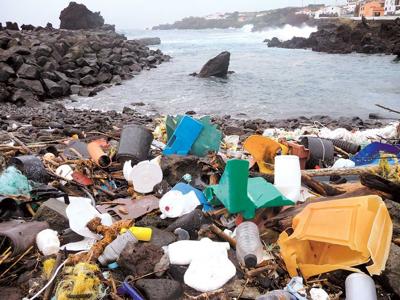
Scrupulous eco-foodies might use their Seafood Watch apps to choose the most sustainably harvested fish. They might consult their Environmental Working Group guides to make sure their dinner doesn’t contain dangerous levels of mercury.
But there is no pocket guide for microplastics or the chemicals they absorb, a potential food-safety hazard that’s only recently started blipping on the public radar.
Among the findings:
A study by the Scripps Institution of Oceanography, published in 2011 in the Marine Ecology Progress Series, estimated fish at intermediate depths in the North Pacific swallow 12,000-24,000 tons of plastic a year. The researchers found plastic in the guts of more than 9 percent of fish caught during the expedition. Another study, published in Marine Pollution Bulletin and reported by the L.A. Times, found plastic in the guts of 35 percent of the fish they sampled.
Marine toxicologists have detected persistent organic pollutants – hazardous chemicals that don’t biodegrade – in fish tissues. A 2013 study published inNature: Scientific Reports finds that polyethylene, a common plastic, accumulates and concentrates toxins including flame retardants, industrial chemicals and toxic metals from the marine environment. When consumed, these chemical cocktails build up in fishes’ bodies and may induce a variety of health impacts, including liver toxicity.
Last year the Marine Environmental Research Institute found nanoplastics in mussels, cultured oysters and wild oysters. “Oysters had the highest number of fragments, averaging 177 pieces per animal,” the MERI website states. “These numbers show microplastics may pose a serious health threat to the animals themselves, and seafood consumers.”
In a 2014 study published in Nature: Scientific Reports, researchers describe a method to quantify plastic that’s been ingested by plankton.
A study published in Science last February estimates about 2 to 5 percent of the plastic waste generated on land – that’s 4.8 million to 12.7 million metric tons – enters the ocean each year.
A study published last December in the research journal PLOS One crunched data from 24 marine expeditions from 2007-2013. The researchers estimated there are at least 5.25 trillion pieces of plastic, weighing 268,940 metric tons, now in the world’s oceans. Their model calculated the global load of floating microplastic at 35,540 tons. That’s a lot lower than they’d expected, suggesting microplastic could be disappearing from the sea’s surface for reasons not yet known.
One of the weirdest findings, published last year in the Proceedings of the National Academy of Sciences and reported in Science magazine: 99 percent of marine plastic – litter that, based on (literal) garbage statistics, should be floating around in the ocean – is missing. Some of it may have sunk to the seafloor, been bound up in rocks or ice, or washed ashore. A lot of it, researchers suggest, could be eaten by marine animals.
(0) comments
Welcome to the discussion.
Log In
Keep it Clean. Please avoid obscene, vulgar, lewd, racist or sexually-oriented language.
PLEASE TURN OFF YOUR CAPS LOCK.
Don't Threaten. Threats of harming another person will not be tolerated.
Be Truthful. Don't knowingly lie about anyone or anything.
Be Nice. No racism, sexism or any sort of -ism that is degrading to another person.
Be Proactive. Use the 'Report' link on each comment to let us know of abusive posts.
Share with Us. We'd love to hear eyewitness accounts, the history behind an article.