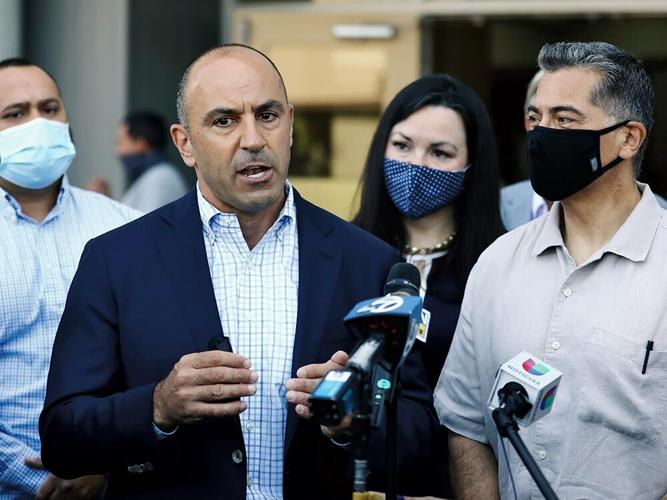
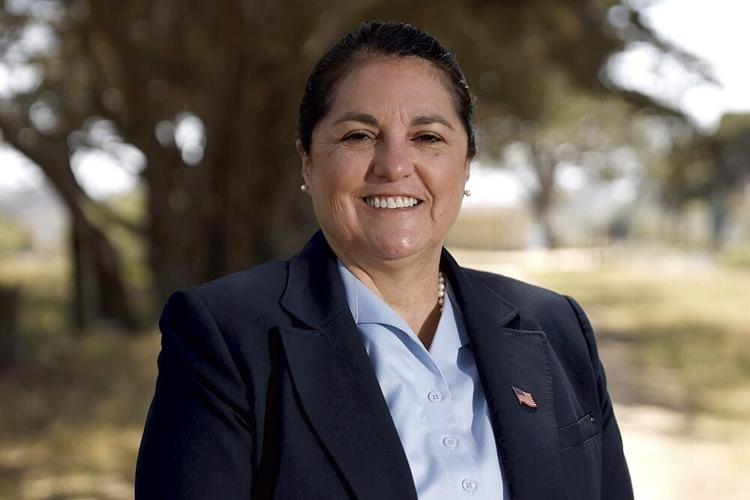
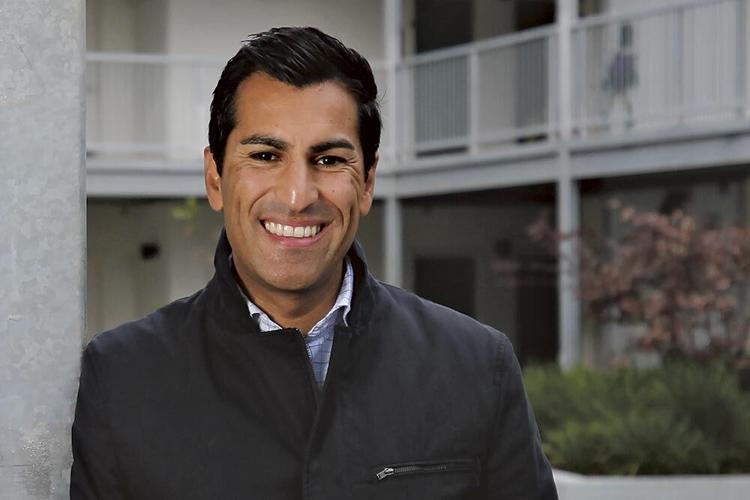
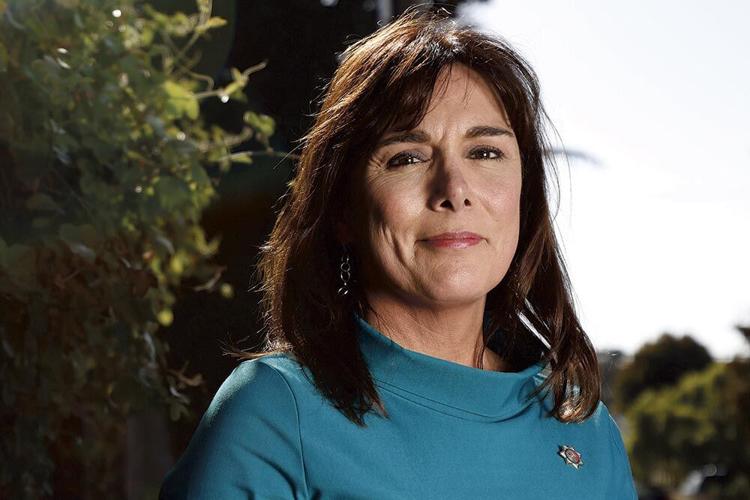

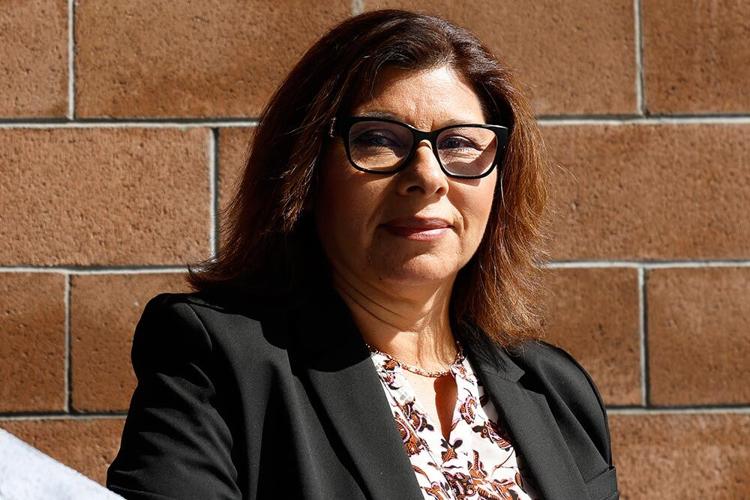
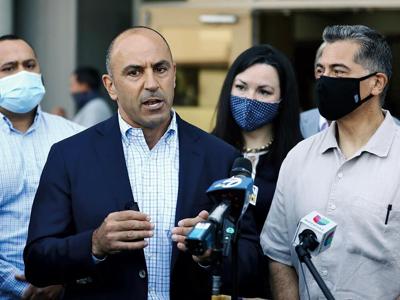
Zoe Lofgren and Jimmy Panetta for Congress
It’s a horrific moment in U.S. politics and extreme partisanship is a threat to our democratic system. The growing movement to undermine our democracy came to a head on Jan. 6, 2021 when right-wing extremists organized a riot at the U.S. Capitol to prevent the peaceful transfer of power after the November 2020 presidential election. But that’s not all in play. There’s an abhorrent infatuation with autocrats, now openly being spoken about in public. Tucker Carlson of Fox News repeatedly expresses respect for the Hungarian anti-democratic ruler Viktor Orban, who has taken over media and undermined the independent judiciary, while former president Donald Trump applauds Russian President Vladimir Putin for his “smart” war against Ukraine. Domestically, governors in Texas and Florida are purposefully changing voting rights to make it harder for minorities to vote, and abortion rights and LGBTQ+ rights are under attack.
While California has its share of challenges, we’re grateful to live here more than ever before and are proud that our state leaders continue to adopt leading-edge policies to address the climate crisis, to create programs to ensure we remain at the center of the technology revolution, to find ways to welcome immigrants and create opportunities for all.
It’s also a plus to be represented by two thoughtful, passionate progressive-minded Democrats – Zoe Lofgren (District 18) and Jimmy Panetta (District 19) – in Washington. Having two representatives for Monterey County is the result of a nonpartisan state commission, tasked with redrawing congressional districts every 10 years. The results of the 2020 Census led to the splitting of our county into two districts – we hope that two makes better than one.
Lofgren has represented Silicon Valley since 1994; her district now includes parts of Monterey and Santa Cruz counties, and all of San Benito County. She is a smart, fiery forward-thinking representative. She serves on the special committee investigating the Jan. 6, 2021 insurrection, and has been outspoken about the fragility of our political system and the need for our rules and laws to be adhered to if we hope to keep our democratic system in place.
She is a big advocate for bringing tech to rural communities, is a champion of agricultural labor issues, specifically an ag workforce reform bill that would provide a legal path for undocumented farmworkers to gain citizenship, a win for our local economy and workers. She recognizes the threat of the climate crisis to our national security and introduced the Clean Energy Victory Bond Act – modeled after the WWII-era program as a way of issuing bonds – to give Americans an opportunity to invest in building clean energy systems. While we’re disappointed she voted to support the outrageous (and largest ever) $770 billion military budget, we believe that Lofgren will serve our community well.
We’re similarly enthusiastic about re-electing Jimmy Panetta, who is steadfast in his support for critical Central Coast issues. Panetta serves on the important Ways & Means Committee, which oversees all revenue-raising measures and taxes in Congress. He’s a strong advocate for addressing the affordable housing crisis facing our district (and this country), helping secure $23 million in housing relief and an additional $16 million for rental assistance at the outset of the pandemic. Panetta also supported a first-time homebuyer tax credit of $15,000, increasing the low-income housing tax credit, and establishing a tenant bill of rights for residents of privatized military housing. He supports protections for oceans and the environment. He is accessible and devoted to providing constituent services.
We hope Panetta becomes more of an advocate for our local (and legal) cannabis businesses, now the third-largest crop in our county, by helping to reform the byzantine banking regulations that prevent legal cannabis operators from banking like other legal businesses, forcing them to do all of their transactions in cash. This archaic rule needs to be updated for the safety of those in this trade.
Challengers in each of these primaries lack experience and/or propose a set of dangerous, fringe ideas. We encourage voters to re-elect both incumbents to bring measured ideas to a fractured Capitol.

Robert Rivas for Assembly, District 29
Robert Rivas for Assembly, District 29
Four years into his stint in Sacramento, Robert Rivas may no longer qualify as a rising star in the Assembly. He has arrived. After two terms as a San Benito County supervisor and now two terms in the Assembly, Rivas has assumed leadership positions that are a direct result of his legislative talents. He is chair of the agriculture committee in the Assembly and vice chair of the Latino legislative caucus.
In Sacramento, Rivas authored the farmworker Covid relief package of bills, the Farmworker Housing Act and Farmworker Smoke Protection Act. While on the San Benito County dais he led the effort to ban fracking in that county, and in 2021 he introduced legislation in the Assembly to advance carbon sequestration on ag fields. His bonafides protecting vulnerable workers and the environment are well established and we endorse his return to Sacramento in the newly numbered Assembly District 29.
Dawn Addis for Assembly, District 30
The new district map – the result of the California Citizens Redistricting Commission – is as much the story in Assembly District 30 as the candidates. The district formerly covered Gilroy south, down the entire Salinas Valley. It skirted the Monterey Peninsula but included the Big Sur coast, south to the county line. For the next 10 years, it now includes a slice of Santa Cruz County, the Monterey Peninsula and Big Sur; all of coastal San Luis Obispo County plus inland southern SLO County, including the cities of Atascadero and Paso Robles, but none of the Salinas Valley. It’s a big and varied district and there is no incumbent running; pieces of this district were previously represented by Republican Jordan Cunningham in the southern portion (he is not seeking re-election), Democrat Mark Stone in the north and Democrat Robert Rivas in the middle (his district has likewise been redrawn). It’s far more Democratic-leaning now than the district Cunningham previously represented, and this primary is really a race between four Democrats: Dawn Addis, Zoë Carter, John Drake and Jon Wizard. Vicki Nohrden is the lone Republican in the race.
Dawn Addis is a teacher and city council member in Morro Bay. Addis distinguishes herself from primary challengers by virtue of her ready command of the variety of issues across the district that are both similar and different – things like water, tourism, green infrastructure, access to health care and the cost of housing are all on her list of urgent needs to address. She is a founder of her local Women’s March group and a committed bridge-builder and listener who’s interested in getting to know this vast new district and fight for its constituents in Sacramento.
Jon Wizard, a Seaside City Council member, is a good communicator who helps engage the public in government. He’s a policy wonk when it comes to housing – a critical issue district-wide – but we think someone with a broader scope of interests will serve the district better. Wizard has helped lead some important developments on housing in Seaside, such as the creation of a housing nonprofit, and he has taken on the difficult bureaucratic project of reorganizing the Housing Authority of the County of Monterey as that agency’s chair. We think there’s still important work for him to do at the local level. We are also unconvinced he will bring a collaborative spirit to Sacramento; in Seaside, he’s had good ideas but has struggled to build effective coalitions. Getting things done in state government requires a spirit of compromise.
Carter, a member of Monterey’s Architectural Review Committee, and Drake, a 21-year-old Cal Poly student, are both unprepared for the job.
Addis is well positioned to represent this stretch of California’s coastline and its unique challenges.

Tina Nieto for Sheriff
Tina Nieto for Sheriff
The best news here for voters is that Sheriff Steve Bernal is retiring, after a series of bad decisions that earned him a formal censure by the Monterey County Board of Supervisors. Whoever wins, there’s going to be a new sheriff in town.
The other good news about the 2022 primary is that four capable candidates are talking seriously about the issues, instead of political mudslinging. On some things, they all agree. But all four bring different styles, experience and, on some key issues, fundamentally different perspectives to the table.
We think Tina Nieto is the best choice for sheriff. She brings the unique mix of being the most experienced candidate when it comes to managing a large organization, and also the benefit of being a total newcomer to the Monterey County Sheriff’s Office.
Before becoming Marina police chief in 2017, Nieto worked for 28 years in the Los Angeles Police Department, where she became the first Latina police captain, and where she managed teams as big as 500 people.
She’s been an outsider new boss before, and says it was tense when she first got hired on in Marina, but she led the department through a “transformational change” process that led to better retention and success. She wants to improve morale within the sheriff’s office, and the reputation of the office in the broader community.
“I want to restore confidence in the office of the sheriff by collaborating with the Board of Supervisors,” Nieto says. “I am looking to create clear channels of communication.”
That’s a critical vision for this role, and Nieto has the experience and temperament to deliver it. .
Other candidates bring their own qualifications. Jeffrey Hoyne is the chief of the Del Rey Oaks and Monterey Regional Airport police departments, which he helped lead the process of merging. He says he’d run the office more like a business, which is as specific as he gets with a proposal to solve chronic budget challenges.
Justin Patterson is a sheriff’s deputy with zero management experience. He’s the only candidate who wants to bring federal ICE officers back to the jail (no longer allowed in California) and is mostly concerned about how the promotions process works within the Sheriff’s Office. That process is indeed worth revisiting given ongoing concerns about favoritism and a good ol’ boys’ club, but we aren’t persuaded he has the leadership skills needed to reform it.
Joe Moses is currently a captain in the Sheriff’s Office, and has worked in the department since he was just starting his career in 1994. He oversaw the county jail through the Covid-19 pandemic – with outcomes he is proud of, although in our take the jail continues to struggle with health and safety issues – and he’s endorsed by the outgoing sheriff. We think that’s a downside, and it’s time for someone from the outside, without the political baggage that plagues the sheriff’s office, to take over with a clean slate.
Moses has been embroiled in internal political drama in the past. In the 2018 election, he and two colleagues (all commanders at the time) publicly accused Bernal’s challenger, Deputy Scott Davis, of embezzlement. Their battle led to a schism in the union, and it also led to a defamation lawsuit against Moses and the two other commanders. The suit was quickly tossed out of Monterey County Superior Court, but just last month, the Court of Appeal overruled the local decision, and sent the case back. Then the Monterey County Board of Supervisors made a dramatic choice to stop covering the defendants’ legal fees – an unusual distancing between the county and a county employee. Moses continues to maintain he acted appropriately, despite an Attorney General investigation that yielded nothing and no criminal charges. These kinds of murky, backroom political antics continue to burden the sheriff’s department – it’s time for new leadership distanced from all of this.
Glenn Church for County Supervisor, District 2
With current Supervisor John Phillips retiring, there is a crowded field of six candidates seeking this position to represent North Salinas and North Monterey County. But this election matters not just to constituents in District 2: It means changing the makeup of a Board of Supervisors that is all too often deadlocked in a predictable 3-2 vote. Voters have a choice here to stick with the status quo, or to elect someone who will bring a fresh, open-minded and progressive perspective to the board. We hope they do, and we think the best candidate to deliver that kind of change is Glenn Church.
Church is an unusual candidate in that he has no political experience. He’s a lifelong Christmas tree farmer in Royal Oaks, and his political education comes largely from his father, former county supervisor Warren Church. But Church has more than made up for his lack of experience by pounding the pavement, and estimates he’s knocked on 5,000 doors. He’s committed to direct conversations with constituents, and wants to expand a big part of what the job of a rural-district supervisor is – to help people who live outside of city borders solve problems like potholes, litter and noise. Church (along with several other candidates) thinks Phillips has failed to relate well to constituents and their needs. “I don’t want to see that kind of separation from an elected official to the people become institutionalized. That’s why I am running,” Church says.
He sees the big picture when it comes to issues like growth – he wants more housing, but sensible housing built in the right places, on a regional scale. (We are troubled by his opposition to proposed H2A housing for seasonal farmworkers in Pajaro; while no project is perfect, our leaders need to say yes to desperately needed units.) Church is also dedicated to updated wildfire prevention plans, especially critical in rural North County, and he sees fire risk as tied up with a bigger, existential issue: climate change.
Church is the best choice, but District 2 is lucky to have six serious candidates with serious ideas about their community.
Kimbley Craig, currently the mayor of Salinas – a role in which she’s shown great leadership – is the candidate most likely to continue in the mold of Phillips, who endorses her. She agrees there is a need to better engage constituents, but seems to think social media is a sufficient way to do so.
We also cannot support Craig for this county-level position after her vote as a commissioner on the Local Agency Formation Commission (LAFCO), against the next step in a public buyout of California American Water, despite Peninsula voters passing Measure J. She’s also the only candidate who does not support a sheriff’s oversight committee. Craig is the clear frontrunner as far as fundraising goes, with $236,000 and counting to her name.
Steve Snodgrass has long been involved as a voice of reason in local government in various capacities, and is the recently retired CFO of North County mining company Graniterock. He wants to apply a CFO’s fiscally conscious mindset to the county.
Regina Gage serves on the board of Salinas Valley Memorial Healthcare System and is executive director of Meals on Wheels of the Salinas Valley. She has strong support from labor unions, and advocates for a more communicative county government.
Adriana Melgoza of Castroville works at nonprofit Center for Community Advocacy. She says wants better services for under-serviced Castroville – a worthy ask – but her under-developed platform ends there.
Grant Leonard, also of Castroville, is a true local government nerd, serving in various capacities, both appointed and in his job as a housing analyst for the city of Monterey. But he’s determined to run a totally underfunded campaign, with just $4,300 raised. He also thinks there should be zero limits on growth, water be damned. He’s committed to the issues, but doesn’t have the political savvy required.

No on Measure B (Del Rey Oaks) .The proposed segment of FORTAG (Fort Ord Regional Trail and Greenway) through Del Rey Oaks would include an underpass to allow for safe crossing under Highway 218 for pedestrians and bicyclists. If Measure B passes, the segment would not be built.
NO on Measure B (Del Rey Oaks)
When Fort Ord closed 30 years ago, our community had both opportunities and challenges to reuse the old military base. While much of the former base remains inaccessible to the public, two CSU Monterey Bay professors, Fred Watson and Scott Waltz, created an exciting plan to develop a 28-mile regional trail that would travel through from Del Rey Oaks to Marina. The Fort Ord Regional Trail and Greenway, or FORTAG, is one of the best ideas to emerge and it’s a legacy project for future generations for recreation and smart transportation. Sadly, a handful of residents in Del Rey Oaks seek to trash the idea because of concerns of increased pedestrian and biking traffic through their town.
Measure B is the product of that opposition that now puts the future of FORTAG in the hands of Del Rey Oaks voters. If approved, the ballot measure would preclude any new trails in the city (unless they’re on Canyon Del Rey, Gen. Jim Moore Boulevard or South Boundary Road). While the measure technically affects only the 1.5-mile Del Rey Oaks segment of multi-jurisdictional FORTAG, it would imperil a key segment of the project – and potentially jeopardize funding for other legs.
The Transportation Agency for Monterey County has already addressed any credible lingering concerns from Measure B proponents. An original design plan called for a rectangular tunnel under Canyon Del Rey between roughly City Hall and the Frog Pond Regional Wetland Preserve; a modified design calls instead for an underpass, with sides that gently slope upward. The new vision would also realign the city’s tennis courts – and the project would pay to refinish them and stripe them for both tennis and pickleball – so that the trail can stay at the same grade as the courts, and not cut into the hill.
It proposes new seating plazas along the segment, including stadium-style seating by the courts and butterfly garden, and envisions moving the path further away from homes on Carlton Street. FORTAG is a plan that deserves to move forward. Plus, real estate values go up for those living closer to open, recreational spaces.
Del Rey Oaks residents should reject this false initiative and vote no on Measure B, and encourage their neighbors to do the same.
Annette Yee Steck for Monterey County Office of Education, Area 1
As noted above, it’s a horrific moment in U.S. politics and extreme partisanship is a threat to our democratic system. That extremism showed up recently when a petition was filed to remove newly appointed Annette Yee Steck from the Monterey County Office of Education position. Sadly, that effort was successful, forcing this special election, and the result of the partisan rancor (by a vocal minority) will come at a cost to the district of over $320,000. That’s a waste of money and it’s especially maddening because Yee Steck – who is now running for this open seat against political newcomer Jake Odello, who works as a food safety director for Nunes Company – is highly qualified. Moreover, whomever is elected only serves only until the Nov. 7 general election when the regular election cycle resumes. (The seat is open because a former board member died mid-term.)
Yee Steck served on the Carmel Unified School District board for 27 years and is adept in fiscal analysis and school district budgeting, which is also her career. She’s highly qualified to serve on MCOE based on this experience alone. Yet a minority of parental rights activists – concurrent with a national movement to infiltrate the public education system and restrict lessons addressing a range of sensitive topics like racism and sexuality, etc. – prevailed.
As Yee Steck told us, topics like slavery and the Holocaust must remain part of our curriculum; the old adage about people who are ignorant of history being doomed to repeat it may well be true. We couldn’t agree more.
Yee Steck should be elected in this special election (and again in November) so she can work on her priorities: advocating for solutions to the declining student enrollment (which presents a fiscal challenge), and addressing the teacher shortage and learning gaps caused by the pandemic.
Yee Steck is a long-time advocate for fiscal responsibility in our public school systems. Let’s elect her by a landslide.
UNCONTESTED POSITIONS

Marina Camacho, County Assessor/Clerk-Recorder
Marina Camacho for County Assessor/Clerk-Recorder
It was 1989 when Marina Camacho got her first job, an entry-level clerical role in the Monterey County Assessor’s Office. Now, 32 years later, she’s Assistant Assessor. And with outgoing Assessor-Clerk/Recorder Steve Vagnini retiring and no challengers, Camacho is poised to take the top job in the department after spending the last seven years in the number-two job. “I tell people that I grew up in the Monterey County Assessor’s Office,” she says jokingly, “and I feel like I really have.”
Not only has she grown up, she’s become a subject matter expert who is well versed in technicalities of how and when properties are assessed. She’s done a little bit of everything – she’s been an appraiser, handled title changes and been responsible for hiring and training.
Camacho will oversee the County Clerk-Recorder’s Office that maintains all kinds of records such as fictitious business names and marriage licenses. She’ll also oversee the Assessor’s Office, responsible for determining the value of all real property and determining when to adjust property taxes based on various tax laws. (There are some 126,000 assessed properties in Monterey County, currently valued at about $74 billion.)
Thanks to Prop. 13 passed by California voters in 1978, properties are generally reassessed only upon change of ownership or a remodel; Camacho is fluent in the ways newer measures, like Prop. 19 that voters passed in 2020, change that policy and which transactions are exempt.
She pledges to carry on Vagnini’s style of leadership. “Our goals have always been to be fair and equitable and run an honest office,” she says. “I want to continue that.”

Jeannine Pacioni for District Attorney
Jeannine Pacioni for District Attorney
Jeannine Pacioni’s path to the job of District Attorney was laid by her predecessor, Dean Flippo. He endorsed her on his way out and she ran uncontested in 2018. Now she’s seeking a second term, uncontested again after a deputy district attorney – who’s filed a lawsuit against his own department – dropped out.
The Monterey County District Attorney is an elected position that has gone uncontested for a whopping 32 years. “I look at it as a sign that Dean, before me, addressed the issues for public safety in a way that the community was satisfied,” Pacioni says.
We’re unpersuaded that’s entirely true, with gun violence now on the rise after a lull and Pacioni’s old-school tough-on-crime views. She was quick to issue a politically charged press release blaming California’s sentencing law reforms for a recent double homicide in Salinas. She’s out of step with voters who are often seeking to give second chances and relieve the pressure on overcrowded prisons.
Still, Pacioni has been successful as a prosecutor. Her office (with a staff of 155 about one-third of them attorneys) handles about 15,000 cases a year, about 4,000 of them felonies.
Her first term was dominated by Covid adaptations such as virtual court appearances. She is proud of partnering with county jail staff, defense attorneys and superior court staff to keep the court system moving, albeit slowly, amid a pandemic. “Other communities are suffering from a tremendous backlog of cases, and we are not,” she says. “That’s because we were able to work together, and that’s because I have strong relationships.”
While the pandemic slowed down some of Pacioni’s other goals, she’s making renewed progress. That includes installing a victims’ rights memorial outside the courthouse in Salinas that was dedicated on April 29, and getting grant funding to open a family justice center in King City.
The concept of the family justice center is to help end intergenerational violence, starting with a navigator helping clients access the resources available to them, whether that’s services provided by Monterey County Behavioral Health, the Monterey County Rape Crisis Center, the DA’s victim advocacy team or how to file for a temporary restraining order with the court. It’s a model that started in San Diego and has been widely replicated, and we’re impressed that Pacioni decided to seek and obtain funding to bring one here – she’s dreaming of additional locations in Salinas and Monterey in the future.
Chris Lopez for County Supervisor, District 3
Chris Lopez had just completed his first year of his first term as supervisor when Covid hit. He was the chair of the board, and had to quickly adapt to Zoom meetings and help lead the county through an unprecedented crisis. Through it all, he held firm to his core beliefs: A commitment to equity; making data-driven decisions (he stood firm against implementing a mask mandate when the county Health Officer was not prepared to require one); and collaborative relationships.
He’s always looking out for his South County constituents, and in his first term, elevated the needs and visibility of his district, which was hit disproportionately hard by Covid-19. He moved the district office from Salinas to Greenfield, his proudest accomplishment. He led a local coalition to engage in the redistricting process, and while the district lines ultimately changed, he’s now forging a relationship with U.S. Rep. Zoe Lofgren, D-San Jose, to introduce her to the new, rural area of her district and make sure South County gets representation in Washington. “One thing I hope I will be credited for doing is raising the profile of the district in terms of need,” he says, “using that to drive decision-making.”
We disagree with Lopez on several important decisions, such as a recent vote capitulating to Big Tobacco and carving out exceptions to a ban on one-time-use vape products (the exemptions were ultimately removed from the final approved ordinance, which Lopez supported). As a board member on LAFCO, he joined other Salinas Valley representatives in voting against the next step in a public buyout of Cal Am. He maintains he was sticking up for Cal Am customers in Chualar, but in this case, protecting a few constituents over the many was the wrong balancing act, based on hypothetical fears.
Still, Lopez is a thoughtful leader, committed to his constituents, and he seems to genuinely love the job. His dreams range from small (getting sidewalks in rural communities that don’t have them) to grand (broadband infrastructure), and so far, he’s got a solid track record for making substantial things happen.
(3) comments
Thank you for the opinion and informational the editorial board has offered the voters again. I think you got it wrong on the new Assembly district seat. Your reasons for for not endorsing Jon Wizard are very puzzling, and make me wonder what is not being said. You rightfully describe how he is working to tackle the housing challenges in Seaside, a city three times larger than Morro Bay (when Dawn Addis serves), including helping create a housing non-profit. You also describe how he is working to improve the bureaucratic mess at the Housing Authority of Monterey County, via a position to which he was appointed. To achieve these opportunities trying to improve THE main operational challenge affecting communities like Seaside, Monterey, Salinas and others in the district. Progress does take time, and the elections now. With this track record, I am struggling to understand why you would think he would not succeed at the next level, and how someone from a conservative leaning county would serve the population centers in this district better in Sacramento. Essentially, I'm reading that you feel he needs to learn how to play in the sandbox better. without saying that. I, for one, wholeheartedly disagree with that suggestion.
John Silva
Dear Endorsers, I appreciate and respect your endorsements in your periodical/websites but find, since they do not even mention the names of the three challenging 19th Congressional District candidates myself, Douglas Deitch (Democrat @ https://ballotpedia.org/Douglas_Deitch), Dalia Epperson (R) (https://ballotpedia.org/Dalia_Epperson) & Jeff Gorman (R) (https://ballotpedia.org/Jeff_Gorman) for such an important position, to be grossly but hopefully not intentionally deficient and not in the best interests of our democracy and protecting it , a fully informed and VOTING public, and basic fairness, imho. I hope you will correct this and be fair and respectful to us all, as well? Best/health/tikkun olam, Doug
Dear Readers (and Voters), Here is definitely a fringe idea I have about our water supply here in our entire Monterey Bay Region which I believe will make us "the global exemplar social economic and natural system for the rest of our planet to admire and emulate" (to quote myself @ lomejorqueeldineroNOpuedecomprar.com): "The local coastside and already approved "ASR-Aquifer Storage Recovery" projects Pure Water Monterey and Soquel (AND San Diego, etc.!!!), where so called "cleaned" local waste water is deeply and very expensively injected into our coastside aquifers for temporary mixing, storage, and later use and extraction, CANNOT POSSIBLY WORK when Sea Level Rise (SLR) is projected to be at least 1 foot and maybe much more!!! by 2050. Use your common sense, if you have any, and simple logic to understand why, Mis Amigos y Mis Vecinos? Why?: The one foot of SLR will push into our and all local coastside aquifers that are at or below sea level and force sea water and other pollutants into our still pristine for the most part local aquifer and pollute them too. Capiche? I hope so! My 30 year old and ignored plan, the 21000 acre Monterey Bay Estuarine National monument including the repurposed to urban from ag 33000 acre feet/year of "DPR-Direct Potable Reuse" recycled water from the already extant and online Castroville Reclamation Plant, which also includes 63000 acre feet per year EVERY YEAR IN PERPETUITY of permanent and not later extracted/used Monterey Bay regional groundwater CONSERVATION and PERMANENT AQUIFER RECHARGE AND 21000 NEW ACRES OF NEW FARMLANDS BACK TO WETLANDS WILL SOLVE ALL OUR WATER PROBLEMS and best preserve our $5 billion year (10% of Cali's total $50 billion year farm production of USA's total $136 billion!) and many other benefits for us here. That's why I am running for Congress to get us the $2.1 billion to fund this project with an emergency executive order from our Governor immediately authorizing and implementing my project for us! Please check it out. Best/health/tikkun olam, Douglas Deitch Democrat 19th District/San Jose Congressional Candidate "The best that money CAN'T buy" ... google me and find out more?"
Welcome to the discussion.
Log In
Keep it Clean. Please avoid obscene, vulgar, lewd, racist or sexually-oriented language.
PLEASE TURN OFF YOUR CAPS LOCK.
Don't Threaten. Threats of harming another person will not be tolerated.
Be Truthful. Don't knowingly lie about anyone or anything.
Be Nice. No racism, sexism or any sort of -ism that is degrading to another person.
Be Proactive. Use the 'Report' link on each comment to let us know of abusive posts.
Share with Us. We'd love to hear eyewitness accounts, the history behind an article.